



The proposal seeks to reorganise Uttar Pradesh into four smaller states for easier administration and regional development.
The four proposed regions are Purvanchal, Awadh Pradesh, Bundelkhand and Paschim Pradesh or Harit Pradesh.
Rajbhar’s remarks revive a debate that includes Ambedkar’s proposal and Mayawati’s 2011 Assembly resolution.
Uttar Pradesh Cabinet Minister and Suheldev Bharatiya Samaj Party (SBSP) chief Om Prakash Rajbhar has revived the long-standing demand to divide Uttar Pradesh into four states, saying such a division is inevitable.
Speaking at a public meeting in Ambedkar Nagar, Rajbhar said Uttar Pradesh would be divided into Purvanchal, Madhyanchal, Bundelkhand and Harit Pradesh. He also said that if a separate Purvanchal state is created, its first chief minister should be from the Rajbhar community.
Rajbhar said the Rajbhar community has a significant vote base across Purvanchal and made having a Rajbhar chief minister a condition for any future electoral alliance.
His remarks have revived an old political and administrative debate over whether Uttar Pradesh, India's most populous state, should be reorganised into smaller states.
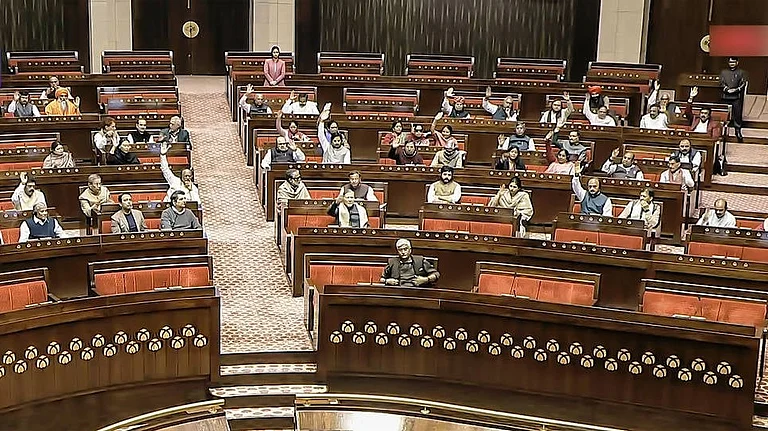
A Four-state Uttar Pradesh
The proposal generally refers to four broad geographical and socio-cultural regions of Uttar Pradesh - Western UP or Paschim Pradesh, Central UP or Awadh, Bundelkhand and Purvanchal.
These are broad regions rather than officially demarcated boundaries for proposed states.


The idea has been raised by political leaders and regional organisations at different points, with arguments centred on administrative manageability, regional development and political representation.
Ambedkar's Proposal
The debate over reorganising Uttar Pradesh goes back several decades. In 1955, BR Ambedkar suggested dividing Uttar Pradesh into three smaller states in his book Thoughts on Linguistic States.
The proposal for smaller states has since appeared in different forms in Uttar Pradesh's political discourse.
Demand for a separate Western Uttar Pradesh has also been raised by leaders including Rashtriya Lok Dal founder Ajit Singh. The idea of a separate Harit Pradesh, carved out of parts of Western Uttar Pradesh, has also periodically featured in the state's politics.

Mayawati's Four-State Move
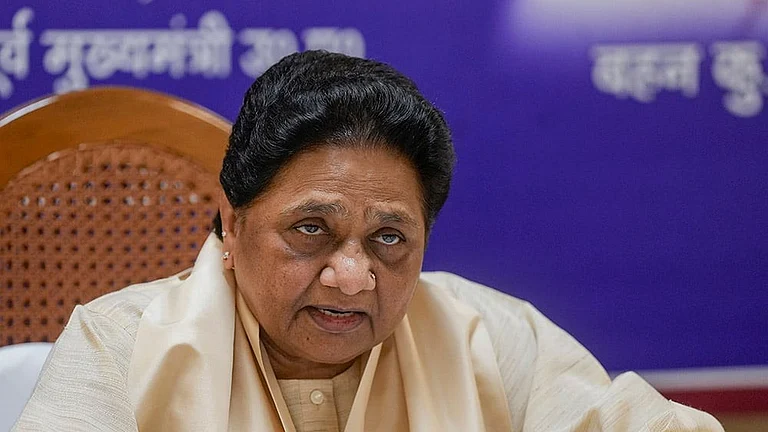
The most concrete move towards dividing Uttar Pradesh came in November 2011, when the Mayawati-led Bahujan Samaj Party government passed a resolution in the state Assembly proposing four states, Purvanchal, Bundelkhand, Awadh Pradesh and Paschim Pradesh.
The Mayawati government argued that Uttar Pradesh's vast size made administration and development difficult and that smaller states could lead to better governance.
The resolution was sent to the Centre but was not pursued further after the Samajwadi Party government led by Akhilesh Yadav came to power in 2012.
Rajbhar's current proposal broadly follows the same four-region idea, although he has referred to the regions as Purvanchal, Madhyanchal, Bundelkhand and Harit Pradesh.

What Would The Four Regions Cover?
Paschim Pradesh: The proposed Paschim Pradesh would broadly comprise 28 districts and parts of several others.
The region includes Saharanpur, Muzaffarnagar, Shamli, Baghpat, Meerut, Hapur, Bijnor, Moradabad, Rampur, Amroha, Bulandshahr, Sambhal, Bareilly, Badaun, Pilibhit, Shahjahanpur, Aligarh, Etah, Farrukhabad, Mathura, Hathras, Agra, Firozabad, Gautam Buddha Nagar and Ghaziabad, along with parts of Kasganj, Kannauj and Mainpuri.
Western Uttar Pradesh's agriculture, sugarcane-based economy, trade and manufacturing, as well as its proximity to Delhi, have featured in arguments for a separate state.
Awadh Pradesh: Awadh Pradesh would broadly cover the central part of Uttar Pradesh.
The proposed region comprises 17 districts, including Lucknow, Unnao, Rae Bareli, Sitapur, Lakhimpur Kheri, Hardoi, Barabanki, Ayodhya, Sultanpur, Amethi, Bahraich, Shravasti, Gonda, Balrampur, Mainpuri and Etawah, along with parts of Kasganj.
Lucknow, the state capital, lies at the centre of this region.
Bundelkhand: The proposed Bundelkhand state would cover Jhansi, Jalaun, Lalitpur, Hamirpur, Mahoba, Banda and Chitrakoot districts in Uttar Pradesh.
The region also extends into neighbouring Madhya Pradesh, making the creation of a separate Bundelkhand state more complicated.
Purvanchal: Purvanchal would broadly cover eastern Uttar Pradesh.
The proposed region includes Prayagraj, Varanasi, Jaunpur, Ghazipur, Ballia, Azamgarh, Mau, Gorakhpur, Deoria, Kushinagar, Maharajganj, Sant Kabir Nagar, Siddharthnagar, Basti, Ambedkar Nagar, Mirzapur, Sonbhadra, Chandauli, Kaushambi, Fatehpur, Pratapgarh, Kanpur Dehat and Kanpur Nagar.
Supporters of a separate Purvanchal have cited the region's large population, economic disparities, migration and geographical distance from Lucknow.
Why Has The Division Been Demanded?
The central argument for smaller states is administrative and region-specific development.
Uttar Pradesh covers a large geographical area and its different regions have distinct economic structures, agricultural patterns, migration trends and historical identities.
Supporters of reorganisation argue that smaller states could make administration easier and allow governments to concentrate on the specific needs of individual regions.
Those opposed to the idea have argued that creating new states by itself would not necessarily resolve development disparities. They have also pointed to the financial, administrative and institutional challenges involved in creating separate state governments.
Uttar Pradesh currently has 403 Assembly seats, the highest number among India's states. The state has also seen a major reorganisation before. Uttaranchal, later renamed Uttarakhand, was carved out of Uttar Pradesh in 2000.
How Can UP Be Divided?
The creation of new states is governed by Article 3 of the Constitution.
Under the provision, Parliament can create a new state by separating territory from an existing state or by combining two or more states or parts of states. It can also alter the area or boundaries of a state or change its name.
A Bill seeking such a change cannot be introduced in Parliament without the President's recommendation.
If the proposal affects the area, boundaries or name of a state, the President refers it to the concerned state legislature. The legislature is given a specified period to express its views, and the President can allow additional time.
The state legislature's views have to be sought, but its consent is not required. The final authority to create a new state therefore rests with Parliament.














