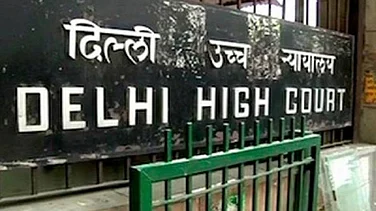
Delhi HC barred victory processions over violence, vandalism and repeated violations of Lyngdoh Committee recommendations during the DUSU election campaign.
ABVP, NSUI and AISA-SFI alliance are contesting president, vice-president, secretary and joint secretary posts.
DUSU traces its origins to an August 6, 1947 proposal to establish a representative student body at Delhi University before Independence.
Voting for the Delhi University Students' Union (DUSU) elections is being held on Friday, with major student organisations, including the ABVP, NSUI and the AISA-SFI alliance, contesting the four central panel posts. Counting of votes is scheduled for September 19.
The Delhi High Court has, meanwhile, barred candidates and student organisations from holding victory processions after the results are declared, as Live Law reported. The court's order came on Friday as polling was under way, amid concerns over violations of election rules and judicial directions.
The bench comprising Chief Justice Devendra Kumar Upadhyaya and Justice Tejas Karia also issued notices to student organisations and candidates, asking why exemplary electoral damages should not be imposed for violations of the Lyngdoh Committee recommendations and earlier judicial orders.
The court said no victory procession should be taken out after the results, either on Delhi's roads or inside university campuses and hostels. It placed the responsibility on the Delhi Police to ensure that such processions do not take place, and said violations could invite criminal and administrative action as well as contempt of court.


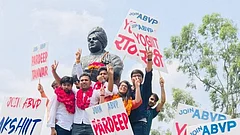
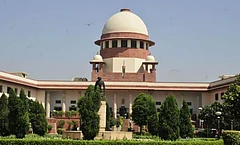
ABVP, NSUI, Left In Fray
The contest is being fought for the posts of president, vice-president, secretary and joint secretary. ABVP, NSUI and the AISA-SFI alliance have fielded full panels.
The ABVP has fielded Yash Dabas for president, Ishu Maurya for vice-president, Riya Chhawadi for secretary and Lakshya Raj Singh for joint secretary.
Dabas, from Kanjhawala, is pursuing studies in the Department of Buddhist Studies and is an international-level tennis player. Maurya, a law student at Campus Law Centre, has been associated with the ABVP since 2021. Chhawadi is a fourth-year BA Programme student at Sri Aurobindo College and an inter-college basketball player. Singh, who is also studying law at Campus Law Centre, has represented India in handball at the Asian Games and World Championship.
The NSUI has nominated Vijay Shankar Meena for president, Vir Chatrath for vice-president, Namrata Chaudhary for secretary and Gopal Choudhary for joint secretary.
The AISA-SFI alliance has fielded Ananya Raturi for president, Akshat Shikhar for vice-president, Stanzin Deskyong for secretary and B Parijaat for joint secretary.
The campaign has focused on issues including student welfare, safety and accommodation. The Satya Niketan building collapse earlier this month, which killed seven people including students, has brought student housing and safety into sharper focus.
The AISA-SFI alliance has raised demands for affordable accommodation and hostel facilities, while the ABVP has highlighted proposals including a Student Housing Cell and safety audits.
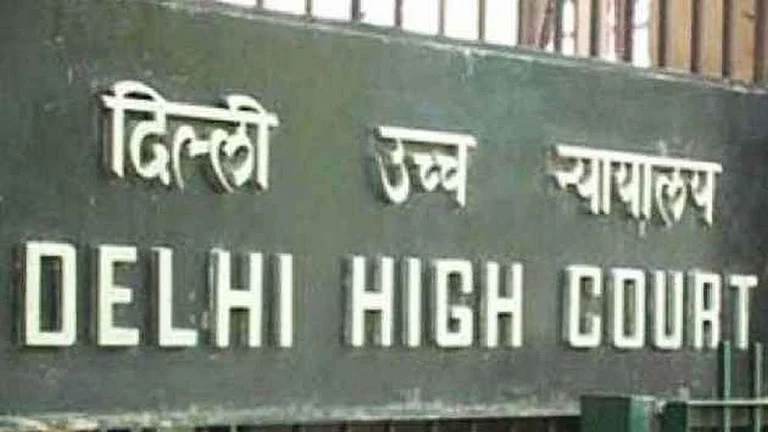
Court's Warning Before Polling
The Friday order followed a warning issued by the Delhi High Court on Thursday over violence and vandalism during the DUSU campaign.
The court had said it could stop vote counting and delay the declaration of results if violations continued. It directed Delhi University and the Delhi Police to place before it details of the action taken over incidents during the campaign. The court also observed that democracy could not be allowed to turn into a "criminal society".
The matter arose from a petition seeking action over defacement of public property and violations of rules governing student elections. The court had also raised concerns over violence, the use of vehicles and other alleged violations of the Lyngdoh Committee recommendations.
The Lyngdoh recommendations prescribe rules for student elections, including restrictions intended to keep university elections orderly and free from excessive political influence.

How DUSU Began
The history of DUSU goes back to the days immediately before Independence.
According to Delhi University records, on August 6, 1947, the university's vice-chancellor informed the Executive Council that a representative body of students wanted to establish a university students' union.
The minutes of the Executive Council meeting recorded that a committee was to be formed to prepare the constitution and procedure of the proposed union. The vice-chancellor also hoped that the council would provide a small grant of ₹150 for its preliminary expenses once it was formally constituted.
That proposal came just days before India became independent and marked the beginning of an institutional journey that would eventually make DUSU the representative body of students from most colleges and faculties of Delhi University.
Over the decades, the union evolved into a prominent platform for student representation and campus politics. The 2026 election is the latest chapter in that history, with voting taking place on September 18 and counting scheduled for September 19.