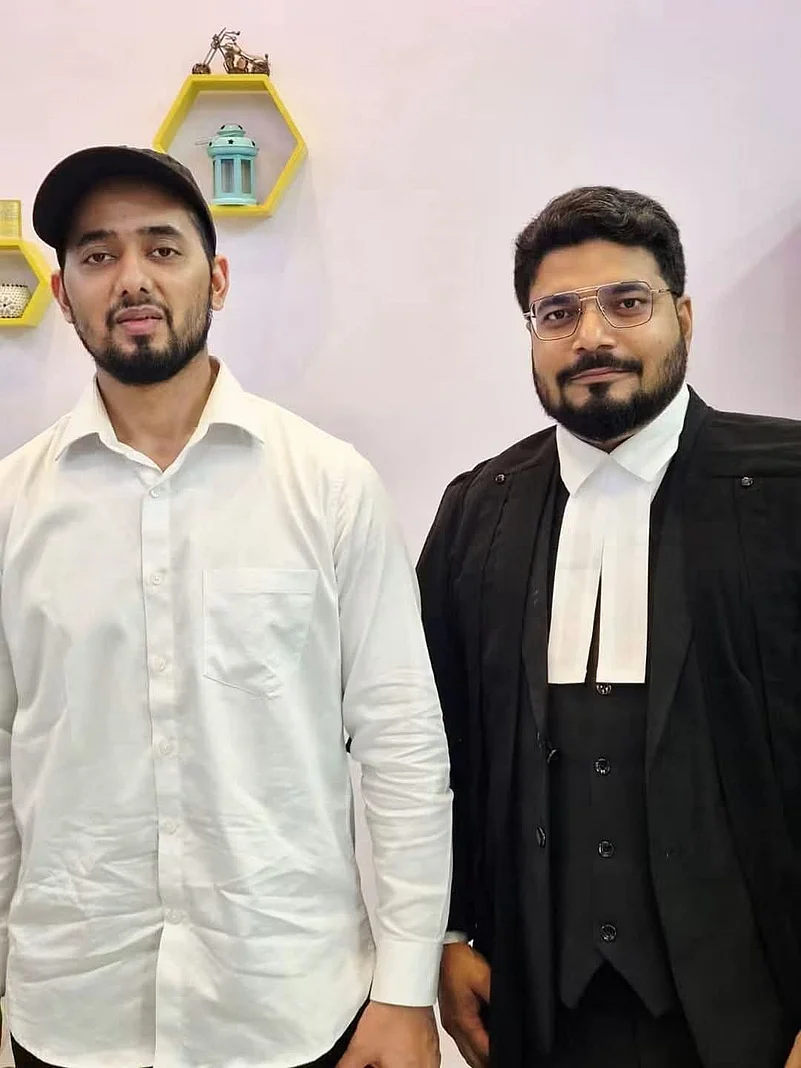
Ayush Malik told Allahabad HC he voluntarily embraced Islam in 2014 and rejected claims of coercion.
His father disputed the claim and alleged Malik had been influenced or “brainwashed”.
The HC set Malik at liberty and allowed him to decide his religion, residence and matrimonial relationship.
The Allahabad High Court has set 31-year-old Ayush Malik of Shamli at liberty after he told the court that he had voluntarily embraced Islam and alleged that his father had threatened and confined him at home. After hearing Malik and his father, Justice Sandeep Jain found no legal basis to continue the restraint on his personal liberty.
The September 16 order came in a habeas corpus petition filed by Malik’s friend, Sultan. The petition alleged that Malik was being confined by his father, Devraj Singh Malik, against his wishes and that state authorities were involved in the alleged restraint. The dispute had begun in June over Malik’s religious choice and his relationship with Chandni Qureshi. His father disputed Malik’s account and told the court that his son had been influenced or “brainwashed”. The High Court ultimately set Malik at liberty to choose where he lived, practise the religion of his choice and take an appropriate decision regarding his matrimonial relationship.




How the Shamli dispute began
The dispute came into public view in June after a video purportedly showing Malik offering Eid prayers circulated on social media. Malik said he had embraced Islam voluntarily, while his father opposed the conversion and approached the police.
According to The Indian Express, an FIR was registered at a Shamli police station on June 6 against Chandni Qureshi, her father Islam Qureshi and others. The FIR invoked provisions of the Uttar Pradesh Prohibition of Unlawful Conversion of Religion Act, 2021, along with other criminal charges. Chandni Qureshi and her father were arrested in connection with the case.
The FIR and the allegations against Qureshi and the other accused formed part of the background to the habeas corpus proceedings, but the High Court was not deciding the merits of that separate criminal case.
The dispute over Malik’s religion also produced conflicting accounts. A later video showed Malik performing puja at a relative’s house, and his relatives said he had converted back to Hinduism. Malik later gave the High Court a different account of his religious choice.
During the September hearing, Malik told the court that he had embraced Islam in 2014 and that he had done so voluntarily, without coercion, threat, undue influence or inducement.
Malik also told the court that he wanted to pursue a matrimonial relationship with Chandni Qureshi, a decision opposed by his parents.
Why was a habeas corpus petition filed?
A habeas corpus petition is used to ask a court to examine whether a person is being unlawfully detained or restrained. In Malik’s case, his friend Sultan approached the Allahabad High Court alleging that Malik was being kept at his father’s home against his wishes.
The petitioner also alleged involvement of state authorities in the alleged restraint. The court subsequently directed that Malik be produced before it for the September 16 hearing.
On September 9, Justice Sandeep Jain directed Malik’s father and the authorities to produce him before the court on September 16. The Indian Express reported that Malik was subsequently produced before the court by Shamli police.
During his interaction with the judge, Malik said he was about 31 years old and had completed a B.Pharma degree. He told the court that he had voluntarily embraced Islam in 2014 and continued to follow its practices despite opposition from his family.
Malik also alleged that he had been threatened and confined at home from June 4, 2026. That allegation was disputed by his father.
According to LiveLaw’s account of the hearing, Malik’s father told the court that his son had been influenced or “brainwashed” and that his conversion had not been voluntary. He also opposed Malik’s relationship with Chandni Qureshi, saying his position was based on concern for his son’s welfare.
The court was therefore presented with two competing accounts. Malik said his religious and personal choices were voluntary; his father said they had been shaped by outside influence.
What did the Allahabad High Court decide?
After interacting with Malik and his father, the High Court considered Malik’s own statement about his religious choice. The court noted that he had categorically said he embraced Islam voluntarily and without coercion, threat or undue influence. It found no material before it sufficient to disbelieve that statement.
The court also considered the constitutional protection surrounding freedom of conscience and personal liberty.
Article 25 of the Constitution protects freedom of conscience and the right to freely profess, practise and propagate religion, subject to constitutional limitations. In Malik’s case, the High Court found no material on record sufficient to disbelieve his statement that he had voluntarily embraced Islam.
The question of his personal relationship was considered separately. The court said an adult’s choice of whom to marry or with whom to establish a relationship is a matter of individual autonomy protected under Article 21, which guarantees life and personal liberty.
LiveLaw reported that the High Court also took note of material indicating that Malik had been residing at his home under police presence. The court held that his father’s concern for his welfare did not provide a legal basis for continuing the restraint on an adult who had told the court that his choices were his own.
The court was not deciding whether the allegations in the FIR against Chandni Qureshi, her father or the other accused were proved. Nor was the habeas corpus proceeding a determination of whether Malik’s conversion had been lawful or unlawful under the separate criminal case.
The immediate issue was whether Malik could continue to be restrained after appearing before the court and stating that he wished to make his own decisions.
What happens to Malik now?
The High Court found no legal basis to continue the restraint and set Malik at liberty.
The order allowed him to reside at a place and with a person of his choice, profess and practise the religion of his choice, and take an appropriate decision concerning his matrimonial relationship in accordance with law.
The Indian Express reported that the court held that family concerns could not, by themselves, justify restricting the choices of an adult concerning his faith, residence and life partner.
The order does not dispose of the separate criminal proceedings arising from the June FIR, which concern allegations against Chandni Qureshi, her father and others under the relevant criminal and anti-conversion provisions. In the habeas corpus proceedings, the High Court set Malik at liberty to choose his place of residence, practise the religion of his choice and take an appropriate decision regarding his matrimonial relationship.