



Villagers in West Kalimantan are being paid for verified wildlife sightings, with rewards ranging from small payments for common birds to larger amounts for endangered species such as orangutans
The KehatiKu programme turns photographs, videos and recordings into both income and conservation data, with more than 350,000 wildlife observations submitted by September 2026
The experiment is testing whether financial incentives can shift communities from exploiting wildlife to monitoring and protecting it, while questions remain over data quality, verification, funding and long-term conservation impact
In the forests of West Kalimantan, spotting an orangutan, monkey or bird can now earn a villager money.
The programme, called KehatiKu, is a Borneo Futures-led conservation initiative working with local communities in the Kapuas Hulu district. The broader pilot began in 2024 with four villages, while its payment-for-observations system was introduced in early 2025, first in one village and then expanded to all four original villages from May.
The programme has since expanded. Borneo Futures said it had reached nine villages and recorded 800 unique observers by February 2026. By September, AFP reported that participants had submitted more than 350,000 wildlife observations, with payments covering 73 species. Funding has been secured through 2028.
The premise is simple: instead of extracting value from wildlife by hunting it, villagers can earn by finding animals alive, documenting them and submitting the evidence for verification. The observations also build a biodiversity dataset that can be used for conservation research.
Getting Paid To Spot Wildlife
KehatiKu is built around a straightforward proposition: people living alongside forests can become wildlife monitors and receive payments for verified observations.



Borneo Futures describes it as a citizen-science system in which local residents collect biodiversity data during their ordinary activities. They can make observations while farming, travelling or spending time in the forest, or go looking specifically for species that can earn rewards.
The economic incentive is now substantial enough to be visible at household level. AFP reported that payments range from about Rp5,000 for common birds to Rp130,000 for endangered orangutans. The most successful observers can earn up to around Rp10 million a month, although earnings vary with the number and type of verified observations.
That marks a significant expansion from the programme's early payment phase. The 2025 research paper described the monetary system as a new and relatively small intervention designed to test whether payments would increase participation in wildlife monitoring. It reported a sharp rise in observations after rewards were introduced.
The latest figures suggest that the model has since grown far beyond that initial test. More than 350,000 observations had been submitted by September 2026.

How Does The Scheme Work?
The process starts with an observation.
A villager can use a smartphone or tablet to record an animal or another sign of its presence. Submissions can include photographs, video or audio, along with information such as the species identified, date, time and location. GPS coordinates are also attached to observations.
That information is then sent to a verification team. An observation has to be accepted before the corresponding payment is released. The data have another purpose: researchers can use the records to study species distribution and, over time, build models of wildlife presence across the landscape.
The system is therefore doing two things at once. It creates an immediate financial reward for the person making the observation and builds a longer-term biodiversity record for conservation research.
The distinction is important because the scientific project is broader than the payment mechanism. Villagers can record species that do not qualify for a reward, and the wider dataset is intended to capture biodiversity beyond the animals on the payment list.
The 2025 paper also describes the findings as preliminary. It says the researchers were still developing ways to deal with biases inherent in opportunistic, unstructured observations, and that the project was continuing.
Which Animals Are Worth Money?
The payment list has changed as the programme has expanded.
The monetary phase began in January 2025 with rewards for orangutan sightings and orangutan nests. The system was then expanded to include additional species considered significant for conservation or to local communities.
Orangutans remain among the most valuable records. But villagers also record gibbons, macaques, birds and other wildlife, using photographs, video and sound where appropriate. Some species are particularly difficult to see, making audio evidence important for verification.
By September 2026, AFP reported that payments covered 73 species. That does not mean only 73 species can be observed: the wider scientific dataset contains observations of many species that are not necessarily eligible for payment.
Indonesia also has a separate statutory framework protecting listed wildlife. The Directorate General of Conservation of Natural Resources and Ecosystems maintains an official database of protected species, while national law prohibits activities including capturing, killing, possessing, transporting and trading protected animals.
KehatiKu operates within that wider conservation environment but is not an Indonesian government wildlife-protection scheme. It is a Borneo Futures-led initiative working with participating communities.

Why Put A Price On Wildlife?
The central idea behind KehatiKu is to change the economic value attached to an animal.
Wildlife can have food, cultural or commercial value for people living near forests. Hunting can therefore provide a direct return. KehatiKu tries to create another source of value: finding an animal alive, documenting it and receiving a payment for the observation.
A living animal can be documented repeatedly. A dead animal produces value only once.
Borneo Futures presents the programme as an effort to make biodiversity and forests economically meaningful to local communities and to give people a direct stake in maintaining wildlife.
The 2025 study found that the introduction of monetary rewards significantly increased the number of observations. The researchers said this indicated that even small financial incentives could increase participation in biodiversity monitoring.
The larger question, however, is whether that economic incentive can change what happens to animals outside the monitoring system.
From Hunting To Monitoring
One example comes from Nanga Embaloh, a village in West Kalimantan that joined KehatiKu in late 2025.
Borneo Futures says some villagers began making regular trips into the forest to look for birds and other wildlife, learning where particular species were most likely to be found. The organisation presents the activity as a new way for residents to generate income from the forest without removing wildlife from it.
In February 2026, the village also introduced a local hunting ban. Villagers sought approval from local authorities as well as army and police representatives before putting up signs prohibiting hunting and shooting in the village area.
Borneo Futures linked the decision to the new economic value villagers had begun attaching to wildlife. Animals had become a source of income through observations, giving residents another reason to protect them.
Villagers have also reported seeing more hornbills around the settlement after the ban. But those reports are observations by residents, not a measured estimate of population growth. The available programme material does not establish that the hunting restriction has produced a quantified recovery in wildlife populations.
That distinction is important. KehatiKu can document changes in reporting behaviour and community attitudes. Demonstrating a sustained change in wildlife populations requires a different kind of evidence.

Who Checks The Photos?
Paying for wildlife records creates an obvious problem: what stops someone from sending a fake photograph or repeatedly reporting the same animal?
KehatiKu's verification system is designed around both the image or recording and the information attached to it.
The 2025 study says observations are reviewed by trained verifiers, with specialists consulted when species identification is difficult. Reviewers assess the photographic, video or audio evidence and compare it with information such as the stated location and GPS coordinates.
The system has already encountered deliberate falsification.
The researchers documented a case in which an observer submitted orangutan photographs taken from the internet. The verification team detected inconsistencies between the images and the reported GPS location, investigated the submission, obtained an admission from the observer and removed that person from the programme.
The latest system also uses more technology than the original pilot. AFP reported in September 2026 that project funding had helped develop an app and an AI-assisted system to help human reviewers screen observations. The AI therefore supports the verification process rather than replacing human review.
More than 350,000 observations have now been submitted, with roughly half validated and paid for, according to current reporting. That gives an indication of the scale of the verification task facing the programme as participation grows.
Can Conservation Payments Backfire?
The same incentive that increases participation can also create new risks for the monitoring system.
The KehatiKu study identifies several potential problems. Observers may repeatedly visit areas where they have already found wildlife, creating clusters of records. A payment system may also encourage participants to focus disproportionately on species that attract rewards. Limited access to smartphones can affect who is able to participate and benefit.
The researchers are attempting to address those problems through training, verification, metadata checks, audits and adjustments to the incentive system. They also say occupancy modelling can help account for some of the biases created by opportunistic observations.
Evidence from another conservation-payment programme in Indonesia shows why incentive design matters. In a separate experiment involving payments to fishers for releasing endangered hammerheads and wedgefish, researchers found evidence that some participants increased catches in order to increase the number of paid releases. The result reduced the intended environmental benefit.
KehatiKu works differently: villagers are paid for verified observations rather than for catching animals and releasing them. But the broader lesson is the same. The behaviour being rewarded has to remain aligned with the environmental outcome the programme is trying to achieve.
There is also the question of sustainability. AFP reported that KehatiKu's current funding is secured through 2028. That gives the project a defined period in which to expand and test the model, but does not answer what happens after the current funding period.
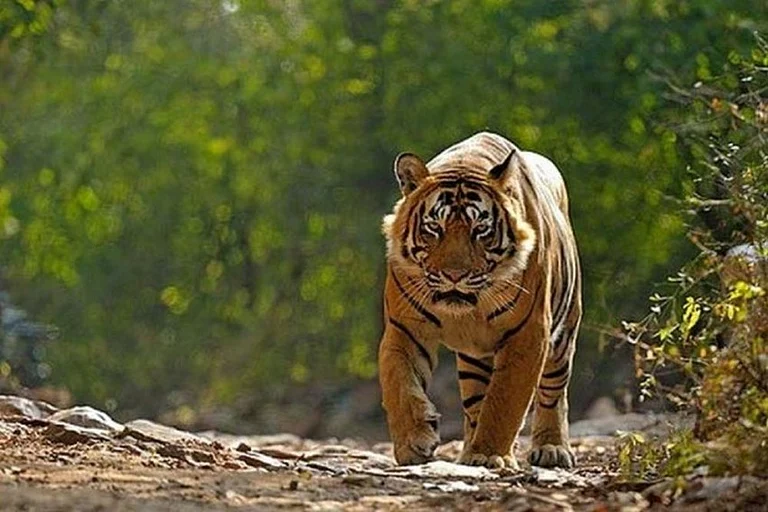
Can A Photograph Protect An Animal?
KehatiKu operates alongside Indonesia's broader conservation framework, which has increasingly emphasised local participation.
Indonesia's Law No. 32 of 2024 expanded conservation responsibilities to regional governments, strengthened the role of communities and indigenous communities and created provisions for conservation financing, including performance-based incentives. The government said the revised law was intended to strengthen conservation implementation at the local level.
That wider policy direction does not make KehatiKu a government-run scheme. The project remains a Borneo Futures-led initiative that works with participating communities and uses payments to encourage wildlife monitoring.
The experiment has already shown that financial rewards can produce large increases in community reporting. It has also created a substantial biodiversity dataset and, in at least one participating village, been accompanied by a community-led hunting ban.
But the scientific evidence remains preliminary. The research highlights data-quality and sampling problems, while the newer programme data demonstrate scale rather than a proven long-term increase in wildlife populations.
A photograph can prove that an animal was there. The harder question is whether enough such photographs can help keep it there.














