Saudi Arabia and the Houthis are exchanging attacks again, as Houthi forces advance along Yemen’s west coast towards the strategically important Bab el-Mandab Strait
The conflict has evolved far beyond Yemen’s internal power struggle, with Saudi military intervention, Iranian weapons support and a long-running confrontation over the kingdom’s southern border
The Red Sea crisis added a new international dimension, bringing the United States into direct conflict with the Houthis and giving the group leverage over a major global shipping route
Saudi Arabia and the Houthis are again confronting each other directly. On September 19, Saudi Arabia's coalition said its air defences intercepted a ballistic missile launched towards Riyadh and thwarted attempted attacks on Yanbu, Taif and Farasan. On September 15, the UN said fighting was intensifying along Yemen's west coast as Houthi forces advanced towards the Bab el-Mandab Strait. At least 125,000 people had been displaced inside Yemen since the beginning of the month, according to that UN briefing.
The Houthis began as a northern Yemeni movement fighting the central government. The capture of Sana'a in 2014 turned them into a national power contender. Saudi Arabia's intervention in 2015 transformed that struggle into a regional war, while Iranian weapons became an increasingly important part of Riyadh's threat perception. Years of missile and drone attacks followed before the 2022 truce sharply reduced the fighting. The conflict acquired another dimension when Houthi attacks on Red Sea shipping brought direct US military confrontation.
How Did The Houthis Rise?
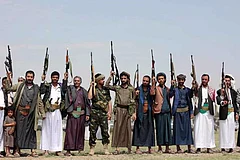
The Houthi movement emerged in Sa'dah in northern Yemen and developed through successive confrontations with the government of Ali Abdullah Saleh. Abdulmalik al-Houthi assumed leadership in 2004 after the death of his brother, Hussein Badreddin al-Houthi. Over time, the movement grew from a northern armed challenge into a political and military force capable of expanding beyond its original stronghold.



When Did Sana'a Fall?
That change became unmistakable in September 2014, when Houthi forces captured Sana'a. Seizing the capital and state institutions turned it from a northern insurgency into the central armed actor in Yemen's political crisis.
Security Council Resolution 2201 said the Houthis had gained control of Sana'a and subsequently dissolved parliament and taken over government institutions. It demanded that they withdraw from those institutions and release President Abd Rabbuh Mansur Hadi and others held under house arrest. Resolution 2216 later demanded that the Houthis withdraw from areas they had seized, relinquish weapons taken from state institutions and stop threatening neighbouring states.
Hadi later escaped to Aden as the Houthis advanced south. The Houthis were now challenging Yemen's political order itself.
Why Did Riyadh Intervene?
On March 26, 2015, Saudi Arabia launched the military intervention that turned Yemen's political collapse into a regional war. Riyadh said it was responding to a request from Hadi and seeking to restore the recognised Yemeni government. Saudi officials also linked the intervention to what they described as Iranian interference in Yemen.
The rationale therefore had two linked dimensions: reverse the Houthi takeover and prevent the conflict from becoming a lasting security threat on the kingdom's southern flank.
Saudi Arabia was now intervening militarily to shape the outcome of a Yemeni power struggle.

How Did Saleh And Iran Change It?
One defining twist was the alliance between the Houthis and the former president they had once fought. UN material says military units loyal to Ali Abdullah Saleh and his son assisted Houthi forces during their advance towards Aden. The UN Panel of Experts later described the relationship as an “alliance of convenience”, with the two sides sharing enemies while remaining divided over Yemen's future political order. The alliance broke down in 2017 after Saleh turned against the Houthis and was killed.
Iran became central to the Saudi interpretation of the conflict for a different reason: weapons and military capabilities.
A 2015 UN Panel reported information from Yemeni authorities that an Iranian vessel seized in 2011 was carrying 900 Iranian-made anti-tank and anti-helicopter rockets intended for Houthi rebels.
The 2024 Panel documented three maritime shipments of small arms and light weapons from Iranian naval bases to the Houthis between July and September 2022. The first included 9,000 assault rifles. The Panel also reported similarities between several Houthi systems and those produced or operated by Iran or allied groups.
That establishes evidence of significant Iranian material support. It does not establish that Tehran directed every Houthi military or political decision. For Riyadh, however, Iranian-origin weapons and increasingly sophisticated Houthi capabilities made Yemen part of its wider confrontation with Iran.
Why Did The War Become Attritional?
Houthi missiles and drones gave the movement the ability to threaten targets beyond Yemen's frontlines, including Saudi territory and infrastructure. Saudi Arabia responded with sustained air operations, but the campaign did not produce a decisive political settlement. The Houthis survived years of military pressure while retaining significant territorial and military capabilities.
The result was a different security problem for Riyadh: the Houthis did not need to defeat Saudi Arabia conventionally to impose costs on the kingdom. Long-range attacks allowed the conflict to reach Saudi territory even while much of the fighting remained inside Yemen.

What Did The 2022 Truce Change?
The biggest reduction in violence came in April 2022, when the Yemeni parties agreed to a UN-brokered nationwide truce.
The agreement halted offensive air, ground and maritime operations inside Yemen and across its borders. It also allowed fuel ships to enter Hudaydah ports, commercial flights to operate from Sana'a airport and negotiations to open roads in Taiz and elsewhere.
The truce was renewed twice and produced the longest period of relative calm since the war began. When it expired on October 2, fighting did not immediately return to its previous intensity. In September 2023, Saudi Defence Minister Khalid bin Salman met a delegation from Sana'a in Riyadh and said the kingdom supported dialogue aimed at a comprehensive political settlement under UN supervision.
The truce reduced violence without settling the underlying distribution of political and military power.
How Did The Red Sea Change The War?
The next transformation came in late 2023, when the Houthis began attacking commercial vessels in the Red Sea.
Security Council Resolution 2722 demanded an end to the attacks and underscored the importance of navigational rights through the Red Sea and Bab el-Mandab.
Bab el-Mandab connects the Red Sea with the Gulf of Aden and the wider Indian Ocean. Ships using the Suez Canal route between Asia and Europe pass through the wider corridor. A movement fighting for power inside Yemen could therefore affect vessels travelling far beyond the country's shores.
For Saudi Arabia, the security calculation widened again. Riyadh was already concerned about attacks on its territory. Houthi threats around Bab el-Mandab added maritime security to the problem. In July 2026, the Saudi-led coalition said it was taking measures to protect commercial vessels transiting the strait.

What Did US-Oman Change?
The Red Sea attacks brought Washington into direct military confrontation with the Houthis.
In January 2024, the United States and Britain launched strikes against Houthi targets after continued attacks on vessels. CENTCOM said the strikes targeted radar, air-defence systems and missile and drone facilities used in attacks on shipping.
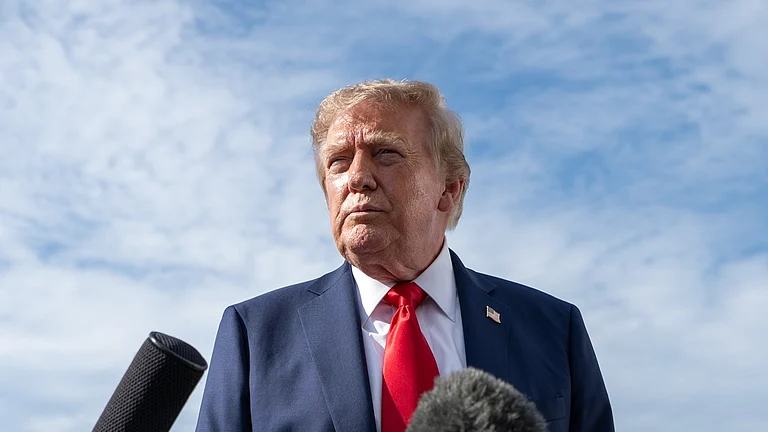
The US campaign expanded significantly in March 2025. President Donald Trump said US forces had begun large-scale strikes in Houthi-controlled areas to eliminate capabilities used against US forces and commercial shipping. By April 27, CENTCOM said Operation Rough Rider had struck more than 800 targets.
Oman mediated a separate ceasefire on May 6, 2025, under which Washington and the authorities in Sana'a agreed not to target each other, including American vessels in the Red Sea and Bab el-Mandab.
It was therefore a US-Houthi ceasefire, not a settlement of the Saudi-Houthi conflict or Yemen's political future.
Why Is The Rivalry Back?
On September 15, the UN said Houthi forces were advancing towards Bab el-Mandab while fighting intensified along Yemen's west coast, with several islands in the southern Red Sea reportedly captured. Commercial shipping flows appeared unaffected at that point, but the UN said the advance had increased market concerns. It also said at least 125,000 people had been displaced inside Yemen since the beginning of September.
The Saudi-Houthi dimension is once again direct. The UN said Houthi missile and drone attacks on September 14 injured 13 people in Abha, Khamis Mushait and Taif, while the Houthis claimed to have targeted the King Khaled Airbase in response to Saudi strikes. On September 19, the Saudi coalition said it intercepted a ballistic missile headed towards Riyadh and thwarted attempted attacks on Yanbu, Taif and Farasan. The claims remain distinct official accounts rather than independent battlefield assessments.

From Yemen's War To A Regional Power Struggle
The Houthis began as a northern Yemeni movement in a struggle against the country's political order. Sana'a gave them national reach. Saudi intervention turned Yemen's political crisis into a regional military conflict. Iranian weapons and support then became a significant part of how Riyadh understood the Houthi threat, without establishing simple Iranian control over the movement.
The 2022 truce showed that the fighting could be reduced, while later Saudi-Houthi contacts showed that diplomacy remained possible. Neither settled the underlying distribution of political and military power.
The Red Sea attacks widened the conflict again, giving the Houthis leverage over an international maritime corridor and prompting direct US military action. The latest escalation shows how those unresolved layers remain connected.
The Saudi-Houthi confrontation now sits at the intersection of Yemen's unresolved political order, Saudi security, Iranian military support and Red Sea navigation — which is why a renewed fight in Yemen can once again become a regional security crisis.