An adviser to Iran’s Supreme Leader has warned that the conflict could spread to the Indian Ocean if the US or Israel launches further attacks, widening the potential geographic scope of the war
India is particularly exposed because much of its trade and energy imports move by sea, with the Strait of Hormuz and wider Indian Ocean network connecting West Asian supplies to Asian markets. The EIA identifies Hormuz and Malacca as among the world’s most important oil chokepoints
The warning does not mean Indian Ocean shipping is an announced target, but a sustained spillover from Hormuz and the Red Sea could affect freight routes, energy flows and shipping costs for India
Iran has warned that the ongoing conflict could spread to the Indian Ocean if the US or Israel carries out further attacks, raising concerns for India because of its dependence on West Asian energy supplies and maritime trade.
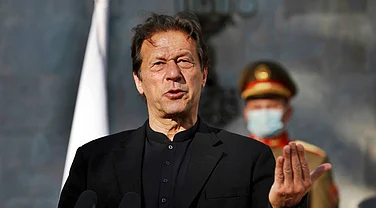
Yahya Rahim Safavi, an adviser to Iran’s Supreme Leader Mojtaba Khamenei, said on Thursday that the conflict had already expanded from the Persian Gulf and Strait of Hormuz towards the Red Sea and could spread further, according to Fars News Agency.
Safavi did not specify which parts of the Indian Ocean could be affected or whether any commercial shipping routes would be targeted. His warning therefore signals a possible expansion of the conflict rather than confirming that attacks on Indian Ocean shipping are planned.



Why India Is Exposed
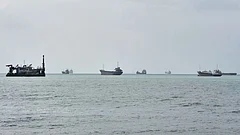
The Indian Ocean is a major corridor for international trade. A NITI Aayog report said nearly 100,000 ships transit the region each year, carrying about 30% of global containerised cargo and 42% of crude oil traded from and within the region.
For India, the stakes are particularly high. The same report said nearly 95% of India’s trade by volume and 68% by value moves by sea, making disruptions around major maritime chokepoints significant for the country’s trade and supply chains.
Past disruptions have shown how instability in one part of the region can affect routes much further away. NITI Aayog noted that Houthi attacks on shipping around the Red Sea and Bab el-Mandeb disrupted traffic between the Indian Ocean and Mediterranean, forcing vessels to take longer routes around the Cape of Good Hope and increasing transport costs.
Hormuz To Malacca
The immediate concern remains the Strait of Hormuz, which connects the Persian Gulf with the Gulf of Oman and the Arabian Sea.
The US Energy Information Administration said about 20.9 million barrels per day of oil moved through Hormuz in the first half of 2025, equivalent to about 20% of global petroleum liquids consumption. India, China, Japan and South Korea together accounted for 74% of crude oil and condensate flows through the strait during that period.
Further east, the Strait of Malacca links the Indian Ocean with the Pacific Ocean and provides the shortest maritime route between Middle Eastern energy suppliers and major markets in East and Southeast Asia. EIA data shows that 23.2 million barrels per day of oil and 9.2 billion cubic feet per day of LNG moved through the strait in the first half of 2025.
That makes Malacca part of the wider trade network that connects West Asian energy supplies with Asian markets. The strait itself has not been identified by Safavi as a target, but prolonged disruption across the Indian Ocean could create knock-on effects for shipping schedules, freight costs and energy flows along interconnected routes.

India’s Maritime Response
India has already strengthened precautions for its merchant shipping amid the wider regional security situation.
The Ministry of Ports, Shipping and Waterways said in August that the Directorate General of Maritime Administration had established real-time monitoring and tracking of vessels and Indian seafarers operating around Iran, the Strait of Hormuz, the Persian Gulf and adjacent waters.
The DGMA’s maritime-security framework includes risk assessments, reporting requirements and coordination with naval and security authorities for Indian vessels operating in designated high-risk areas.
For India, the significance of the Iranian warning therefore lies in the possibility of the conflict moving into a maritime region through which a large share of the country’s trade and energy supplies move. Safavi’s comments do not establish that such an expansion will occur, but any sustained disruption beyond the Gulf and Red Sea could affect shipping and energy markets well beyond the immediate battlefield.