Trump has directed JD Vance to shift attention from the Iran war to an anti-fraud campaign targeting alleged corruption in Democratic-led cities.
Vance has questioned the political cost of the war following Republican midterm losses, while reports of possible renewed US-Iran talks persist.
Tanker attacks and security concerns around the Strait of Hormuz continue to threaten Gulf shipping despite increased oil flows.
US President Donald Trump has directed Vice President JD Vance to shift his attention away from the Iran war and concentrate instead on tackling what he describes as corruption and crime in Democratic-controlled cities and states. The instruction comes after Republicans suffered major setbacks in the November 3 midterm elections, with Vance openly questioning the political cost of the conflict and its economic consequences.
Trump's directive also comes as Democrats prepare to assume control of Congress in January and have pledged intensive oversight of his business dealings and other matters concerning his administration. Vance, who led negotiations aimed at securing a truce with Iran, has blamed the eight-month war and its economic repercussions for the Republicans' sweeping electoral losses. His reported consideration of another round of direct talks with Tehran has also brought the administration's position on negotiations into focus.
In a social media post on Thursday, Trump dismissed the need for a diplomatic agreement with Iran and instructed Vance to devote his attention to the administration's anti-fraud campaign.


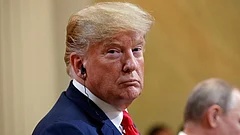

“We don’t need a deal with Iran,” Trump said in the post. “Those days have long since passed. We’ve got their money, Hundreds of Billions of Dollars, and we’ve got their Strait!”
Trump had earlier this week said he believed the war “militarily is effectively over”. His latest remarks indicate that he does not consider further negotiations necessary, although he has continued to leave open the possibility of renewed military action.
The directive followed a report by The Wall Street Journal on Wednesday evening that Vance was weighing another round of direct talks with a senior Iranian official. Reuters also reported on Trump's instruction to Vance and his rejection of a new agreement with Tehran.
Vance's office did not respond to a request for comment. The White House press office, responding by email, reiterated Trump's position that there was no need to negotiate with Iran, without directly addressing the reported possibility of renewed talks.
Vance Questions Political Cost Of Iran War After Republican Setbacks
Vance's criticism of the conflict has become particularly significant following the Republicans' November 3 election losses. Before the war, he had advocated restraint in US military interventions overseas. After Trump launched the campaign, Vance offered limited public support for it before taking the lead in negotiations to end the fighting.
Reuters reported that Vance had led direct negotiations with Iranian officials in Pakistan in April, with the discussions resulting in a memorandum of understanding in June. The agreement paused the fighting but broke down within weeks.
Following the midterm election results, Vance posted on X, directly addressing the political consequences of the war. He challenged those defending the military campaign to explain whether its costs were justified, particularly given the Republicans' loss of control of the Senate for the next six years.
“If you’d like to argue it was worth it, that losing the Senate for the next 6 years was worth it, then do so,” Vance said. “Argue it was a worthwhile cost to pay. Agree or disagree, that’s at least honest.”
The vice president is also considering a possible presidential bid in 2028. Dissatisfaction among voters over Trump's handling of the war could affect his political prospects. Trump has yet to endorse a successor for the next presidential election.
During an interview with CBS' 60 Minutes, broadcast on Sunday, Trump said he “may or may not get involved” in endorsing a candidate.
Trump Keeps Military Action On The Table As Iran Talks Continue
Despite describing the war as effectively over, Trump has not ruled out resuming attacks if diplomatic efforts fail. Earlier this week, he said mediation efforts led by Qatar were making progress and suggested that a return to full-scale bombardment was unlikely.
However, speaking on The Hugh Hewitt Show on Thursday, Trump said he remained prepared to restart strikes against Iran.
“If something doesn’t work out, I would not hesitate,” he said.
In a separate interview with commentator Stephen A. Smith, Trump indicated that he had not ruled out striking Iran's Pickaxe Mountain facility, which is linked to the country's nuclear programme. He suggested that the US could target the site if it detected signs of activity there.
Qalibaf Claims US Approached Putin To Facilitate Iran Talks
Meanwhile, Iran's chief negotiator and Parliament Speaker Mohammad Bagher Qalibaf claimed that Washington had approached Russian President Vladimir Putin to facilitate direct negotiations between the US and Iran.
In an interview with Al Jazeera, Qalibaf said American officials had raised the possibility during a visit to Moscow, asking Putin to speak to Tehran and encourage it to agree to direct discussions with Washington.
“It was the Americans who, during a visit to Moscow, spoke with Mr. Putin and asked him to speak with Iran so that, in any case, Iran would agree to speak directly with them,” Qalibaf said.
He described Russia as a close strategic partner of Iran and said Tehran maintained strong relations with Putin.
“Look, Russia and Mr. Putin, the Russian president, are friends of ours. We have strategic relations with Russia. We are very close, and we hold Mr. Putin in particularly high regard.”
The White House did not directly respond to whether Washington had asked Putin to facilitate negotiations with Tehran.
Qalibaf also said Maj. Gen. Mohsen Rezaei, secretary of Iran's Supreme National Security Council, had travelled to Russia and briefed Putin on the negotiations. According to him, Rezaei informed the Russian president that Tehran had conveyed its positions, including what it considers the legitimate rights and demands of the Iranian people, to the US.
Qalibaf said the next step depended on Washington's response.
“It is up to them to decide. If they are truly telling the truth and are sincere about negotiations, then they should respond and begin the process,” Qalibaf said. “But if they want to pursue the path of war, then naturally, we are fully prepared for that as well.”
Tanker Attacks Keep Gulf Shipping Routes Under Pressure
While diplomatic efforts continue, maritime security remains a concern in the Persian Gulf and surrounding waterways. Iran had effectively restricted traffic through the Strait of Hormuz for months, disrupting the movement of crude oil and other energy resources from neighbouring Gulf countries.
Oil shipments through the Strait of Hormuz have increased from their wartime lows, although available tracking data indicates that flows through the waterway remain below pre-war levels. Crude oil and liquefied natural gas exports from the wider Gulf region have also been climbing. However, this recovery in shipment volumes does not mean that overall maritime traffic has returned to normal. International tankers continue to rely on US Navy escorts, while the US military has recently limited its strikes on Iran, including attacks on the country's air defence systems.
Reuters has also reported on US efforts to enforce restrictions on Iranian maritime traffic and secure the movement of international shipping through the region.
The Joint Maritime Information Center's November 12 update listed four tanker incidents in the Strait of Hormuz and the Arabian Gulf between November 10 and 12. These included attacks on tankers northeast of Lima, Oman, and north of Khasab, as well as two incidents in the Arabian Gulf. In the latter incidents, multiple crew members of the Fujairah Energy were taken ashore for medical assistance, while the crew of the Dominica Prosperity evacuated safely.
US Secretary of State Marco Rubio said earlier this week that he had urged his Group of Seven (G7) counterparts during discussions in Paris to increase efforts to protect ships from Iranian attacks. He acknowledged, however, that the discussions had produced no progress on the issue.
Security concerns also extend to the Bab el-Mandeb Strait, which connects the Red Sea to the Gulf of Aden and the Indian Ocean. A Saudi-led coalition is fighting Iranian-backed Houthi rebels in Yemen, adding to security concerns around the strategic waterway. However, the JMIC reported no confirmed attacks or disruptions to commercial shipping in the Bab el-Mandeb between November 8 and 12. The waterway remains open to commercial traffic, although the security situation is considered volatile.