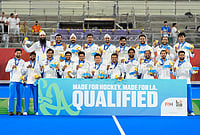
Handshake over politics: Both sides followed the pre-match sporting tradition and shook hands in Amstelveen
India dominate the contest: Harmanpreet Singh and Abhishek scored braces in the 5-3 victory
Pakistan's fightback falls short: Two late goals made it tense, but India held on to reach the second round
The India-Pakistan rivalry arrived at the 2026 Hockey World Cup carrying plenty of baggage before a ball was even struck. Yet, at Wagener Stadium in Amstelveen, the players chose to keep the pre-match ritual exactly that, a sporting ritual.
The two teams shook hands before the contest, continuing the approach seen during their FIH Pro League meetings earlier this year. Hockey India had maintained that it would follow international sporting protocols and had not instructed its players to avoid handshakes.
The moment stood out because handshakes between the two countries have become a much bigger talking point in cricket following the recent political tensions. Hockey, however, has taken a different route.
The gesture did not soften what followed on the pitch as this was still a must-win World Cup clash, with India needing a result to progress and Pakistan fighting to stay alive. And once the whistle went, the focus quickly moved from the handshake to the hockey.
Why The Handshake Mattered More Than Just A Pre-Match Ritual
The handshake was significant precisely because it was so ordinary. Players from both sides had already shown during the FIH Pro League in London in June that the sporting tradition could continue despite the political backdrop. On that occasion, the teams shook hands after the national anthems, and Hockey India's position was that its conduct was based on international sporting principles rather than politics.

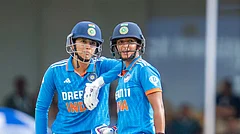
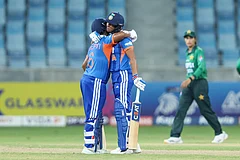

That same approach was followed in Amstelveen. There was no dramatic exchange, no hesitation that became the story of the evening, simply players acknowledging each other before turning their attention to the contest. It also followed an earlier example from junior hockey, when players from the two countries exchanged high-fives at the Sultan of Johor Cup in 2025.
For a rivalry that has often been reduced to everything surrounding it, the handshake offered a different image: fierce competition without necessarily carrying the politics onto the playing surface. The result was still going to matter enormously. But the opening gesture suggested that the two things could coexist, respect before the game and intensity once it began.
What Happened In The India-Pakistan Match?
India made the stronger start and quickly turned their pressure into goals. Harmanpreet Singh opened the scoring from a penalty corner before Abhishek doubled the advantage.
Harmanpreet then struck again from another penalty corner, and Abhishek added his second after a deflection to put India 4-1 ahead. Pakistan responded through Hannan Shahid and Sufyan Khan, but India still carried a 4-2 advantage into half-time.
Hardik Singh restored the three-goal cushion with a penalty stroke in the third quarter, but Pakistan refused to disappear. Hannan scored again early in the fourth to make it 5-3 and briefly raise the tension.
India were then reduced to 10 men after Aditya Lalage received a yellow card in the 55th minute, yet the defence held firm through the closing stages. India eventually sealed a 5-3 win, finished second in Pool D and advanced to the second round, while Pakistan were eliminated.