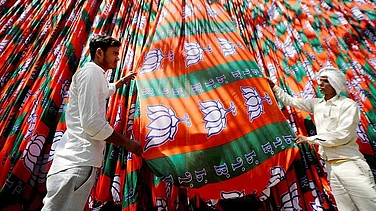
Narendra Modi inherited a foreign-policy framework built around strategic autonomy, ties with Russia, engagement with China and an expanding partnership with the United States.
His major shift has been to pursue these relationships more simultaneously and connect them more closely to defence, technology, energy, trade and connectivity.
The strategy has expanded India’s diplomatic room for manoeuvre, but growing competition between major powers is making that balancing act increasingly difficult.
When Narendra Modi became India’s prime minister in May 2014, India's foreign policy was already built around a principle that had survived successive governments; strategic autonomy. Its foundations lay in Jawaharlal Nehru's effort to keep India outside permanent Cold War alliances while maintaining working relationships with competing powers.
However, that approach evolved as India's security environment changed. The 1962 war with China exposed the limits of the earlier approach to Beijing and ushered in a more security-focused phase of Indian foreign policy. India's strategic relationship with the Soviet Union deepened during this period and was formalised in the 1971 Treaty of Peace, Friendship and Cooperation, even as the treaty itself reaffirmed India's non-alignment.
The China relationship was adjusted again under Rajiv Gandhi, whose 1988 visit to Beijing began a process of political normalisation in which India and China expanded bilateral engagement while leaving the boundary question unresolved.
The end of the Cold War brought another shift. P V Narasimha Rao's Look East policy, formulated in 1992, expanded India's strategic and economic focus towards Southeast Asia. It would eventually provide part of the foundation for Act East and India's later engagement with the Indo-Pacific.


Atal Bihari Vajpayee then accelerated India's opening to the United States. The 1998 nuclear tests initially brought sanctions, but the subsequent India-US dialogue began a political transformation in the relationship. Manmohan Singh carried that process further through the 2005 civil nuclear understanding, culminating in the 2008 Nuclear Suppliers Group waiver that opened international civil nuclear commerce to India.
By 2014, therefore, Modi inherited several strands rather than a single doctrine: strategic autonomy from the Nehru era; the political and defence relationship with Russia; a framework for managing China despite the border dispute; an eastward orientation from the post-Cold War period; and an increasingly institutionalised strategic partnership with the United States.
The important question was therefore not whether to replace that architecture, but how to use it.
What Modi Changed
The clearest shift in the Modi years has been the simultaneity of Indian diplomacy. Earlier governments also maintained relationships with Washington, Moscow, Beijing, Tehran, Israel and the Gulf. Under Modi, however, those relationships have been pursued with greater political visibility and with a stronger effort to connect diplomacy with defence, technology, trade, energy and connectivity.
Strategic autonomy therefore became less about distance from competing power centres and more about preserving the freedom to deal with each on different terms.
The relationship with Washington shows how that approach acquired new institutional depth. Following the launch of the Initiative on Critical and Emerging Technology in January 2023, Modi's June state visit produced initiatives spanning technology, defence production and critical minerals.
Since the launch of iCET, cooperation has expanded across areas including semiconductors, artificial intelligence, quantum technologies, space and advanced telecommunications. The relationship has consequently moved well beyond the political and nuclear foundations laid before 2014.
Yet that convergence has not turned India into a formal US ally. The same government that has deepened defence and technology ties with Washington has maintained independent positions on Russia, Iran and other major foreign-policy questions.
Personal diplomacy has reinforced the approach, but the more consequential change lies in the institutional depth built beneath leader-level relationships.
Washington And Moscow
The India-US relationship has moved from political rapprochement to a broad strategic partnership. The Quad, involving India, the United States, Japan and Australia, was elevated to leaders' level in 2021 and has expanded cooperation across areas including maritime security, critical technologies and infrastructure.
India has consistently framed the Quad as a cooperative partnership rather than a formal military alliance, leaving space for its wider diplomatic engagement.
At the same time, strategic convergence with Washington has not eliminated disagreement. India's approach to Russia's war in Ukraine, its purchases of Russian energy and its continued reliance on Russian-origin defence systems have all complicated the relationship.
Russia remains important for more concrete reasons. It is deeply embedded in India's defence inventory, while energy became an even more significant component of the relationship after the Ukraine war. Russia also remains a permanent member of the UN Security Council and an important partner in multilateral organisations such as BRICS and the Shanghai Cooperation Organisation.
Modi's engagement with Vladimir Putin continued through the Ukraine war. In Bishkek on August 31, 2026, the two leaders met on the margins of the 26th SCO summit and reviewed political, economic, defence, energy, space, mobility and people-to-people ties.
They also discussed the conflicts in West Asia and the Black Sea region and their impact on maritime trade and the safety of Indian seafarers. They met again in New Delhi during the BRICS summit in September, their second meeting of 2026.
The Russia relationship has nevertheless changed underneath the political continuity. Moscow's much closer relationship with Beijing since 2022 creates a complication for India: the country whose partnership New Delhi is trying to preserve is drawing closer to the power with which India has its sharpest strategic rivalry.
The point is not that India has chosen between Moscow and Washington. It is that Modi has tried to make both relationships useful at the same time, even when the strategic expectations of the two sides increasingly diverge.
Beijing: Engagement Without Resolution
China presents the harder contradiction because it combines economic interdependence with direct military competition.
Modi's early years included substantial political engagement with Xi Jinping, including Xi's visit to India in 2014. But the relationship deteriorated after the 2017 Doklam standoff and, more decisively, following the deadly Galwan clash in June 2020.
For several years, diplomacy focused primarily on disengagement and maintaining peace and tranquillity along the Line of Actual Control. India and China reached an agreement on patrolling arrangements in Depsang and Demchok in October 2024, which the Indian government said led to disengagement from the 2020 friction points.
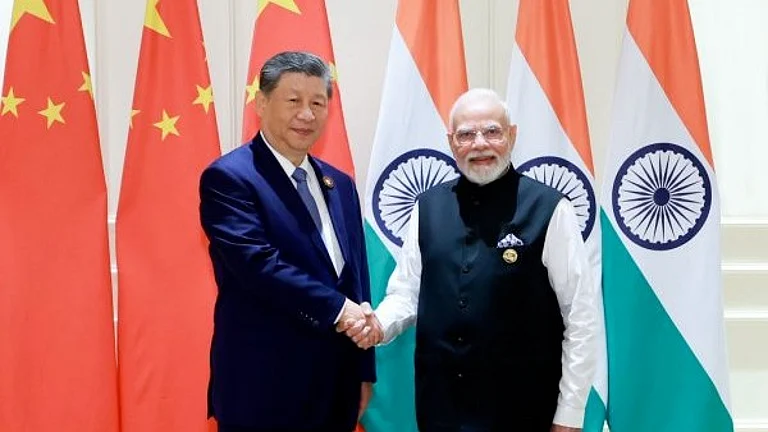
That created the basis for renewed political engagement. Modi and Xi met in Kazan in October 2024, followed by another meeting in Tianjin in August 2025. They met again in New Delhi on September 12, 2026, on the margins of the BRICS summit.
The latest meeting is significant partly because of what it does not resolve. Modi stressed that peace and tranquillity in the border areas remained an essential basis for the development of bilateral ties and underlined the need for both sides to observe existing agreements and understandings.
The two sides also discussed the structural trade imbalance, supply-chain issues, market access, business links and people-to-people ties. They reaffirmed the need for a long-term approach to the relationship and a fair, reasonable and mutually acceptable resolution of the boundary question.
Under Modi, the relationship has moved from early political outreach to military confrontation and, more recently, controlled re-engagement. That is not a return to the pre-2020 relationship. It is an attempt to keep competition from consuming the entire bilateral relationship.
The strategy resembles the logic behind Rajiv Gandhi's China policy: engagement while the central dispute remains unresolved. The difference is that the military and economic stakes are now much higher.
Israel, Iran And The Gulf
West Asia offers perhaps the clearest demonstration of Modi's preference for simultaneous engagement.
India's relationship with Israel has moved from cautious cooperation to an openly strategic partnership. Modi's 2017 visit was the first by an Indian prime minister to Israel, after diplomatic relations were established in 1992. Cooperation has since expanded across defence, agriculture, water, technology and security.
In February 2026, Modi returned to Israel and held talks with Prime Minister Benjamin Netanyahu. The two governments elevated their relationship to a “Special Strategic Partnership for Peace, Innovation and Prosperity”, with defence, security, space, energy, critical technologies and cyber cooperation among the areas identified for further expansion.
Yet closer ties with Israel have not meant abandoning Iran.
India signed a 10-year contract for the operation of the Shahid Beheshti terminal at Chabahar Port in May 2024, reinforcing a connectivity project designed to strengthen India's links with Afghanistan and Central Asia.
The relationship has also remained politically active in 2026. On June 30, Modi spoke with Iranian President Masoud Pezeshkian about developments in West Asia. He reiterated India's position that issues should be resolved through dialogue and diplomacy and stressed the importance of freedom of navigation and commerce.
The Gulf adds a third layer. Saudi Arabia and the UAE have become central to India's interests in energy, trade, investment and the welfare of its large expatriate population. India and the UAE signed their Comprehensive Economic Partnership Agreement in 2022, further expanding the economic architecture of the relationship.
These relationships do not always point in the same direction.
India wants defence and technology cooperation with Israel. It wants connectivity and diplomatic space with Iran. It wants energy, trade, investment and diaspora stability through its Gulf relationships. At the same time, New Delhi continues to support a two-state solution to the Israeli-Palestinian conflict.
The continuing violence in Gaza and wider regional tensions have made this balancing act harder. Maritime insecurity has added a direct economic dimension, as disruptions around the Red Sea and Strait of Hormuz can affect India's energy supplies, trade routes and the safety of Indian seafarers. India's 2026 engagement with Iran has explicitly linked regional diplomacy to freedom of navigation and commerce.
The strategy works through compartmentalisation. Its value lies in allowing India to preserve several relationships at once. Its vulnerability is that prolonged conflict can make those compartments harder to keep separate.
The New Architecture
Alongside these bilateral relationships, the Modi years have seen India use a wider set of multilateral platforms to preserve room for manoeuvre.
The Quad gives India a framework for cooperation with the United States, Japan and Australia in the Indo-Pacific without a formal alliance. BRICS provides a different platform, bringing India into the same institution as China, Russia, Iran and other major emerging powers. The SCO creates another space in which India engages Russia, China, Pakistan and Central Asian countries.
India's 2026 BRICS chairship has made this architecture particularly visible. The New Delhi summit on September 12–13 produced a declaration structured around political and security, economic and financial, and cultural and people-to-people cooperation. It also called for a more representative and reformed multilateral system and greater representation for developing countries, including thorough reform of the UN Security Council.
Modi used the summit to argue that the Global South should move from being a “rule-taker” to a “rule-shaper”. That builds on a diplomatic frame India developed more visibly during its G20 presidency, when the African Union was admitted as a permanent member of the G20.
Taken together, these forums provide something bilateral relationships cannot: multiple diplomatic rooms in which India can work with different combinations of countries without making those relationships identical to one another.

Where The Strategy Strains
The strategy works best when India can compartmentalise its relationships. It becomes harder when one relationship directly affects another.
Russia is the clearest example. India can maintain defence and energy ties with Moscow while deepening cooperation with Washington, but Russia's much closer relationship with China since 2022 changes the strategic context for New Delhi.
China creates another pressure point. India is deepening cooperation with the Quad and other Indo-Pacific partners while trying to rebuild a functioning relationship with Beijing. The September 2026 Modi-Xi meeting shows that political engagement has resumed, but the border remains central to the relationship.
West Asia presents a similar problem. India can maintain relations with Israel, Iran and the Gulf while conflicts remain manageable. As regional tensions become interconnected and begin affecting maritime routes and energy security, the freedom to treat each relationship separately narrows.
The United States presents a fourth constraint. The strategic partnership is broader than it was before Modi, particularly in technology and defence, but India continues to make decisions on Russia, Iran, trade and other issues according to its own interests.
The common thread is that India's room for manoeuvre depends partly on its ability to prevent one relationship from dictating another. The more intensely major powers compete, the harder that becomes.

Continuity, Acceleration, Change
Twelve years into Modi's tenure, the foreign-policy record reveals substantial continuity alongside meaningful changes.
Strategic autonomy predates him. The Russia relationship predates him. Engagement with China despite the border dispute predates him. The strategic opening to Washington was established before 2014. India's turn towards Southeast Asia also has roots in earlier governments.
The record therefore does not fit neatly into either a story of rupture or one of simple continuity.
Modi inherited a diversified foreign policy. He intensified it, gave it greater political ownership and built new economic and technological structures around it.
The larger shift was from strategic autonomy as a principle of preserving room for manoeuvre to strategic autonomy as an active method of using that room. Existing relationships were pursued more simultaneously and tied more closely to defence, technology, energy, trade and connectivity.
Its next test is whether the same strategy can preserve that flexibility as the international system becomes more competitive and major powers increasingly seek clearer alignment.
The question for the next phase is not whether India can engage everyone. It is whether it can continue doing so when the interests of those relationships begin pulling in opposite directions.