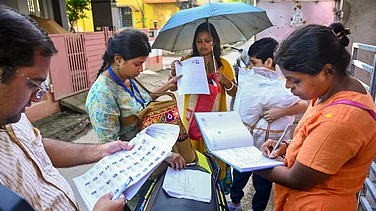
Iranian President Masoud Pezeshkian is set to visit New Delhi for the BRICS Summit on September 12–13
The summit is expected to bring Pezeshkian together with Russian President Vladimir Putin and Chinese President Xi Jinping
West Asia tensions and divisions within BRICS are likely to dominate discussions as India seeks to keep the focus on cooperation and global governance reform
Iranian President Masoud Pezeshkian is set to visit New Delhi for the BRICS Summit on September 12–13, Iranian sources confirmed to Outlook India on Friday, marking his first visit to India since assuming office and setting the stage for a high-stakes summit overshadowed by geopolitical crises and divisions within the expanded BRICS bloc.
The summit is also expected to witness the participation of Russian President Vladimir Putin and Chinese President Xi Jinping.
Their expected presence comes as India seeks to steer the grouping through growing disagreements over the ongoing conflict in West Asia while preserving its focus on economic cooperation and reform of global governance institutions.
Pezeshkian's visit follows Iran's renewed push for BRICS to adopt a stronger collective position on what Tehran describes as aggression against its territory.

Last month, addressing the BRICS Ministers of Interior Meeting in New Delhi, Iranian Interior Minister Dr Eskandar Momeni urged member states to defend national sovereignty and oppose the use of force.
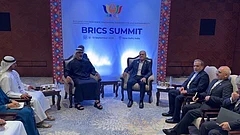


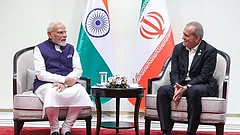
"The aggression against the territory of the Islamic Republic of Iran, the violation of the country's integrity, the widespread destruction of infrastructure, power plants, residential areas, schools, hospitals and other civilian sites, the killing of women, children and the elderly are a clear manifestation of disregard for all international documents, including the United Nations Charter", Momeni said.
His remarks came in the backdrop of the military confrontation in West Asia, including US strikes on Iranian targets and Tehran's retaliatory attacks on American military facilities across the region.
The conflict has intensified concerns over regional stability and maritime security, particularly around the Strait of Hormuz, a critical global chokepoint through which a substantial share of the world's crude oil and liquefied natural gas exports passes.

What to expect?
The New Delhi summit will unfold at a delicate moment for BRICS itself. The grouping, expanded to include countries such as Iran, Egypt, Ethiopia and the UAE, has struggled to forge consensus on major geopolitical issues.
The divisions became evident during the 'BRICS Foreign Ministers' Meeting in May, which concluded without a joint declaration. Instead, India, as chair, issued only a Chair's Statement after member states failed to reconcile differences.
According to experts, the immediate fault line was the West Asia conflict, with Iran pressing for explicit condemnation of the United States, Israel and the UAE. The discussions reportedly witnessed sharp exchanges between representatives of Tehran and Abu Dhabi, exposing the ideological and strategic differences within the bloc.
For India, the upcoming summit represents a significant diplomatic test. As host, New Delhi will attempt to bridge competing positions among members while preventing geopolitical disputes from overshadowing BRICS' broader agenda of strengthening multilateralism and advocating reforms in global financial and governance institutions.
When BRICS was established in the late 2000s, culminating in its first leaders' summit in Russia in 2009, its primary objective was to reshape global economic governance and enhance cooperation among emerging economies.
Nearly two decades later, the grouping finds itself increasingly consumed by strategic rivalries and regional conflicts.
With Pezeshkian, Putin and Xi expected in New Delhi, the September summit is likely to be closely watched to see whether India can secure a rare consensus on a 'Joint Statement' amid an increasingly fractured global order.