Jharkhand, India’s most mineral-rich state, has become the loudest opponent of the Centre’s newly passed Mines and Minerals (Development and Regulation) Amendment Act, cleared by Parliament during the monsoon session.
What the state is protesting is a single new clause. Section 9D bars state governments from imposing any tax, cess or levy on mineral rights or on “mineral-bearing land”, whether measured by quantity, value or royalty, except on conditions the Centre prescribes. Another provision brings mineral-bearing land itself under Union regulatory control for the first time.
The Act was introduced in the Lok Sabha on August 10, passed by both Houses by August 13, notified on August 17 and brought into force on August 22. It was not referred to a standing committee.
The effect is retrospective. Any state levy assessed but not collected before the Act commenced is now deemed invalid. Anything already banked stays with the state and will not be refunded.

The Number Mismatch
Though Jharkhand Chief Minister Hemant Soren has vowed to launch a battle against the “black bill” from “booth to Parliament”, claiming that it violates India’s federal structure and cripples the state’s economic autonomy, political observers argue that the financial grievance and the political calculation may both be present. The state’s exposure is real and so is the value of a fight with Delhi over tribal land in a year when the state government has been battling anti-incumbency in the form of youth protests.

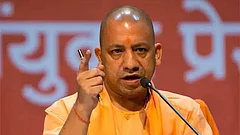


Jharkhand Mukti Morcha (JMM) national general secretary and party spokesperson Vinod Pandey claimed the Act would create massive revenue losses. “Mining revenues account for 84.9 per cent of Jharkhand’s own non-tax revenue. The new restrictions will cost the state treasury Rs 11,000-15,000 crore annually. This fiscal deficit will severely impact critical state-sponsored social security and welfare programmes,” argues Pandey.
The 84.9 per cent figure was quoted in Soren’s August 13 letter to the prime minister. However, Jharkhand’s non-tax revenue accounts for only Rs 20,700 crore out of a total revenue of Rs 1,36,210 crore budgeted for 2026-27. In other words, mineral revenue as a share of total revenue receipts is only about 13 per cent; but the figure is still substantial.
For perspective, Jharkhand’s fiscal deficit for the current financial year is budgeted at Rs 13,596 crore. The state’s own estimate of the loss due to the new law is almost equal to the entire deficit. State finance minister Radhakrishna Kishore has since put the deficit at around Rs 14,000 crore and announced that Jharkhand will move the Supreme Court.
Economists agree on a substantial revenue loss but differ sharply on the amount.
“The state will likely lose between Rs 6,500 crore and Rs 8,500 crore in anticipated annual revenue because of the new central law. The government’s claim of Rs 11,000-Rs 14,656 crore appears to be an overestimate. The government’s higher numbers assume mining will grow very fast, but past data indicates otherwise,” says Amarendu Nandy, associate professor in the economics and public policy area at IIM Ranchi.
Nandy says mining tax collections jumped from Rs 1,379 crore in 2024-25 to Rs 7,488 crore in 2025-26 following rate hikes from Rs 100 to Rs 450-600 per tonne, with the 2026-27 budget targeting Rs 13,215-13,800 crore.
That escalation is itself part of the Centre’s case. Jharkhand’s Mineral-Bearing Land Cess began in August 2024 at Rs 100 per tonne on coal and iron ore. By March 2025 the rates were Rs 250 and Rs 400. By December 2025 they were Rs 450 and Rs 600—a six-fold increase in 16 months. The Union mines ministry’s stated objection is not to state taxation as such but to levies introduced and repriced after projects are sanctioned.
Nandy claims that raising rates too high leads companies to cut production, reducing total collections. “BCCL’s [Bharat Coking Coal Limited] cess rate increased from Rs 100 to Rs 450 per tonne within 16 months, and coal output fell from 40.50 million tonnes to 35.52 million tonnes, a 12.3 per cent decline. This indicates there is a trade-off,” he argues. BCCL’s output has also been affected.
Nandy further noted that despite 37 commercial coal blocks being allotted, Jharkhand produced only 0.35 million tonnes in 2025-26, arguing the state “cannot rapidly scale mining to match budget targets”.
Taking 2025-26’s actual Rs 7,488 crore as the baseline, adding 5 per cent organic growth and subtracting 15-20 per cent for production elasticity, Nandy puts realistic sustainable revenue at Rs 6,500-8,500 crore a year, around 5-6 per cent of Jharkhand’s total budget revenue.
Mining Claims
Pandey alleges that the Act seeks to extinguish the state’s pending mining-related claims against the Centre, totalling nearly Rs 1.36 lakh crore. The Rs 1.36 lakh crore is a long-standing demand against Coal India subsidiaries for washed coal royalty and “common cause” dues—a royalty dispute, and strictly not a state cess and may not be covered by the new provisions. However, if it does, then companies such as Steel Authority of India, Coal India group and National Mineral Development Corporation may get relief from the estimated Rs 1.5-2 lakh crore of dues they owe to the states.
“The new amendment explicitly preserves royalty as a state revenue head. So, as I understand, royalty arrears are not automatically extinguished. Land compensation is typically a contractual/statutory compensation for land, not a tax/cess on mineral rights. Unless a court treats it as an impermissible levy on mineral‑bearing land, it should fall outside the extinguishment clause,” says Nandy. He further claims that the common cause royalty dispute is the grey zone.
Caught in Politics
BJP state president and Rajya Sabha member Aditya Sahu accused the JMM and Congress of spreading misinformation over the MMDR Act. He said the amendment is not intended to take away the rights or mineral revenue of states, but to promote transparency, investment, efficiency and development. “States will continue to receive their share from royalty, auction premiums, National Mineral Exploration Trust and Goods and Services Tax,” says Sahu.
The mines ministry has also countered the arguments, claiming that states already retain roughly 90 per cent of total mining payments, with major mining states collecting over Rs 5 lakh crore between 2016 and 2026 against about Rs 82,000 crore for the Centre. They have also collected Rs 96,000 crore in auction premiums since 2021, according to the ministry.
Hemant Soren has vowed to launch a battle against the “Black Bill” from “booth to Parliament”, claiming that it violates India’s federal structure.
Sahu also rejects Soren’s statement that the Act would adversely affect tribals, Dalits and backward communities and said states would retain their existing powers over minor minerals such as sand, stone chips and ordinary earth.
BJP spokesperson Pratul Sahdeo said the Supreme Court’s 2024 judgement permitted states to levy mineral cess only until Parliament enacted an overriding law, and that with the amendment now passed under Entry 54 of the Union List, the central legislation prevails. Entry 54 of the Union List empowers Parliament to regulate mines and mineral development to the extent that such control is in the public interest, allowing it to override state legislative powers when coordinated national management of mineral resources is required for industrial growth, defense or economic planning. However, the nine-judge bench had held that Entry 54 does not give it the power to restrict states from taxing land.
Former Jharkhand advocate general (AG) Rajiv Ranjan says that after amendment made in MMDR Act, state government’s power to tax on mineral rights under Entry 50 gets curtailed. However, under Entry 49, the state government can levy taxes on lands and buildings including mineral bearing lands as held by the Supreme Court in the Mineral Area Development Authority (MADA) case, and there is no limitation on state. “In the MADA case, the Supreme Court has stated that under Entry 49 land means even ‘Mineral Bearing land’ and the state can impose tax on it. It cannot be eclipsed by limitation imposed by the Parliament for land under Entry 54. Entry 49 is the independent right of the state,” says Ranjan, who is currently a senior advocate practicing in the Supreme Court after resigning as AG in June.
Inefficient Governance
BJP leader of opposition Babulal Marandi accuses the state government of inefficient governance. “Jharkhand has successfully auctioned only three mineral blocks during its tenure. We would urge the state to fix internal leaks and illegal mining rather than protesting central legislation,” says Marandi.
Faisal Anurag, a writer and political commentator based in Ranchi, feels the planned agitation and economic blockade threats are part of a political ploy to outwit opposition parties that had hoped to cash in on student protests.
“We had seen in 2024 how Soren raked up the issue of Rs 1.36 lakh crore allegedly outstanding as mining royalty from the Centre, and this struck a chord with the displaced and mining-affected people, mostly tribals and people from poor backgrounds,” says Anurag. He claims the blockade is an attempt to organise tribals and moolvasi behind the ruling dispensation.
Senior journalist Ashok Verma says the protest is an attempt at positioning the JMM as defenders of federalism against a centralist BJP government. CPM state president Prakash Viplav endorses the JMM stance and threatened economic blockades. Meanwhile, Congress governments in Karnataka, Kerala and Telangana are preparing a joint Supreme Court petition, with Jharkhand expected to join. Soren has separately proposed a GST Council-style body to bring mineral states into the room before the Centre frames the actual rules under Section 9D. Jharkhand hosts around 132 coal blocks. Whether that leverage is used, and how quickly the petition is filed, will decide whether this stays a protest or becomes a constitutional test.

MORE FROM THIS ISSUE



Animesh Bisoee is a Jharkhand-based journalist