




Assam CM Himanta Biswa Sarma defended a 1-km Eco-Sensitive Zone around Kaziranga.
He said a 10-km buffer would affect towns including Bokakhat and Kaliabor.
Sarma said the final ESZ distance will apply once the Centre issues a notification.
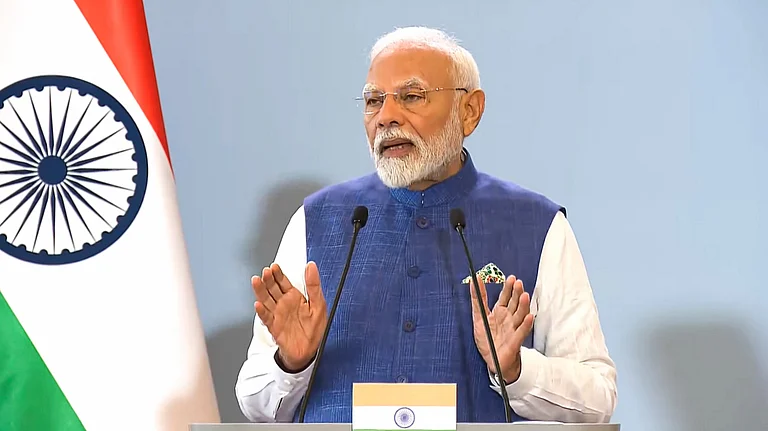
Assam Chief Minister Himanta Biswa Sarma on Wednesday defended the state government’s move to notify a one-kilometre Eco-Sensitive Zone around Kaziranga National Park and Tiger Reserve, saying a uniform 10-km buffer would affect several towns and thousands of residents living around the protected area.
“If we have to maintain that 10 km limit around KNPTR then towns like Kaliabar, Doboka, Jakhalabandha, Bokakhat would not remain,” Sarma said.
He added: “The SC guidelines specifies that the ESZ should be 1 km, but it can extend to 3 km depending on circumstances. There’s no wildlife sanctuary in the world which has an ESZ of 10 km surrounding it.”
Sarma said the existing 10-km provision would continue until a formal Eco-Sensitive Zone notification is issued on the basis of proposals submitted by the state government.
“Once the zone is notified, the distance specified in that notification will come into effect,” he told journalists in Guwahati.

Sarma Says Proposal Is Not A Reduction
The Chief Minister rejected criticism that the Assam government was seeking to reduce an existing Eco-Sensitive Zone around Kaziranga.


“The Supreme Court said the ESZ can be 1 km [from the periphery of a protected area]. The 10-km provision will continue to apply until the ESZ is notified. This is not about reducing the existing zone,” Sarma said.
He argued that retaining a 10-km zone around Kaziranga, a UNESCO World Heritage Site and a major habitat of the one-horned rhinoceros, would affect people living in Bokakhat, Kaliabor and other surrounding areas.
Sarma also said some of the criticism of the proposal stemmed from a misunderstanding of the rules and urged critics to examine the relevant Supreme Court order before reaching conclusions.

How The ESZ Notification Process Works
Explaining the procedure, Sarma said the process begins with the State Forest Department preparing a proposal.
“The State government will then send it to the Centre, which will then forward it to the National Board for Wildlife,” he said.
He also referred to the recent notification of an Eco-Sensitive Zone around Deepor Beel, a Ramsar Site and bird sanctuary on the outskirts of Guwahati.
“The ESZ around Deepor Beel was notified at 1 km. This implies no rule says the buffer zone has to be 10 km everywhere in the world,” Sarma said.
Where The 10-Km Guideline Came From
The broader 10-km guideline traces back to a resolution adopted at a meeting of the National Board for Wildlife in 2002 as part of a wildlife conservation strategy.
The Union Ministry of Environment, Forest and Climate Change later issued formal guidelines in 2011 asking states to submit site-specific proposals for Eco-Sensitive Zones, with a general guideline extending up to 10 km.
The issue later reached the Supreme Court. In June 2022, the court directed that every national park and wildlife sanctuary should have a minimum Eco-Sensitive Zone of one kilometre from its demarcated boundary and also prohibited mining within such zones.















