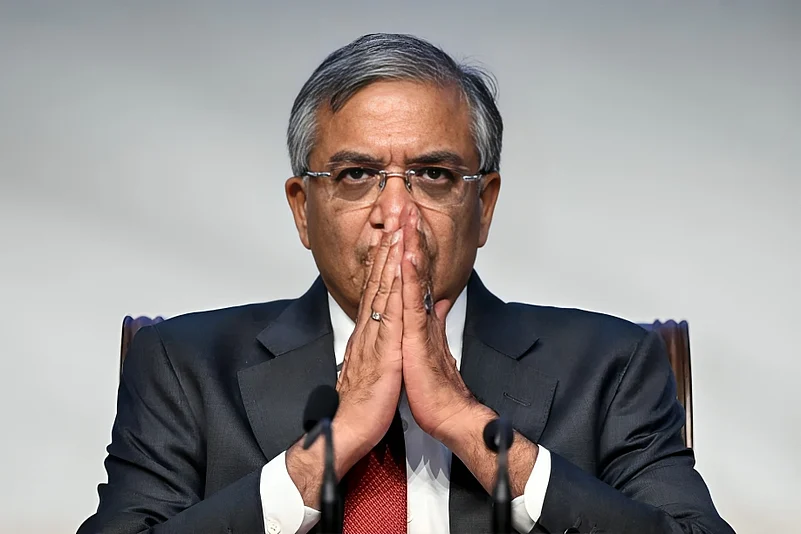
Gyanesh Kumar arrest demands have brought Section 16 of the 2023 Election Commissioners Act under scrutiny.
Section 16 protects serving and former CECs and ECs from specified civil and criminal proceedings over official conduct.
The law does not expressly mention arrest, leaving the provision’s application to investigative action open to legal interpretation.
Chief Election Commissioner Gyanesh Kumar is facing calls for arrest, but Section 16 of India's 2023 election law raises a separate legal question: what protection does a CEC have from civil and criminal proceedings over official acts?
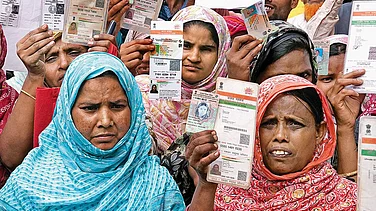
The provision has come under renewed scrutiny amid a fresh controversy within the Election Commission after The Indian Express reported that Election Commissioners Sukhbir Singh Sandhu and Vivek Joshi had formally objected at least 14 times over 10 months to decisions and orders concerning the functioning of the poll panel and the Special Intensive Revision (SIR) of electoral rolls. The objections covered voter registration, deletion and restoration of names, changes to Form 6 and the management and security of electoral-roll databases. The Election Commission has said that differing views and observations are part of internal deliberations and maintained that its final decisions, including those relating to SIR, were unanimous.
Opposition leaders have since demanded Kumar's removal and, in some cases, his arrest. But does Section 16 actually prevent a CEC from being arrested? The answer depends on what the provision actually covers.
What does Section 16 say?
Section 16 of the Chief Election Commissioner and Other Election Commissioners (Appointment, Conditions of Service and Term of Office) Act, 2023 is titled “Protection of Chief Election Commissioner and other Election Commissioners”.
It begins with the words “notwithstanding anything contained in any other law” and says that “no Court shall entertain or continue any civil or criminal proceedings” against anyone who is or was a CEC or Election Commissioner for an act, thing or word committed, done or spoken while, or in the course of, acting or purporting to act in the discharge of official duty or function.


Two parts of the provision are particularly relevant.
First, it covers both civil and criminal proceedings.
Second, it applies to someone who “is or was” a CEC or Election Commissioner. The protection is therefore not expressly limited to the period in which the person holds office.
But Section 16 does not say that every act of a serving or former Election Commissioner is protected. Its language connects the protection to an act, thing or word done or spoken while, or in the course of, acting or purporting to act in the discharge of official duty or function.
Does Section 16 mean Gyanesh Kumar cannot be arrested?
Section 16 does not use the words “arrest”, “police investigation” or “investigation”. It is framed in terms of courts entertaining or continuing civil or criminal proceedings.
That makes it inaccurate to describe the provision as an automatic arrest ban.
Section 16 is framed in terms of proceedings before a court; it does not expressly set out a separate prohibition on arrest or investigation. How the provision interacts with investigative or pre-trial action in a particular case would depend on the applicable law and judicial interpretation.
What the section expressly establishes is a bar on a court entertaining or continuing proceedings that fall within its terms.
The central legal question would therefore be whether the alleged conduct concerns an act, thing or word done or spoken while the commissioner was acting, or purporting to act, in the discharge of official duty or function.
How did Section 16 enter the law?
The protection was not included in the Bill when it was originally introduced.
The Chief Election Commissioner and Other Election Commissioners Bill, 2023, was introduced in the Rajya Sabha on August 10, 2023. During consideration of the Bill on December 12, the government moved an amendment to insert a new Clause 15A, titled “Protection of Chief Election Commissioner and other Election Commissioners”.
The official Rajya Sabha record identifies Amendment No. 39 and reproduces the proposed clause. It was moved by then Law Minister Arjun Ram Meghwal and adopted by the Rajya Sabha. The wording of the new clause is substantially the same as the provision that became Section 16 of the enacted law.
The Bill was subsequently passed by the Lok Sabha on December 21 and received presidential assent on December 28, 2023. Section 16 came into force with the Act on 2 January 2024.
The protection was therefore added through a formal government amendment during parliamentary consideration; it was not part of the Bill when it was first introduced.
Why did the government add the protection?
In the Rajya Sabha, Meghwal said Clause 15A was intended to allow the CEC and Election Commissioners to discharge their functions “unhindered and independently”. The clause was subsequently enacted as Section 16.
The legal challenge has questioned the breadth of that protection, particularly because the wording applies to a person who “is or was” a CEC or EC and does not prescribe a separate period after which the protection expires.
That criticism is part of the legal challenge to the provision. It should not, however, be confused with a judicial finding that the provision is unconstitutional.
Why is the Supreme Court examining Section 16?
In January 2026, the Supreme Court agreed to examine a challenge to Section 16 filed by Lok Prahari, an NGO. A bench comprising Chief Justice Surya Kant and Justice Joymalya Bagchi issued notice to the Centre and the Election Commission but declined to stay the provision.
The petition argues that Section 16 creates excessively broad and continuing protection from civil and criminal proceedings, including after a commissioner leaves office. This is the petitioner's position; the Supreme Court has not made such a finding.
The court has not yet issued a final ruling on the constitutional validity or precise scope of Section 16. The provision therefore remains in force.
Why are there demands for Gyanesh Kumar's arrest?
The immediate controversy centres on reported differences within the Election Commission over SIR and electoral-roll management.
According to The Indian Express, Sandhu and Joshi formally raised objections at least 14 times over 10 months to decisions and orders they said were taken without their knowledge. One dispute concerned changes to Form 6, the statutory form used by people applying to register as voters. The changes added questions linked to the last SIR, including whether the applicant or their parents or grandparents appeared on the relevant electoral roll.
The Indian Express reported that Joshi objected in May to changing Form 6 through the SIR framework, arguing that the form was prescribed by the Registration of Electors Rules, 1960, and that changing it in the proposed manner would require an amendment to the rules. Sandhu later concurred with that objection. According to The Indian Express, Sandhu later described the changes on the portal as “unauthorised” and “illegal” and called for their removal.
The ECI said written objections, observations and differing views were part of its normal deliberative process and maintained that the Commission's decisions over the past year, including those relating to SIR, were unanimous.
Opposition leaders have nevertheless demanded action against Kumar. Uddhav Thackeray called for his removal and arrest, while Mamata Banerjee demanded his arrest and criminal prosecution and sought fresh elections in West Bengal using the pre-SIR electoral roll.
Those are political demands and allegations. They are not judicial findings that Kumar has committed a criminal offence.
So, what does Section 16 mean for Gyanesh Kumar?
Section 16 does not provide a simple legal answer of “yes” or “no” to the question of whether Gyanesh Kumar can be arrested.
What the law expressly provides is narrower: a court cannot entertain or continue civil or criminal proceedings against a person who is or was a CEC or Election Commissioner for conduct covered by the section and connected to the discharge, or purported discharge, of official duty or function.
That is different from saying the statute expressly prohibits arrest.
Whether particular allegations against Kumar would fall within Section 16 would depend on the nature of the alleged conduct and how a court interprets the provision. The current dispute over the Election Commission's internal decision-making is therefore separate from the legal question of what Section 16 protects.
For now, Section 16 remains in force. It provides statutory protection against specified civil and criminal proceedings arising from official conduct, but its text does not expressly describe that protection as an immunity from arrest. Its constitutional validity and scope remain under judicial scrutiny.