Digvijaya Singh’s 930-km yatra from Ujjain to Ayodhya calls for temple donation transparency and an investigation into alleged irregularities.
The Congress leader is challenging the RSS and VHP’s interpretation of Sanatan Dharma and Hindutva politics.
The march tests whether Congress can challenge the BJP’s claim to represent Hindu interests while rebuilding its political presence.
Digvijaya Singh’s 930-km march from Ujjain to Ayodhya has put Congress’s approach to Hindu religious identity in focus. The former Madhya Pradesh chief minister began his ‘Satya Sanatan Swabhiman Yatra’ on October 20, calling for transparency in temple donations, an investigation into alleged donation theft, and public awareness about what he calls “Vote Chori”. The march raises a political question for Congress: can it challenge the BJP’s claims to represent Hindu interests while offering a distinct argument of its own?
The journey, expected to take around 70 days, combines religious symbolism with demands for accountability. Singh has accused the Rashtriya Swayamsevak Sangh (RSS) and the Vishwa Hindu Parishad (VHP) of distorting Sanatan Dharma through Hindutva politics. His challenge is to make that distinction meaningful beyond the march. The BJP’s response shows how quickly the argument can turn into a dispute over Congress’s own relationship with Hindu religious traditions.
A Religious March With A Political Question
The march began in Ujjain on Vijayadashami amid Vedic chants, bhajans and the presence of sadhus and saints. Singh visited the Chintaman Ganesh, Mahakaleshwar and Harsiddhi temples before participating in religious rituals near Narsingh Ghat. A chariot carrying idols of Ram, Lakshman, Sita and Hanuman is accompanying the marchers.

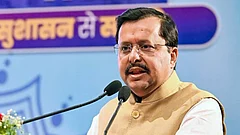
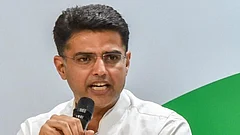
“Throughout the Yatra, we’ll discuss with the people, the main issues – transparency in temple offerings and management of religious places, impartial probe into cases of donation theft and public awareness on Vote Chori (vote theft),” Singh said in Ujjain.
The combination is significant. Singh is not distancing himself from religious practice; he is arguing that religious faith should not be treated as the preserve of political organisations. By taking that message to Ayodhya, he is placing himself in a debate over who speaks for Hindu traditions and who is accountable for institutions that receive devotees’ offerings.
The march’s religious setting alone cannot establish that Congress has found a way to connect with Hindu voters. That depends on whether Singh’s demands resonate beyond his supporters and whether the party can sustain the argument after the journey ends.
Can Congress Challenge The BJP On Its Own Terrain?
The route offers a clue to the political calculations behind the march. The Indian Express reported that Singh will pass through areas where Congress has struggled to maintain an independent organisational presence, including parts of Madhya Pradesh linked to Union minister Jyotiraditya Scindia, before entering Uttar Pradesh.
The journey also takes Singh to Orchha, home to the Ram Raja temple, before continuing through Bundelkhand towards Ayodhya. This gives the march two possible functions: taking Singh’s religious message to communities along the route and bringing Congress workers into areas where the party has struggled electorally.
The political stakes extend beyond religion. Congress won 66 of Madhya Pradesh’s 230 Assembly seats in 2023, against the BJP’s 163, according to the Indian Express report. Singh’s march could help revive local party networks, but visibility on the road is not the same as rebuilding an organisation capable of competing in elections.
Singh’s criticism of the RSS and VHP has drawn a sharp response from the BJP. In its report on the controversy, NDTV reported how Madhya Pradesh minister Vishwas Sarang accuses Singh of insulting Hindus and promoting appeasement politics. BJP MLA Ram Kadam also criticised Singh’s remarks. The exchange illustrates the difficulty for Congress: Singh is attempting to distinguish Hindu religious faith from Hindutva politics, while his opponents are framing that distinction as an attack on Hindu interests.
From Temple Donations To ‘Vote Chori’: The Accountability Pitch
Singh’s demand for an investigation into alleged irregularities in Ram temple donations gives the march a concrete issue beyond religious symbolism. His allegations concerning the handling of temple donations need to be distinguished from established findings: a demand for an inquiry does not establish that funds were stolen or misused.
The march could give Congress a more assertive position in the debate over Hindutva. By raising questions about temple donations, Singh is challenging the management and accountability of religious institutions without rejecting the faith associated with them. Whether that argument can reach voters who support the BJP for reasons beyond religious identity remains uncertain.
Singh has also linked the journey to “Vote Chori”, bringing electoral accountability into a campaign centred on religious faith. The two issues, however, require separate evidence: allegations concerning temple donations must be investigated independently of claims about electoral malpractice. Linking them gives the yatra a broader political message, but does not establish a connection between the alleged irregularities.
The march can bring these demands before people along its route. Whether they become a credible political platform will depend on the evidence Singh presents and what Congress does with the issues after the procession ends.
For now, the yatra puts Congress in a position it has often struggled to occupy: speaking about Hindu religious traditions while directly challenging the BJP’s claim to represent them. The 930-km journey may help Singh reach voters and reactivate party workers, but it cannot by itself settle the larger contest over religious identity and political trust.