The UN’s Fund for Responding to Loss and Damage has provisionally set aside $20 million for Nepal following the devastating August floods
The disaster killed around 1,500 people, left more than 5,000 missing and caused an estimated $2.7 billion in infrastructure damage
Nepal estimates recovery and reconstruction needs at $4.7 billion and must submit a funding request before it can access the provisionally reserved amount
The United Nations’ Fund for Responding to Loss and Damage (FRLD) has provisionally set aside $20 million for Nepal following devastating floods in August, as the Himalayan country faces billions of dollars in infrastructure damage and reconstruction costs.
The fund’s board took the decision on Thursday, at its first-ever extraordinary meeting to consider Nepal’s urgent request for assistance, Reuters reported on Friday. The board provisionally reserved $21.6 million in total, including $20 million for Nepal and $1.6 million for oversight costs.
The allocation is intended to help address damage caused by the floods in the Bhote Koshi–Trishuli region. The board also agreed to pilot an approach allowing Nepal to submit a funding request outside the fund’s standard application window, according to information released by the fund.

Scale Of The Damage
The floods on August 26 followed an ice-and-rock avalanche that triggered extensive downstream flooding along the Bhote Koshi and Trishuli river systems.


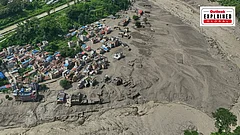
The disaster killed about 1,500 people and left more than 5,000 missing, according to official figures cited by Reuters. Around 60,000 people from 15,000 families were affected.
Initial estimates put infrastructure losses at approximately $2.7 billion, including damage to roads, bridges, schools and 13 hydropower plants. The government’s early estimates indicate that overall recovery and reconstruction costs could exceed $4.7 billion.
The $20 million allocation amounts to less than 1% of the estimated reconstruction bill.
The United Nations and humanitarian partners launched a separate $49.6 million emergency appeal on September 4 to provide life-saving assistance to more than 84,000 people affected by the floods and landslides. The four-month response plan was intended to address immediate humanitarian needs, including shelter, food, water and sanitation.

Climate Finance
Nepal submitted its request for assistance to the FRLD in August, less than a week after the disaster. The fund supports developing countries dealing with the economic and non-economic losses associated with climate change.
At the 81st session of the United Nations General Assembly in September, Prime Minister Balendra Shah described the disaster as a warning of the consequences of climate change and called for greater support for vulnerable countries.
Nepal has argued that it contributes very little to global greenhouse gas emissions but faces severe climate-related risks. The government has also called for climate finance to be made more accessible and predictable, rather than relying on fragmented assistance after disasters.
The board’s decision allows Nepal to pursue an exceptional funding route under the fund’s Barbados Implementation Modalities. The country will still need to submit a funding request for consideration through the agreed process before the provisionally reserved amount can be accessed.
The decision marks a step towards the fund’s capacity to respond to urgent disaster-related needs, although the amount remains a small fraction of Nepal’s estimated recovery costs.