Nepal PM Balendra Shah proposed a Himalayan Climate Resilience Mechanism involving Nepal, India and China at the UN General Assembly.
The proposed mechanism would focus on sharing satellite data and expertise, monitoring dangerous glacial lakes and strengthening joint early-warning systems.
Shah called for greater cross-border cooperation on climate-related disasters, citing recent flash floods in Nepal as a warning about the region's growing risks.
Nepal’s Prime Minister Balendra Shah on Friday proposed a Himalayan climate resilience mechanism involving Nepal, India and China to improve cooperation on climate-related risks in the region, including monitoring dangerous glacial lakes and strengthening early warning systems.
Shah presented the proposal while addressing the 81st United Nations General Assembly in New York.
Why Is Himalayan Climate Cooperation Important?
Nepal contributes less than 0.1 per cent of global greenhouse-gas emissions. “We did not create this crisis. Yet we are paying a colossal price for it.” He emphasized: “Our glaciers are retreating. Our mountain slopes are becoming unstable. Our rivers are becoming less predictable.”
The proposal comes as Himalayan countries face growing concerns over climate-related risks in mountain regions, where glacial changes and extreme weather can affect communities and infrastructure downstream.
“As an urgent first step, we propose that we establish a Himalayan Climate Resilience Mechanism, led by Nepal, India and China. Through this mechanism, let us share satellite data and expertise. Let us monitor dangerous glacial lakes. Let us strengthen joint early-warning systems. And when disaster strikes, let us coordinate assistance across borders,” he said.



What Did Balendra Shah Propose?
Shah said the mechanism could allow the three countries to share satellite data and expertise, monitor dangerous glacial lakes and strengthen joint early warning systems. He argued that the Himalayas should become a “laboratory of international cooperation” rather than a region divided by fragmented information. The speech did not provide details on how such a mechanism would be structured or funded.
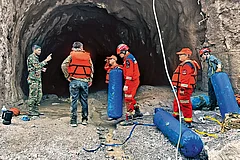
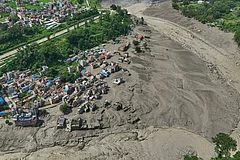
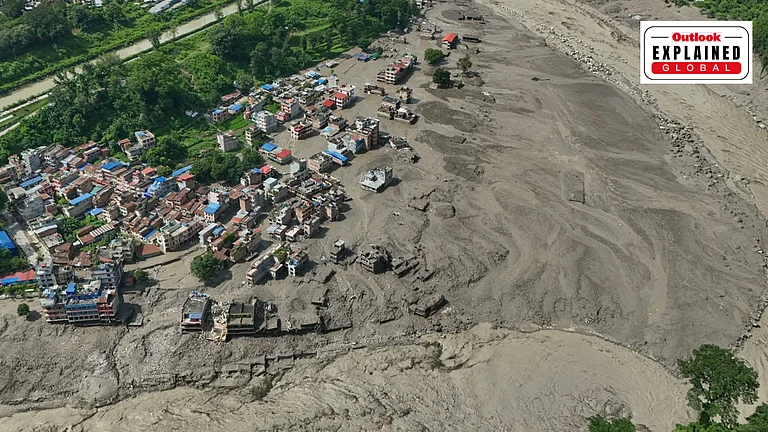
Catastrophic flash floods in Nepal’s mountain communities last month were “not just a local tragedy, it was a warning to the world,” he said.
The resulting devastation unleashed havoc on both sides of the Nepal-China border.
"Climate change does not recognize borders. Glaciers and floods do not travel with a visa stamped on passports," he said. Yet, the world’s political leaders have been negligent in translating those warnings over the climate crisis into action at the speed and scale that required.
Shah said the Hindu Kush Himalaya is home to nearly two billion people and provides water, ecosystems, agricultural resources and livelihoods to populations far beyond Nepal. He said the region's environmental risks therefore have consequences that extend beyond individual countries.

The proposal comes after the devastating floods in Nepal, which Shah cited as evidence of the growing risks faced by Himalayan communities. The disaster caused extensive loss of life and damage to infrastructure, strengthening Kathmandu's call for international cooperation on disaster preparedness and climate resilience.