Saudi Arabia has asked France, Britain, Pakistan and Egypt for air-defence support as its missile interceptors run low.
The Houthis have targeted Saudi infrastructure and Red Sea shipping, while Iran continues attacks around the Strait of Hormuz.
Riyadh is seeking a collective response from allies, while the US has indicated it does not want direct military involvement.
Saudi Arabia has sought air-defence assistance from regional and Western allies as it faces a shortage of missile interceptors while attacks by Yemen’s Houthi rebels continue, according to two regional officials cited by the Associated Press.
The officials said Riyadh has asked France, Britain, Pakistan and Egypt to deploy air-defence support to the region to help counter missiles and drones fired by the Houthis and other Iran-backed groups. The outreach was initiated because the United States, Saudi Arabia’s main ally and arms supplier, has seen its own stocks of missile interceptors dwindle during the six-month war with Iran.
The two officials spoke on condition of anonymity because they were not authorised to brief the media. Saudi officials did not immediately respond to a request for comment.
Saudi Arabia faces pressure on several fronts
The latest escalation between Saudi Arabia and the Houthis is a new front in the Iran war. On Wednesday, Saudi Arabia accused the Houthis of attempting to attack Mecca with a drone and said its forces had intercepted it.
The kingdom declared Mecca, the birthplace of the Prophet Muhammad, a “red line”. The allegation prompted condemnation across the region, but there was no sign of military assistance. The Houthis denied targeting the city, which lies about 1,100 kilometres (680 miles) from Yemen’s border.

Saudi Arabia is under pressure to protect military bases, government installations and oil facilities across the kingdom while also securing an outlet for its crude exports, with no clear path to either. One of the regional officials described the kingdom as being in a “very difficult position”.
Saudi Arabia is the world’s biggest oil exporter, but its energy infrastructure and shipping routes are facing attacks. A crucial Saudi pipeline has reportedly been shut down for weeks following an attack by Iranian-backed militias in Iraq.
The Houthis have also targeted infrastructure in the kingdom and shipping in the Red Sea, where they have seized several islands in the Bab el-Mandeb Strait. Iran, meanwhile, continues to target ships in the Strait of Hormuz. Oil prices remain above $100 a barrel.
According to the Associated Press, Saudi Arabia is therefore seeking both military assistance and diplomatic backing as it tries to protect its territory and maintain routes for its crude exports amid the regional conflict.
Riyadh seeks a collective response
Saudi Arabia is also seeking to rally its international allies behind a collective response to the Houthi attacks, one of the regional officials said.
The wider security implications extend beyond the immediate confrontation between Saudi Arabia and the Houthis, according to Adam Baron, a fellow at New America, a Washington-based think tank.
“This is just not a Houthis versus Saudi Arabia issue,” said Baron. “This is a matter of figuring out some way to guarantee wider patterns and pathways of international shipping.”
Oman hosted a meeting between US and Houthi representatives last weekend to discuss regional tensions, according to two people familiar with the matter, including a Houthi official. They provided no further details and spoke on condition of anonymity because they were not authorised to brief the media.
Allies voice support but military role remains unclear
So far, there have been diplomatic statements of support but no confirmed military assistance.
British Prime Minister’s spokesman Tom Wells said on Tuesday that Britain has a “close defense partnership” with Saudi Arabia. However, he declined to say whether Riyadh had requested military assistance or whether British troops were in the country.
US and NATO officials have previously acknowledged a critical shortage of missile interceptors in Europe, raising questions about Europe’s ability to provide assistance.
Turkey is also involved in diplomatic efforts. A Turkish government official said Ankara was holding talks with Iran and the United Arab Emirates to try to lower tensions. The official did not provide further details and spoke on condition of anonymity because he was not authorised to discuss the issue publicly.
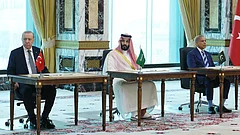
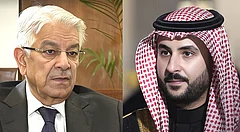
The latest attacks are the first test of a new defence pact involving Saudi Arabia, NATO member Turkey and nuclear power Pakistan. However, officials from Turkey and Pakistan told the Associated Press they had not received a Saudi request for support in response to the Houthi escalation. The officials spoke on condition of anonymity because they were not authorised to speak publicly on the issue.
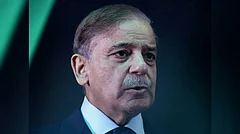
Amid condemnation of the alleged attack on Mecca, Pakistani Prime Minister Shehbaz Sharif said Pakistan and Saudi Arabia stand “unwaveringly, shoulder to shoulder”. Turkey’s foreign minister also expressed solidarity, saying no country can “remain indifferent”, state-run Anadolu Agency reported.
Washington signals limited military involvement
The United States has sold billions of dollars in weapons to Saudi Arabia and has committed to other forms of support, but senior US officials have indicated that Washington does not want to become directly involved in the latest fighting.
US Vice President JD Vance said on Monday that Washington had been in “constant contact” with the Saudis and had “engaged in direct conversations with the Houthis”.
Asked whether Saudi Arabia had requested intervention, a US official said the military’s Central Command has a task force in place for “enhancing intelligence sharing and planning support with Saudi forces”.
The US military also hosted senior military leaders from eight countries in Germany last week to discuss “opportunities for enhancing security cooperation in the Middle East”, the official said. The official did not identify the countries that attended and spoke on condition of anonymity because they were not authorised to comment publicly.
Houthis claim Saudi F-15 was shot down
The Houthis on Wednesday claimed they had shot down an F-15 fighter jet operated by the Saudi-backed coalition over Yemen’s central province of Marib.
The group did not say when the alleged incident occurred. In a video released through Houthi media channels, fighters appeared to be pushing what they described as the wreckage of an F-15 emblazoned with a Saudi flag.
The Associated Press could not independently verify the claim. Spokespeople for the Saudi-led coalition and the Saudi government did not immediately respond to requests for comment.
Iran’s top diplomat is in China
Meanwhile, Iranian Foreign Minister Abbas Araghchi travelled to China, the biggest buyer of Iranian oil, as Beijing called for restraint and the reopening of the Strait of Hormuz.
Chinese Foreign Minister Wang Yi urged the United States and Iran to exercise restraint and reopen the waterway as soon as possible. He also expressed China’s concern about the conflict spreading to Yemen and the Red Sea, according to China’s Foreign Ministry.
Araghchi said Tehran sought “the restoration of calm to the region and friendly and peaceful relations with our neighbors.”
China has avoided direct involvement in the war, but President Xi Jinping again offered Beijing’s help in ending the conflict at the BRICS summit in New Delhi over the weekend.
Oil flows through the Strait of Hormuz have recovered somewhat as tankers risk using a route near Oman on the other side of the waterway, with guidance from US forces. Estimates vary because ships can turn off their location systems, but current flows are estimated at between five million and seven million barrels per day on average.
That is less than half the level recorded before the war began with US and Israeli strikes on Iran on February 28.