Nepal clarifies it did not seek financial compensation from India after the Rasuwa floods.
Foreign Minister Shisir Khanal says Nepal was referring to climate compensation and climate change impacts.
India has provided relief supplies, rescue equipment, medicines and a rescue team to flood-hit Nepal.
Nepal Foreign Minister Khanal has clarified that Kathmandu did not seek financial compensation from India, but was referring to the broader issue of climate compensation and the impact of climate change on Himalayan communities following the devastating Rasuwa flash floods.
Khanal said China, India and Nepal share similar environmental ecosystems and are all affected by climate change in the Himalayan region. He urged the three countries to strengthen collective preparedness while calling on the global community to support smaller nations such as Nepal and recognise the long-term impact of rising temperatures and climate change on communities.
"I've also mentioned that all three countries — China, India, and Nepal face and share similar environmental ecosystems. We are all impacted by climate change in the Himalayas as well. Our call is for all these three countries to come together to be better prepared, but also for the global community to support and, particularly, to look at this disaster not just as a one-time event or to look at this as one-time support, but to think about the impact rising temperatures and climate change are having on communities across the world. It is our call for the global community to come together and support smaller nations like Nepal," he said.

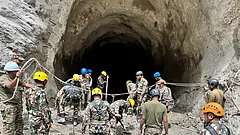


Khanal also expressed gratitude for India's immediate relief efforts and said Nepal remained in communication with New Delhi as further requirements emerged. According to ANI, India was among the first countries to extend humanitarian assistance to Nepal during the crisis, sending emergency rescue gear, modular bridge equipment, dewatering pumps and essential relief materials.
"We stand ready to collaborate to save our civilisation, our heritage, our culture and our future together," Khanal added.
India mobilised multiple airlifts carrying relief supplies for communities affected by the disaster. The first relief aircraft arrived in Nepal on August 26 with 10 tonnes of supplies, including temporary shelters, blankets, hygiene kits, solar lamps and medicines, ANI reported.
A second flight arrived on August 27 carrying 37.5 tonnes of relief material, including tents, blankets, hygiene kits, solar lamps, dewatering pumps, kitchen sets, generators, medicines and food items. A subsequent consignment carried another 10 tonnes of relief material.
India later sent a fifth aircraft on Wednesday carrying an 11-member rescue team, specialised equipment and 5.5 tonnes of essential medicines.
Asked about communication with the Indian government over additional areas where Nepal may require assistance, Khanal said New Delhi had been in contact with Kathmandu from the immediate aftermath of the disaster.
"In this disaster context, right after the disaster, we began to receive communication from Indian officials and they have provided all kinds of support and they have said they are standing ready to provide any support that the government of Nepal needs," he said.
Khanal said India's assistance had included immediate relief supplies, rescue materials and forensic support, while the two countries continued to communicate as new requirements emerged.
"We've been communicating as need arises and the government of India has fully supported our initiative. So in the future also, as new requirements come up, we communicate and they stand ready to provide support," he said.
The Foreign Minister's remarks came as search, rescue and rehabilitation operations continued in flood-affected areas of Nepal. According to ANI, the National Disaster Risk Reduction and Management Authority (NDRRMA) said the death toll from the Rasuwa floods had reached 1,259 as of 7 pm on Thursday.