The SCO is promoting multipolarity, multilateralism and cultural diversity as its leaders meet in Bishkek
China is pushing a more explicit vision of a multipolar world and a less US-centred global order
The SCO’s diverse membership gives it broad reach, but differing national interests limit how far it can act as a unified geopolitical bloc
As leaders gather in Bishkek for the 26th SCO summit, the organisation's language increasingly centres on a multipolar world, multilateralism, cultural and civilisational diversity and a greater role for the Global South.
That does not make the SCO an anti-US alliance. Its 2021 Dushanbe Declaration explicitly says it is not directed against other states and that deeper cooperation does not imply creating a military-political alliance. The question in Bishkek is therefore less whether the SCO can replace the US-led system than whether it can offer a broader platform to counterbalance American influence without becoming a conventional geopolitical bloc.
What Is The SCO Trying To Project?
In July, SCO foreign ministers reaffirmed their commitment to a “more representative, inclusive, just, democratic and multipolar world order” based on international law, multilateralism, cultural and civilisational diversity and mutually beneficial cooperation. They also highlighted the growing importance of the Global South and new economic and political centres.
The same statement rejects attempts by states to ensure their own security at others' expense, criticises unilateral coercive measures and calls for political and diplomatic solutions to international conflicts, including around Iran.
The SCO is therefore presenting itself as a forum where sovereignty, non-interference and civilisational diversity can coexist without requiring members to adopt a common political system.



Why Is Bishkek Important Now?
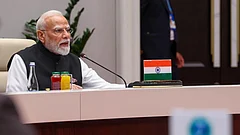
The 26th meeting of the Council of Heads of State is being held in Bishkek on August 31 and September 1, giving that vision a prominent political stage.
India's participation is particularly significant. Prime Minister Narendra Modi has framed India's SCO engagement around security, connectivity and opportunity, while stressing cooperation against terrorism, separatism and extremism.
The summit brings together states with very different relationships with Washington, including India, China, Russia and Iran. That diversity allows the SCO to present itself as something broader than a China-Russia platform. But it also creates a basic problem: representation is easier than coordination.
Can The SCO Actually Represent Multiculturalism?
The organisation has increasingly tried to make cultural and people-to-people exchange part of its political identity.
The Dushanbe Declaration describes the “Shanghai Spirit” through mutual trust, equality, consultation, respect for cultural diversity and common development, while calling for dialogue among civilisations and wider cultural cooperation.
That agenda was visible in Bishkek on Sunday, when the 2026 SCO Forum on People-to-People Exchange brought together more than 100 representatives from political, economic, cultural and media circles. The organisers highlighted media cooperation, professional exchanges, training and joint content designed to deepen understanding among SCO members.
The effort matters because the SCO's claim to represent multiple civilisations is not based solely on its membership. It is also trying to build institutions through which that diversity becomes part of its public identity.

How Is China Framing The Alternative?
China is giving the SCO's multipolar language a more explicit geopolitical interpretation.
In a signed article ahead of the summit, President Xi Jinping called for multilateralism and opposition to hegemonism, unilateralism and bloc confrontation. He argued for an equal and orderly multipolar world and a more just global governance system.
Xi also described the SCO as a model of partnership rather than alliance, based on mutual trust, equality, consultation and respect for civilisational diversity.
That helps explain how the SCO can challenge aspects of a US-dominated order without defining itself as anti-American. Its preferred language is multipolarity, sovereignty and non-confrontation.
The effect, however, can still be counterbalancing if more countries use the organisation to coordinate outside Western-led institutions.
Is The SCO Becoming More Than A China-Russia Platform?
Its expanding engagement suggests that it wants to be.
In Bishkek, SCO Secretary-General Nurlan Yermekbayev met Lao President Thongloun Sisoulith to discuss deeper cooperation. Laos highlighted trade, transport, digital connectivity, tourism and security and welcomed its Dialogue Partner status, while the two sides discussed stronger links between the SCO and ASEAN.
The organisation also held talks with Egyptian Deputy Prime Minister Hussein Eissa on economic development, transport, logistics, energy, water management, education and infrastructure, including Egypt's participation in consultations on an SCO Development Bank.
These engagements suggest that the SCO is trying to extend its institutional reach beyond its established membership into wider networks across Asia, Africa and the Global South.

Where Does India Fit Into This?
India makes the SCO's claim to multipolarity more credible because New Delhi does not belong exclusively to one strategic camp.
India is an SCO member while maintaining substantial relationships with the United States, Europe and other Western partners. Its participation demonstrates that membership does not require abandoning those relationships.
Modi has framed India's SCO engagement in practical rather than ideological terms, focusing on security, connectivity and opportunity. That makes India important to the question of whether the SCO can function as a genuine multipolar platform rather than an instrument of any single member.
Its presence shows that major powers with competing interests can participate in the same institutional framework without adopting identical foreign policies.
What Does Modi's Iran Engagement Tell Us?
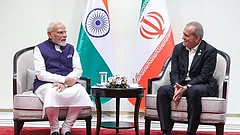
The Modi-Pezeshkian meeting in Bishkek provides a concrete example.
The two leaders discussed the West Asia conflict, with Modi expressing concern about escalating tensions and reiterating India's preference for dialogue and diplomacy. He also called for freedom of navigation and commerce and protection of civilians, commercial shipping and seafarers.
That does not amount to India aligning with Iran against the United States. It does show the diplomatic space a multipolar forum can create: India can engage Iran directly on a regional crisis while maintaining its wider relationship with Washington.
For the SCO, that supports its claim to provide a forum where states do not have to choose one exclusive geopolitical alignment.

Can The SCO Counter The US Without Becoming Anti-US?
The organisation's own documents point towards that model.
The Dushanbe Declaration says the SCO is not an alliance directed against other states, while the July 2026 foreign ministers' statement calls for a more representative multipolar order and rejects unilateralism and unilateral coercive measures.
This creates a distinction between counterbalancing and confrontation.
The SCO does not need to become a military alliance against Washington to reduce American influence. It can contribute to a more distributed international system by giving non-Western powers a forum for political coordination, economic cooperation and diplomatic engagement.
That is a slower form of geopolitical competition, but potentially a more durable one.
Does The SCO Have The Political Weight?
The organisation has considerable breadth, but breadth does not automatically produce strategic unity.
Its members have different priorities and relationships with each other and with Washington. India and China remain strategic competitors. Russia's confrontation with the West is far more direct than India's, while Iran has its own security priorities and Central Asian members must balance ties with China, Russia and the West.
The SCO's challenge is therefore not simply to demonstrate dissatisfaction with the existing order. It is to turn overlapping interest in greater strategic autonomy into sustained institutional cooperation.
Its July statement points towards that approach by combining political coordination with economic, security, cultural and technological cooperation.

What Are The Limits Of Its Multicultural Vision?
The same diversity that gives the SCO its appeal can constrain it.
Different political systems, civilisational traditions and national interests allow the organisation to demonstrate that cooperation does not require uniformity. But they also make common strategic positions harder to achieve.
The SCO itself recognises this by emphasising consultation, equality and mutually beneficial cooperation rather than supranational decision-making. Its 2021 declaration explicitly says deeper interaction does not imply creating a military-political or economic-integration alliance.
Its strength therefore lies less in imposing a unified strategy than in creating an alternative diplomatic and institutional centre of gravity.
Can Bishkek Become The SCO's Big Political Moment?
The summit gives the organisation an opportunity to project that identity at several levels.
Major powers are meeting in the same forum; the organisation is discussing a multipolar order; Bishkek has hosted a people-to-people forum focused on cultural and media links; and the SCO is engaging countries such as Laos and Egypt.
But a political alternative needs more than declarations. It needs institutions, networks and repeated cooperation that give those ideas practical meaning.
Bishkek can strengthen that projection. It cannot by itself prove that the SCO has become a coherent alternative to Western-led institutions.

So, Can The SCO Counter US-Centred Global Order?
The evidence suggests that the SCO is trying to position itself as a platform for multipolarity, multilateralism and civilisational diversity. Its official documents say so explicitly, China is reinforcing that language, and the organisation is expanding external engagement while investing in people-to-people diplomacy.
But becoming the face of an alternative order is a much bigger task.
The SCO's diversity is its strongest argument: countries with different political systems and strategic interests can participate without surrendering their sovereignty or existing relationships. India is a clear example, engaging China, Russia and Iran through the organisation without treating membership as an exclusive geopolitical alignment.
Its diversity is also its limitation. The SCO defines itself as a partnership rather than an alliance, giving it breadth but limiting the strategic coordination its members can realistically achieve.
The Bishkek summit may therefore not produce an anti-US bloc. Its more consequential achievement would be to make the SCO a more visible institutional expression of a multipolar world in which the United States remains powerful, but is no longer assumed to be the only centre of global influence.