Five years after the Taliban takeover, Afghan women and girls face restrictions affecting education, employment, movement, healthcare, dress and participation in public life.
The Taliban says its policies are based on its interpretation of Islamic law, Afghan traditions and social norms, while UN officials say the restrictions violate fundamental rights.
The international community has responded through diplomatic pressure, sanctions, humanitarian assistance and accountability measures, while India has maintained engagement with Afghanistan without formally recognising the Taliban government.
Five years after the Taliban barred Afghan girls from secondary schools, women and girls in Afghanistan face restrictions extending far beyond education, affecting their work, movement, access to public spaces, healthcare and participation in public life. The UN's Special Rapporteur on Afghanistan, Richard Bennett, said on September 17 that an entire generation of girls had missed secondary education, warning that the restrictions were affecting both women and Afghanistan's future.
Since returning to power in August 2021, the Taliban has introduced a series of decrees and rules that have progressively narrowed women's rights and freedoms. Afghanistan is now the only country where girls and women are explicitly barred from education at all levels, according to the United Nations.

What Restrictions Do Afghan Women Face Under Taliban Rule?
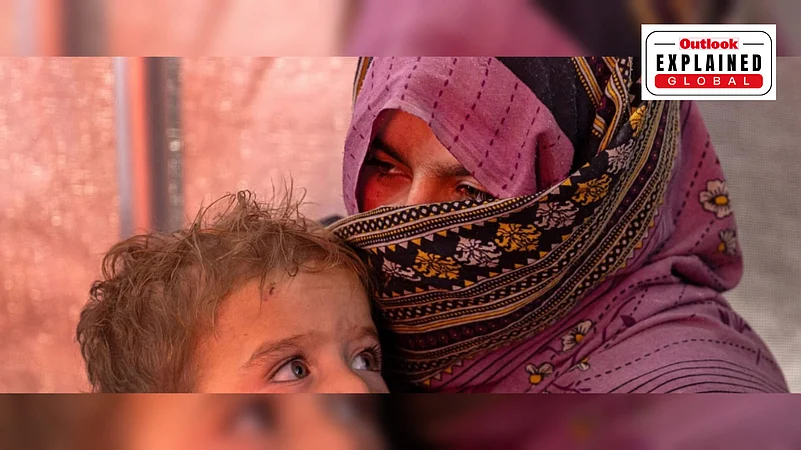
The second time when they seized power in the country, Taliban has been effectively erasing women from the public. No other country in modern times has dismantled the rights of half its population through law, policy, and practice to the same extent. At the same time, overlapping humanitarian and economic crises and deepening poverty are also having a disproportionate impact on women and girls.



Girls cannot attend school beyond Grade 6, while women and girls have been excluded from higher education. Women and girls have also been barred from studying medical disciplines since December 2024, affecting the future supply of female healthcare workers. Women are excluded from many forms of employment, including restrictions affecting NGOs and the UN.
Women can face requirements to travel with a mahram — a close male relative or guardian — and restrictions on using transport without one. Restrictions have affected women's access to parks, gyms, public baths and other spaces. Even when devastating earthquake struck the region in September last year, women trapped under the rubble were denied help from male rescuers. The Taliban's "no skin contact with unrelated males" rule prohibits male rescuers from physically assisting women, even in life-threatening situations, New York Times reported.
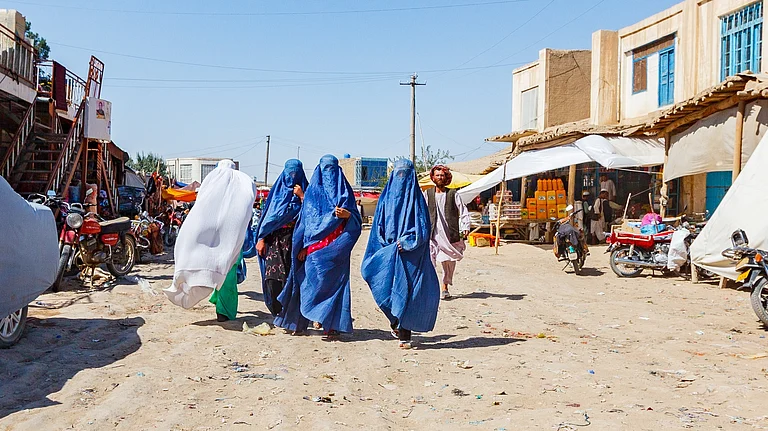
The 2024 Law on the Promotion of Virtue and Prevention of Vice imposed stringent dress requirements, including covering the body and face. The law also requires women to not speak in public or be seen through windows from outside.
Afghan women have been prevented from accessing UN compounds since September 2025, affecting humanitarian operations. A 2026 decree on judicial separation has raised concerns over women's ability to leave marriages and provisions relating to girls who have reached puberty and are married.
The Taliban is an all‑male administration focused on implementing a system of governance based on its strict interpretation of Sharia law, a statement by UK Government states.
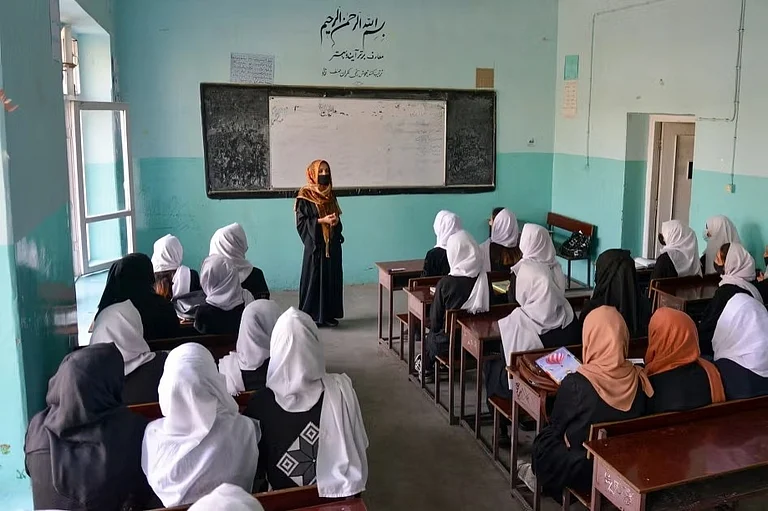
Why Does The Taliban Say It Is Imposing These Restrictions?
The Taliban has defended its policies by invoking its interpretation of Islamic law, Afghan culture and social norms.
The Taliban has previously said women's rights are protected under its interpretation of Islamic law and Afghan traditions. Its officials have also said restrictions are intended to ensure what they describe as an Islamic environment and protect social or moral values, AP reported.
For the education ban, Taliban authorities have previously said they were working on a nationwide policy that would allow girls' education within what they described as an Islamic framework. UN officials recorded those explanations while noting that the restrictions nevertheless continued.
UN Human Rights Chief Volker Türk told the Human Rights Council in Geneva, “Afghanistan is a graveyard for human rights. The cascade of edicts and laws announced by the de facto authorities since coming to power in 2021 is having a crushing impact on the Afghan people, particularly women and girls.”

What Has The International Community Done?
International response has involved diplomatic pressure, sanctions, UN monitoring, humanitarian engagement and accountability mechanisms. But there has been no single international policy.
The Security Council has repeatedly called on the Taliban to reverse restrictions on women and girls. The UN has also continued political engagement through UNAMA and the Doha Process.
Oscar-winning American actress and activist Meryl Streep famously noted on September 23, 2024, when speaking at a side event on “The Inclusion of Women in the Future of Afghanistan” at the UN General Assembly, “Today in Kabul a female cat has more freedom than a woman. A cat may go sit on her front stoop and feel the sun on her face… A bird may sing in Kabul, but a girl may not in public. This is extraordinary. This is a suppression of the natural law.”
The Security Council's Taliban sanctions regime includes an asset freeze, travel ban and arms embargo against designated individuals and entities associated with the Taliban. Resolution 2816, adopted in February 2026, reaffirmed those measures. UNAMA continues documenting restrictions and their impact. Its monitoring has covered education, employment, healthcare, movement, dress and access to public spaces.
The International Criminal Court has pursued accountability for alleged gender persecution by senior Taliban figures. The UN Security Council discussions have also included calls for stronger accountability mechanisms. Despite political disagreements with the Taliban, the international community continues providing humanitarian assistance to Afghans. This distinction is important: engagement with the Taliban does not necessarily mean recognition or acceptance of its policies.