



UNESCO says 2.4 million Afghan girls are currently barred from secondary education.
The number has risen by 200,000 in a year and could approach four million by 2030.
Alternative learning programmes continue, but cannot replace formal secondary education.
Five years after the Taliban returned to power in Afghanistan, an estimated 2.4 million girls remain barred from secondary education, according to UNESCO. The figure has increased by 200,000 since last year, and the UN agency says it could approach four million by 2030 if the restrictions continue.
The number reflects successive groups of girls reaching secondary-school age without being allowed to continue their formal education. Afghanistan is now the only country in the world where girls and women are formally banned from secondary and higher education, UNESCO says. While some alternative learning programmes remain available, they do not provide the same qualifications or pathway as formal schooling.
The ban has also reversed much of the progress made in Afghan girls’ education in the two decades before the Taliban takeover. Nearly one million girls were enrolled in secondary school in 2021, according to UNESCO. The question now is how the restrictions developed, what their longer-term effects could be and whether girls have any routes left to continue learning.
How did Afghanistan reach this point?
The Taliban returned to power in August 2021 after taking control of Kabul and promised that women’s rights, including access to education, would be maintained within what it described as an Islamic framework. But restrictions on girls’ schooling followed.


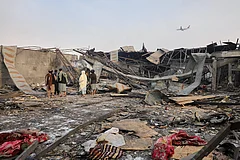
In March 2022, the Taliban closed secondary schools to girls just as they were due to reopen. The authorities later banned women from universities in December 2022. Both measures were presented by the Taliban as temporary, but they remain in force. The Taliban has justified its restrictions by referring to its interpretation of Islamic law and Afghan culture, according to Reuters.
The secondary-school ban is what has produced the growing 2.4 million figure. Girls can continue attending primary school, but are barred from secondary education once they reach the relevant age. As each new cohort reaches that stage, the number of girls affected increases.
That explains why UNESCO’s estimate has risen by 200,000 in a year. It is not simply a tally of girls who were already excluded in 2021 or 2022; it continues to grow as the restrictions prevent new groups of students from progressing through the education system.
The change represents a sharp reversal of the expansion of girls’ education after the Taliban’s previous government was removed in 2001. By 2021, almost one million girls were enrolled in secondary school. The current restrictions have effectively halted that progress and put Afghanistan on a path towards a much larger educational deficit if the bans continue.
What does the ban mean for Afghanistan?
The immediate effect is the loss of years of schooling for millions of girls. But the consequences extend into the education system, labour market and wider economy.
One concern is the future supply of female teachers. UNESCO estimates that more than 11,000 qualified female teachers could be missing by 2030 as restrictions on women’s education prevent new generations from acquiring the qualifications needed to enter the profession. Reuters reported that the shortage could further weaken the quality of education in a country where the school system is already under pressure.
The wider education system is facing problems beyond the girls’ secondary-school ban. The organisation says more than two million primary-school children are already out of school for reasons other than the restrictions on girls and women. More than 90 per cent of 10-year-olds cannot read a simple text, while Afghanistan’s national literacy rate is 37 per cent, according to the agency.
The economic impact could also become more pronounced over time. UNESCO estimates that restrictions on female secondary and higher education could push about 600,000 women out of the workforce by 2066 and lead to around $9.6 billion in lost income. The figures illustrate how the effects of denying girls an education can continue long after they reach school-leaving age.
Girls who cannot complete secondary school are also less able to progress to university or professional training, limiting their future access to jobs that require formal qualifications.
What options remain for Afghan girls?
Formal secondary and higher education remain closed to girls and women, but some alternative forms of learning continue.
UNESCO supports community-based education, literacy and skills programmes that allow Afghan girls and women to continue learning outside the formal school system. Some classes are held in community settings or homes, providing opportunities for students who cannot attend recognised schools. AP reported that UNESCO-backed programmes have reached nearly 70,000 learners, most of them women.
These programmes are important because they provide some continuity of learning while the formal restrictions remain. But they cannot fully replace secondary school. They do not offer the same recognised qualifications or a direct route into higher education.
That distinction is central to understanding the current situation. The issue is not simply whether Afghan girls have access to any form of learning. It is whether they can move through a recognised education system from primary school to secondary school and then, where possible, to university and professional training.
The organisation has called for the immediate and unconditional restoration of education for Afghan girls and women at all levels, warning that the longer the restrictions remain, the more girls will be shut out of formal education.
The 2.4 million figure is therefore not a final count. If the ban remains in place, more girls will reach secondary-school age without being allowed to continue their education. It warns that the number could approach four million by 2030.
Five years after the Taliban returned to power, the ban has become a continuing barrier to secondary education for successive cohorts of Afghan girls. UNESCO’s projection points to the scale of the problem: without a change in policy, millions more girls could enter adulthood without completing secondary school.















