ISRO Chairman V Narayanan has said the space agency is not being privatised and remains a government organisation despite growing private-sector participation.
His clarification came after nine ISRO employee associations sought answers over plans to transfer some manufacturing and operational functions to private entities.
Narayanan said nearly 80 per cent of the budget for PSLV or GSLV launches is invested in Indian industries, while India may need around 50 launch vehicles a year as its space economy expands.
ISRO Chairman V Narayanan on Monday said the space agency remains a government organisation and dismissed concerns over its privatisation, saying it is working with private companies and startups to expand India's space ecosystem, as per PTI report.
His reaction came after nine employee associations at ISRO wrote to the Chairman on September 4, seeking official clarification on the proposed transfer of its manufacturing and operational functions to private entities.
What Did ISRO Chief V Narayanan Say?
Speaking to reporters after the inaugural ceremony of the ninth edition of the Bengaluru Space Expo (BSX) here, Narayanan said India's space programme is about 64-65 years old, and that at present there are 56 space assets in the sky serving the common man of the country, but the need is huge numbers.
Recalling that since the space sector reforms were rolled out six years ago, he said, "we are supposed to hand-hold the private sector, startup companies, and grow the space ecosystem." "In fact, whenever a PSLV or a GSLV is lifting off, almost 80 per cent budget is invested in Indian industries. A total of 450 industries are working for us," he said.

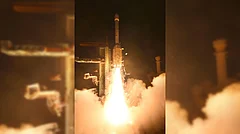

On the concerns raised by the employee associations, Narayanan said, "So, surely, my colleagues, whatever they have, is a genuine concern. It is our responsibility to clarify." He clarified that ISRO is not privatised and remains a government organisation. "We are working -- it's a government investment, and we are working there. But the only thing is, we now (have) so many activities. The space ecosystem in the country has to grow and the space economy has to grow," he said.
Why Were ISRO Employees Concerned About Privatisation?
Responding to a question about different voices within ISRO raising concerns, Narayanan said, "We are 20,000 employees...we will address the employees." He further added that ISRO has a system and it regularly talks to its employees.
When asked about scientists resigning from ISRO, he said the space agency has 20,000 employees with over 8,000 scientists.
"In the last five-six years, if you take the statistics, somewhere around 150 people per year have resigned. This is normal in any organisation," he said.

He stressed that India's growing space ambitions would require a significant increase in the number of launches.
"The country's requirement is around 50 launch vehicles per year. We have to go ahead," Narayanan said, as per PTI.
On the feasibility of targeting 50 launches a year, he recalled that when he joined ISRO 43 years ago, one launch used to take place once in three years.

"So many activities are going on. Probably one or two things are only known outside, but it is our responsibility to put everything on the ISRO side. Fifty launches per year is going to be a reality," he said, adding that it would be accomplished by Indians in India," he added.
On the US announcing partnership with India on the Moon mission, the ISRO chief said he strongly believed in the need for strong international collaboration to yield good results with lower expenditures.
He also clarified that the space agency had no shortage of budget and said whatever ISRO needs, the government has been allotting it.
"Suppose if we spend more, the government is ready to fund more. So, in my capacity as the secretary of the Department of Space, we only request the government to allot the budget. Whatever we request, the government is allotting. There is no shortage of budget," he said.