



Census 2027 will record caste through an open-ended response, raising concerns over different spellings, sub-castes and regional names being counted separately.
The 2011 SECC produced millions of raw caste entries that the Centre later deemed too error-ridden to use, with the government itself saying a caste registry or drop-down menu would have been preferable.
A credible caste count could influence debates over welfare, representation and reservation, but the data itself would not automatically alter existing reservation policies.
India is preparing to count caste as part of the regular decadal Census for the first time since Independence, but the exercise has already run into a political and methodological dispute. The Congress has accused the Narendra Modi government of deliberately making the process vulnerable to errors, particularly by not providing a pre-prepared list or drop-down menu for recording castes.
The Centre, however, has said Census 2027 will have a Code Directory and validation checks. The question is whether those safeguards will be enough to turn millions of open-ended responses into reliable caste-wise data.
The Census Coding Challenge
The Centre's August 14 notification lists 40 questions for the second phase of Census 2027. Question 10 asks respondents to state their Scheduled Caste, Scheduled Tribe or caste, with the enumerator recording the caste or sub-caste as declared. The open-ended format was retained after a pre-test across 16 states and Union Territories.
This is where the central challenge lies. India has thousands of castes and sub-castes, with names varying by state, language, spelling and local usage. The same community can therefore appear under several names or spellings.


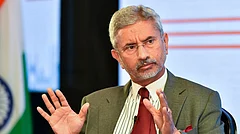
Congress leader Jairam Ramesh has argued that enumerators should instead have a state-wise, pre-prepared caste list, similar to those used in Bihar and Telangana. The party's criticism is also based on the Centre's own 2021 Supreme Court affidavit, which said a caste registry and drop-down menu would have produced more consistent data.
What Happened During SECC 2011?
India did collect caste information in 2011, but not as part of the regular Census. The Socio-Economic and Caste Census (SECC) was conducted separately, with the rural exercise handled by the Ministry of Rural Development and the urban exercise by the then Ministry of Housing and Urban Poverty Alleviation.
The caste question was open-ended. The result was an enormous volume of raw entries, containing different spellings, surnames, sub-castes and local descriptions. The Centre later said technical flaws made the caste data unusable. In its 2021 affidavit, it specifically pointed to the absence of a caste registry and said a drop-down menu would have been preferable.
The government had also said the data needed classification and categorisation before it could be used. An expert group headed by then NITI Aayog vice-chairman Arvind Panagariya was tasked with the exercise, but by 2022 the caste data had still not been released. In other words, India had raw caste information from 2011, but no publicly released, standardised national caste count.
Bihar, Telangana vs Census 2027: Which Way Should India Count Caste?
Bihar and Telangana offer an alternative model. Both used predefined caste lists and codes rather than relying entirely on respondents to type or state caste names without a standard reference.
The Bihar caste survey of 2022-23 demonstrated that a predefined list could produce more usable data. Telangana's 2024 Socio-Economic, Educational, Employment, Political and Caste survey similarly used caste lists, codes, alternate names and validation mechanisms. Congress has argued that the national Census should draw from these approaches.
The government says Census 2027 will have coding and validation mechanisms. But critics want greater clarity on how open-ended responses will ultimately be mapped to standard caste categories. The Mandal Army has, for instance, demanded a National Caste Master Registry, standard caste codes and systems to account for alternate names and spellings.
What Can The Data Actually Change?
The stakes extend beyond producing a population figure for OBCs. Reliable caste data could shape debates around welfare, political representation and affirmative action, including questions around the creamy layer and whether reservation benefits are disproportionately concentrated among some communities.
But a caste count does not automatically mean a change in reservation policy. The data would provide an empirical basis for future political and policy decisions; how governments use those numbers would remain a separate question.
That is why the immediate battle is over the credibility of the count itself. With caste and reservation already politically charged, particularly ahead of the 2027 Uttar Pradesh Assembly election, an unreliable database could deepen rather than settle existing disputes. As the debate around Census 2027 shows, the question is not simply how many castes India has, but how accurately India can count them.















