



The USTR proposed tariffs of up to 25 per cent on Indian goods after a Section 301 probe into alleged structural excess capacity, naming pharmaceuticals and medical devices, steel, solar products and ICT.
The rate would fall to 17 per cent if India signs a trade deal, compared with proposed rates of 18 per cent for several Asian rivals and 20 per cent for Vietnam, while India's commerce ministry denies the charge.
The measures are proposals open to consultation, and talks on the first tranche of the deal continue, with India's signing tied to Washington's final tariff framework.
India's ambition to become a global manufacturing hub has run into a new obstacle in Washington. On Wednesday, the US Trade Representative proposed tariffs of up to 25% on Indian goods, citing "structural excess capacity" in manufacturing, with the rate falling to 17% if India signs a trade deal.
The numbers are a proposal, not a duty. But they show what Washington wants from New Delhi, and why a country that spent the year negotiating is back in the dock.

The Charge: Too Much Made, Too Little Bought
The proposal comes from an eight-month investigation into 16 economies, launched in March under Section 301 of the Trade Act of 1974, a law that lets the US act against trade practices it considers unfair. The USTR's case is that government support and industrial policy encourage factories to produce more than their markets can absorb, giving foreign manufacturers an advantage over American ones. It says such measures create or sustain "structural excess capacity" that burdens US commerce.

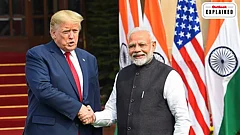
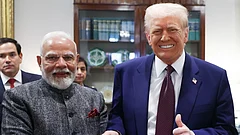

For India, the report named four areas. They are pharmaceuticals and medical devices, steel, solar products, and information and communications technology. The USTR also pointed to India's trade surpluses in pharmaceuticals, steel and ICT goods. Several Indian exports, including steel, aluminium, automobiles, patented pharmaceuticals and semiconductors, already face separate Section 232 duties.
India rejected the charge within hours. Its commerce ministry said it "does not have structural excess capacity in any sector", while adding that it remains committed to an early conclusion of the trade agreement. The argument has a fair point at its centre. Producing more than a market needs, or running a trade surplus, does not automatically mean unfair practices, since exporters may simply be competitive or foreign buyers may want their products. Trump has long taken the other view. He has called India a "tariff abuser", and in 2025 he blamed high Indian tariffs for a US goods deficit with India of $45.7 billion in 2024.

Why Now, And Why Section 301
The choice of law is the clue. On February 20, the US Supreme Court struck down Trump's reciprocal tariff policy, just weeks after India and the US had announced an understanding that cut the rate on Indian goods to 18%. When a 150-day global tariff regime ended, Washington introduced a 10% tariff specifically targeting Indian goods under Section 301 on July 24. Section 301 is the route the administration now uses to rebuild its tariff wall on firmer legal ground, one investigation at a time.

The USTR plans two rates for each country: a "warranted" rate and a lower one tied to an actual trade deal. USTR chief Jamieson Greer said the tariffs would generally not stack on existing duties, calling them "not really additive". India's proposed rate is to be calculated net of existing Section 301 tariffs, with exemptions for certain goods. The measures are proposals that must go through public consultation before any final decision.
The politics at home matter too. The administration pressed ahead despite American frustration with the cost of living, which played a major part in the Democrats' strong midterm performance. A tariff campaign that raises prices is a hard sell, and the "excess capacity" argument lets the White House present it as a defence of American jobs.

What It Means For The Deal, And For Delhi's Factories
The 17% figure is not the bad news it first appears. Bangladesh, Cambodia, Indonesia, Malaysia and Thailand face proposed rates of 18%, Vietnam 20% once its deal takes effect, and China an additional 20% on top of existing duties. CNBC reads this as Washington signalling that it will give India an edge over its Asian competitors if New Delhi finalises the long-pending deal. That is leverage in the plainest sense: a discount offered for signing.
The deal is close but not done. India's Commerce Secretary, Rajesh Agrawal, said last week that talks on the first tranche were nearing conclusion, but that signing depends on Washington finalising its new tariff framework and giving clarity on the Section 301 probes. India has already put a lot on the table. It agreed to cut or remove import duties on American industrial and farm goods, and said it intends to buy $500 billion of US goods over five years, including oil and gas, aircraft and technology. Washington is also pressing for access for genetically modified products and for easing of dairy restrictions.
For India's manufacturers, the risk is uneven. Pharma, steel, solar and ICT are the sectors the US has named, and they are also the sectors that India's production-linked incentive schemes have been built to expand. That connection is my reading of the policy, not a USTR finding, but it explains why the charge touches a nerve. A tariff that follows the subsidy can shape where Indian capital goes next.
So the question for Delhi is whether to pay the price of 17%, which would be the second-lowest of its Asian peers, to avoid 25%, or to hold out for terms that do not reopen its farm and dairy markets. Washington has made the offer. The signature is Delhi's to give.








