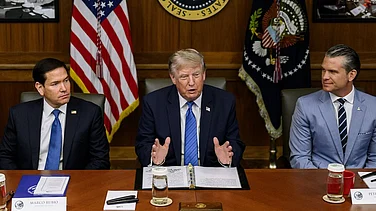


Marco Rubio’s India visit has raised hopes of a trade agreement, with the US secretary of state saying negotiations are close to completion.
Business and energy ties, including potential cooperation involving Reliance Industries and Venezuelan crude, could create new avenues for engagement.
Disagreements over tariffs and India’s Russian oil purchases remain unresolved, leaving the final trade deal dependent on political compromises.
Trade disputes rarely remain confined to spreadsheets. They spill into diplomatic exchanges, unsettle investors and turn the price of a barrel of oil into a question of national strategy. For India and the United States, the latest attempt to repair strained ties has brought business leaders and energy executives into a conversation that neither government can afford to abandon. US Secretary of State Marco Rubio’s meetings in Mumbai, followed by his planned visit to Reliance Industries’ Jamnagar refinery, put commercial interests at the centre of a relationship tested by tariffs and India’s purchases of Russian crude.
Rubio has offered a reason for cautious optimism. After meeting External Affairs Minister S Jaishankar on Tuesday, October 20, the US secretary of state said the two countries were “very, very close” to concluding a trade agreement, with only a small number of issues left to resolve. The remarks marked a more hopeful note after negotiations had struggled to overcome disagreements over market access, tariffs and energy purchases. Yet a deal that is close is not a deal that is done. The remaining questions will determine whether the diplomatic thaw translates into a durable economic arrangement.



Business Steps Into The Diplomatic Gap
The choice of Mumbai and Jamnagar gives the visit a commercial emphasis. Mumbai offers access to financial institutions, investors and corporate executives; Jamnagar is home to Reliance Industries’ vast refining complex. Rubio’s planned engagement with business leaders, including Reliance chairman Mukesh Ambani, reflects Washington’s interest in turning strategic ties into commercial opportunities. The visit is not simply about what officials can agree on across a negotiating table, but also about what companies might be willing to invest, buy and build.
Energy provides one of the clearest illustrations of this approach. Rubio has indicated that Washington wants Reliance to refine more Venezuelan crude at its Indian facilities and potentially explore opportunities in Venezuelan oil production. For the US, such arrangements could open commercial avenues for energy supplies; for India, access to different grades of crude would offer another option for a refining sector built to process a varied range of imports. But commercial interest is not the same as a commitment, and any prospective arrangement would depend on price, supply, sanctions and the economics of refining.
There is a wider strategic calculation, too. Stronger energy and technology trade could give both countries more reasons to preserve a stable relationship, even when political disagreements flare. US officials want greater access for American goods and technology, while Indian businesses seek predictable rules, market access and opportunities to expand internationally. Corporate engagement can help identify mutually beneficial arrangements that governments may then negotiate. It cannot, however, substitute for decisions on tariffs, sanctions or the terms of a bilateral trade agreement.

Russian Oil Remains The Toughest Question
The most difficult disagreement lies beyond the boardroom. India has continued buying Russian crude since the war in Ukraine began, citing its energy requirements and the need to secure supplies at competitive prices. Washington has sought to use tariffs and sanctions as leverage against countries purchasing Russian energy. For New Delhi, the issue goes beyond a trade concession: it touches the cost of energy, the security of supply and the freedom to make decisions based on domestic needs.
A recent decision by US President Donald Trump to waive key Russia-related tariffs and sanctions has eased one immediate source of pressure. The measures had threatened to expose Indian goods to duties of up to 100% under legislation targeting major buyers of Russian energy. Trump said the waiver was in the US national interest. The move could improve the atmosphere for trade negotiations, but it does not mean the underlying disagreement over Russian oil has disappeared. Nor does it guarantee that future policy decisions will not revive uncertainty for Indian exporters.
That uncertainty matters because businesses make investment decisions over years, while tariff policy can change much faster. Exporters need clarity on the duties they will face; refiners need confidence that crude supplies will remain commercially viable; investors need to know whether political disputes might alter the rules after they have committed capital. A trade agreement could provide greater predictability, but only if its terms are clear and both sides have confidence that commitments will endure.

A Partnership Bigger Than One Trade Deal
Trade is only one part of the relationship. India and the US also have reasons to deepen defence cooperation, technology links and supply-chain partnerships, particularly as both seek to strengthen their positions in the Indo-Pacific. Those interests provide a foundation for continued engagement, but they should not obscure the disagreements over market access, energy and immigration that have complicated bilateral ties. A broader strategic partnership can make compromise worthwhile; it cannot make every dispute disappear.
The immediate test is whether the optimism expressed in Mumbai can be translated into a concluded agreement. Business diplomacy may help by giving negotiators concrete opportunities to expand energy purchases, investment and technology cooperation. But the final bargain will still require political choices on both sides, including how much each is willing to concede on trade and how far energy disagreements can be separated from the wider relationship. The boardrooms can help open the door. Governments must decide whether to walk through it.