



The TTP is the main fault line, with the UN reporting its presence in Afghanistan and increased attacks on Pakistan.
The rift has escalated into border tensions and Pakistani strikes inside Afghanistan, which Kabul condemns as violations of sovereignty.
Trade restrictions and Afghan returns have added pressure, even as both sides maintain diplomatic channels.
When the Taliban returned to power in Afghanistan in 2021, Pakistan sought engagement with Kabul and stressed the importance of a peaceful, stable and economically connected Afghanistan. Islamabad also made clear that Afghan territory should not be used for terrorism against Pakistan.
Five years later, the TTP has become the central fault line. The UN says the group operates from Afghanistan and that its attacks on Pakistan have contributed to military confrontation, while Islamabad accuses the Taliban authorities of providing support and sanctuary. Kabul rejects that charge and says the TTP is an internal Pakistani problem.
The dispute has since spread beyond militancy. Border management, Pakistani strikes inside Afghanistan, trade closures and the return of Afghan nationals have added pressure to the relationship.
Diplomatic channels, including China-backed talks, remain open, but the relationship is now increasingly defined by security rather than the strategic cooperation Pakistan had hoped for after 2021.
When Were Pakistan And The Taliban Partners?
Pakistan's initial approach after the Taliban takeover was engagement. Islamabad argued that Afghanistan's stability was directly connected to Pakistan's own security and regional economic interests. It maintained diplomatic contact with Kabul and continued to pursue trade and connectivity despite concerns over terrorism.



That approach did not mean Pakistan considered the new Taliban authorities an uncomplicated partner. The TTP question was present from the beginning. Islamabad wanted assurances that Afghan soil would not be used to launch attacks against Pakistan and expected Kabul to act against militant groups threatening its neighbour.
Even after relations began deteriorating, Pakistan continued to describe a peaceful and regionally integrated Afghanistan as a strategic objective. Its Foreign Ministry says bilateral relations are based on geography, shared history and economic links and that Pakistan remains interested in a stable Afghanistan.
The problem was that Pakistan's expectation of cooperation on security increasingly collided with the Taliban authorities' approach to the TTP.

When Did The TTP Become The Fault Line?
The TTP is a Pakistani militant organisation designated by the UN Security Council in 2011. Its stated objective is to overthrow Pakistan's government and establish its own system of rule.
The UN Monitoring Team says the TTP operates as one of the largest terrorist groups in Afghanistan. Its 2026 report says the group was given greater liberty and support by Afghanistan's de facto authorities and that TTP attacks against Pakistan increased, contributing to growing regional tensions. It also says attacks on Pakistani security forces and state structures led to military confrontation.
For Islamabad, this has become the decisive issue. Pakistan's Foreign Ministry said in August that support for the TTP by the Taliban authorities remained the "main stumbling block" in bilateral relations and that ties would remain at their existing level until that support ended.
This is where the relationship changed fundamentally. Pakistan no longer viewed the Taliban government primarily through the lens of Afghan peace or regional connectivity. It increasingly viewed Kabul through the question of whether the authorities were willing or able to prevent attacks on Pakistan.
Why Does Kabul Reject Islamabad's Claim?
The Taliban authorities reject Pakistan's central allegation.
Afghanistan's Foreign Ministry has described the TTP as an internal Pakistani matter and rejected accusations that Kabul is responsible for attacks inside Pakistan. In September, after Pakistani airstrikes in Kunar and Paktika, the Afghan government again denied that recent security incidents in Pakistan originated from Afghan territory and accused Islamabad of using those allegations to justify military action.
The UN assessment does not support Kabul's broader position that no terrorist groups operate from Afghanistan. Its monitoring report says TTP has a significant presence in the country and has conducted attacks against Pakistan from there. It also says no member state supported the Afghan authorities' claim that there were no terrorist groups within Afghanistan.
The distinction is therefore important. Pakistan's claim that the Taliban government supports TTP is a government allegation. Kabul denies it. The UN independently establishes that TTP operates from Afghanistan and that its activities have contributed to cross-border conflict.
The disagreement over what Kabul is responsible for has become the core political obstacle to normalising relations.

How Did The Border Become A Flashpoint?
Security disputes have also become tied to the border itself.
Pakistan says its border with Afghanistan is established, fenced and guarded, with crossings regulated for legal movement. Its Foreign Ministry said in September that the border was not awaiting fresh demarcation and described fencing and border posts as part of an established system of management.
Afghanistan has repeatedly objected to Pakistani border measures and incidents along the frontier. The disagreement becomes particularly sensitive when security forces operate around crossing points because the border question is then linked directly to sovereignty and military activity.
Torkham has become a recurring example. Afghanistan has previously protested its closure, saying it stranded passengers and traders and damaged bilateral and regional commerce.
The result is a cycle in which measures intended to control militant movement can produce new disputes over movement, sovereignty and access across the border.
When Did Pakistan Start Striking Afghanistan?
The relationship crossed another threshold when Pakistan moved from diplomatic pressure to direct military action inside Afghanistan.
In March 2026, Pakistan said Operation Ghazab Lil Haq was continuing after a temporary Eid pause and described its objective as addressing what it called terrorist infrastructure and proxies operating from Afghanistan. Islamabad said it had spent years trying to persuade the Taliban authorities to act against TTP before resorting to military measures.
Kabul has characterised such strikes as violations of Afghan sovereignty. On Monday, Afghanistan's Foreign Ministry said it had summoned Pakistan's chargé d'affaires over airstrikes in Kunar and Paktika and rejected Pakistan's allegation that attacks inside Pakistan originated from Afghan territory.
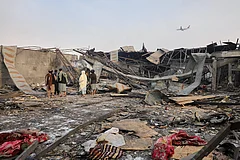
This was a major change in the relationship. Security disagreements that had previously produced diplomatic protests, border closures and pressure were now directly generating military confrontation between the two neighbours.

How Did Trade Become A Weapon?
Trade has become another casualty of the security dispute.
Pakistan and Afghanistan remain economically connected despite the deterioration. Pakistan's Foreign Ministry records bilateral goods trade of about $1.38 billion in 2024-25 and lists Torkham, Chaman and other crossings as important routes for commerce and transit. It also notes that the two countries signed an Early Harvest Programme in July 2025 as part of efforts towards a preferential trade arrangement.
But those links are vulnerable to security closures. In 2025, Pakistan said Afghan transit trade would remain suspended while it assessed the security situation. Afghanistan has separately protested closures of Torkham, arguing that they hurt traders and disrupted regional commerce.
Trade has therefore become part of the pressure between the two states. Neither side benefits from prolonged disruption, but border commerce is increasingly affected by unresolved security disputes.
Why Did Afghan Refugees Become Another Flashpoint?
The refugee issue has added a separate layer of tension.
Pakistan has been implementing its Illegal Foreigners Repatriation Plan since November 2023, targeting foreign nationals living without valid documents or with questionable documentation. In July, Pakistan's Foreign Ministry said the process was ongoing and that the government had facilitated the relocation of more than 89,000 Afghans to third countries since 2021.
The scale of movement has since become substantial. UNHCR's latest data show 1.23 million returns to Afghanistan in 2026 as of September 22, including about 705,400 from Pakistan. The UNHCR figures include deportations, assisted voluntary repatriation and other forms of return.
For Pakistan, the policy is primarily an immigration and documentation measure. For Afghanistan, large-scale returns have become another source of bilateral pressure, particularly as Kabul deals with the challenges of reintegration.
The refugee issue is therefore connected to the wider deterioration, but it should not be treated as the cause of the TTP dispute. It is another pressure point that has accumulated as relations have worsened.

Can The Two Sides Still Talk?
The relationship has not broken down completely.
Pakistan and Afghanistan have continued diplomatic contacts even during periods of military escalation. China hosted talks between the two sides in Urumqi in April 2026, where Afghanistan said security issues, bilateral relations and regional stability were discussed in what it described as a constructive atmosphere.
Afghan officials subsequently described the talks as encouraging and expressed hope that technical differences would not derail the process.
Pakistan has similarly maintained that it does not want war with Afghanistan and has said it remains open to dialogue, while insisting that the TTP issue must be addressed. Its September position was that Pakistan wanted good relations with Afghanistan but expected Kabul to curb militants it says are operating from Afghan territory.
That leaves diplomacy functioning mainly as crisis management. The two sides continue to talk because they share unavoidable interests in border security, trade and regional stability, even while they disagree fundamentally over the source of the security threat.
What Has Actually Changed?
The relationship has shifted from a working security partnership to a relationship dominated by competing claims over security and sovereignty.
In 2021, Pakistan saw the Taliban's return as an opportunity to pursue engagement with a government capable of helping stabilise Afghanistan and prevent its territory from being used against neighbours. The TTP issue complicated that expectation almost immediately.
The UN now identifies TTP as a major terrorist group operating from Afghanistan and links its attacks on Pakistan to military confrontation. Pakistan says the Taliban authorities are supporting the group; Kabul denies that and rejects the legitimacy of Pakistani military action.
The consequences have spread outward. Border disputes have intensified, military strikes have crossed into Afghan territory, trade routes have been disrupted and large numbers of Afghans have returned from Pakistan. Yet the two sides are still using diplomatic channels, including China-backed talks, rather than severing contact entirely.

From Strategic Partners To Security Rivals
Pakistan and the Afghan Taliban did not become adversaries because of a single dispute. The relationship deteriorated as Islamabad's expectation that Kabul would help contain threats from Afghan territory collided with the Taliban authorities' rejection of Pakistan's demands over TTP.
That dispute then became harder to contain because it was tied to the border, military action, trade and refugee policy. Pakistan now treats the TTP issue as the main obstacle to improved relations, while Afghanistan sees Pakistani strikes and border measures as violations of its sovereignty.
The relationship has therefore moved from strategic expectation to security management. The remaining diplomatic channels show that the two countries are not locked into uninterrupted confrontation. But unless the TTP dispute and the competing claims over cross-border security can be addressed, trade, borders and refugee policy will continue to be pulled into the same bilateral crisis.















