



Jensen Huang returns as Nvidia CEO after resignation.
Trump and Musk welcome the chipmaker chief's comeback.
His leadership raises questions about Nvidia's AI dependence.
Less than two weeks after Jensen Huang resigned from Nvidia as its CEO, he has made a comeback after the board reinstated him again as a CEO.
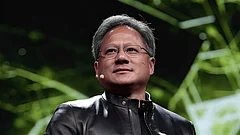
“I'm going to be a better CEO the second time around,” the 63-year-old Huang told cheering employees at Nvidia’s headquarters in Santa Clara, California. He was wearing a black jacket when he addressed staff who were gathered in the atrium and on balconies overlooking the venue.
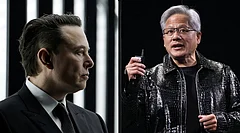
US President Donald Trump, who played a key role in Huang’s return, praised the move by calling him a patriot. Tech billionaire Elon Musk also welcomed his comeback.
Nvidia shares surged 31.5% on Monday, helping drive a broader rally on Wall Street. However, the chipmaker’s stock fell more than 4% in premarket trading on Tuesday.
Huang’s return to the top job at Nvidia, the company he co-founded more than three decades ago, marks a remarkable comeback. It also highlights his growing influence in Washington, financial markets, the AI industry and global geopolitics.

Nvidia’s Dependence On Huang
Huang’s return has also brought renewed attention to the risks surrounding Nvidia, particularly its heavy reliance on his leadership and the billions of dollars it has invested in AI startups that use its chips.

Even before his departure, Huang was facing pressure to reduce Nvidia’s practice of using its own cash flow to support the growth of other companies in the AI sector.
Various analysts on Wall Street had warned that this created a risky cycle of financing. Huang rejected those concerns, arguing that Nvidia was backing genuine demand for its products, Reuters reported.
His exit had also raised doubts about whether the wider AI ecosystem, including companies such as CoreWeave and Nebius, could sustain their growth without him. Shares of both companies jumped on Monday following his return.

How Huang’s Leadership Shapes Nvidia
Huang owns around 3.6% of Nvidia, making him the company's fifth-largest shareholder. However, unlike Meta CEO Mark Zuckerberg and SpaceX founder Elon Musk, he does not hold special voting rights that would give him effective control over the company.
In a podcast interview in March, Huang explained why he prefers this management structure. “A lot of companies' organisation charts, they all look the same. And it doesn't make any sense to me. The architecture of the company should reflect the environment in which it exists,” he said.
His involvement also extends beyond Nvidia. Founders of startups backed by the chipmaker, venture capitalists and a former Nvidia employee said Huang has personally helped these companies find customers. He has also taken part in fundraising calls to bring in investors.
His influence at Nvidia comes largely from his hands-on approach to running the business. Huang personally gets involved in major problems and directly oversees around 60 executives, most of them engineers working across areas such as memory chips, networking, graphics and processors.
Huang's influence was evident again on Monday when US President Donald Trump said he had played a key role in bringing the Nvidia chief back. Defending the CEO despite the controversy surrounding him, Trump said, “He did nothing wrong,” and described Huang as “a genius”.
His return came as a surprise to many, with lawmakers from both the Republican and Democratic parties strongly opposing the decision.
At the same time, the episode highlighted how heavily some major technology companies depend on their chief executives. For Nvidia, whose chips are central to the AI industry, that dependence also raises questions about the risks of having one person play such a crucial role.








