



IRGC General Mohammad Reza Naqdi stated Iran could extend the conflict with the US until Donald Trump's presidential term ends on January 20, 2029.
Naqdi emphasized that prolonging the war serves a military purpose to achieve deterrence and cause attrition against future US aggression.
The general dismissed the threat of US nuclear strikes, claiming American military bases worldwide would be occupied the morning after any such attack.
Iran could prolong its ongoing conflict with the US until President Donald Trump finishes his term on January 20, 2029. Mohammad Reza Naqdi, a general in the Islamic Revolutionary Guard Corps and a close aide to Iran's Supreme Leader Mojtaba Khamenei, issued the warning during a rare interview with US broadcaster PBS.
"The longer this war lasts, the more experience we gain. We had never seen a real war to gain real experience to learn how to fight with America. In these five months, we have learned how," Naqdi said.
The conflict erupted on February 28, 2025. Joint US-Israeli airstrikes targeted and killed the then 86-year-old Supreme Leader Ali Khamenei alongside a swath of the country's leadership. In response, the Iranian forces attacked American and Israeli assets in the Middle East.
Deterrence and Nuclear Threats
Prolonging the war serves a calculated military purpose. "We have to attain deterrence so that the enemy never dares to attack us so we can live with security. One way is to prolong this war until we get to the next term of the presidency and cause attrition so that if anyone else wants to attack Iran, they will know there is a cost," Naqdi told PBS.
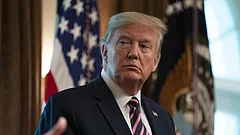



The general dismissed the threat of US nuclear strikes, warning it could "end up being a mistake for them". "The morning after they use a bomb, all of America's military bases around the world will be occupied. Today, things are different than World War II. The people of the world have awakened. No one in the world will allow for such a crime to be committed, because the next time it could be them," he said. He added that Iran has no plans to build its own weapons. "Our nuclear bomb is the hearts of the people of the world that we won fighting oppression...There is no need for nuclear bombs. There is no need for slaughter."
Addressing public rhetoric, Naqdi clarified they have "no enmity" with the Americans and the "Death to America" slogan targets US leadership, not its citizens. He stated the animosity stems from US military interventions across more than 70 countries.
Missile Production and Faith
Ideology drives Iran's military approach more than hardware. "We are not reliant on missiles and drones. If we are victorious, we relied on our faith to be victorious... The Americans and the Zionists always want to count our missiles," Naqdi said.
Despite this stance, Naqdi claimed Iran's daily missile manufacturing rate exceeds the number of missiles it launches. Asked where Iran makes its missiles, he said, "We do it in different ways. We have various ways to manufacture them securely. Rest assured, even if this war lasts for years, until the last day, Iran's rockets will be launched."
The military remains prepared for extreme scenarios. "If there comes a day when Iran has no more missiles left, that's when we will be even more dangerous for America," Naqdi added.
Stalled Peace Negotiations
Diplomatic efforts to end the hostilities remain deadlocked. Reuters reported, citing a senior Iranian source, that there had been no progress in diplomatic talks to revive the interim peace deal and establish an implementation timeline.
Trump and Iranian President Masoud Pezeshkian signed a 14-point peace agreement on June 17, 2025. The agreement provided for an immediate cessation of military operations, including in Lebanon, and commits both countries to pursuing a final agreement within 60 days. Trump subsequently declared the deal "over" on July 8, 2025. Tehran suspended the memorandum of understanding in mid-July 2025, accusing Washington of violating its commitments.
Both sides maintain conflicting grievances. Washington blames Tehran for failing to reopen the Strait of Hormuz. In response, Tehran accuses the US of refusing to lift port blockades and release frozen assets.















