Balen Shah rose to power after Nepal’s Gen Z-led protests reshaped the political system
His government now faces parliamentary scrutiny over its approach to governance and accountability
Shah’s appearance before lawmakers on August 26 will be an early test of his relationship with Parliament
Five months ago, Balendra Shah appeared to embody the political change unleashed by Nepal’s Gen Z movement.
The former Kathmandu mayor and rapper rode the political momentum created by the September 2025 protests that brought down the government of KP Sharma Oli. The Rastriya Swatantra Party (RSP) emerged with 182 of the 275 seats in the House, giving it a commanding majority, and Shah became prime minister on March 27.
Now, the political equation is changing.
The Speaker has directed Shah to appear in the House of Representatives on August 26 and answer lawmakers’ questions after weeks of opposition pressure. Local media reports said opposition lawmakers ended their 78-day protest after the ruling. The Federal Parliament’s official record confirms that the House was sitting on Monday.
The pressure has not translated into a government collapse. But it raises a larger question: how did the politician who emerged from Nepal’s Gen Z uprising reach the top of the political system, and why is that same system now testing him?
How Did Gen Z Protests Change Nepal?
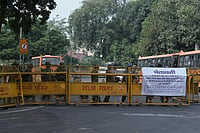
The protests began on September 8, 2025, initially around the government’s ban on more than two dozen social media platforms. According to the Nepal Police’s account, the demonstrations quickly expanded into a broader movement involving demands for good governance, accountability, transparency and action against corruption. The protests escalated after clashes with security forces and were followed by attacks and damage to government buildings.



The interim government later described the movement in broader terms.
In her September 19 Constitution Day address, interim Prime Minister Sushila Karki said the Gen Z movement reflected dissatisfaction with corruption, shortcomings in governance and development, and unmet expectations among younger Nepalis.
The protests were followed by Oli’s resignation on September 9. President Ram Chandra Paudel subsequently appointed Karki as interim prime minister as Nepal moved towards fresh parliamentary elections.
The movement therefore did more than remove one government. It created political space for figures who could claim to represent a break with the established parties.

How Did Balen Become The Face Of Change?
Shah’s rise had started before the uprising.
In 2022, he won the Kathmandu mayoral election as an independent candidate, defeating established political forces and becoming one of Nepal’s most recognisable anti-establishment politicians.
After the September uprising, that image became more politically valuable. Local media reports said Gen Z representatives approached Shah about a possible transitional role, although he ultimately chose electoral politics. In January 2026, he resigned as Kathmandu mayor, joined the RSP and was named its prime ministerial candidate.
His choice of constituency was also symbolic. Shah contested Jhapa-5, a long-standing stronghold of former prime minister KP Sharma Oli.
He defeated Oli by a wide margin, securing 68,348 votes against Oli’s 18,734. Nepal’s state broadcaster Radio Nepal reported the result.
How Did He Become Prime Minister?
Shah’s victory was part of a much bigger RSP breakthrough.
The RSP’s 182 seats gave it a commanding parliamentary majority.
That allowed Shah to move from anti-establishment mayor to head of government through an electoral mandate rather than an interim political arrangement.
The President Ram Chandra Paudel administered the oath to Shah in March.
The distinction matters. The Gen Z movement created the opening, but voters then gave Shah and his party the institutional power to govern.

What Did Voters Expect?
The expectations surrounding Shah were unusually high.
He was not a conventional politician promising continuity. His appeal was based on the idea that an outsider could challenge Nepal’s established political class and replace political patronage with competence, transparency and delivery.
RSP’s rise has been linked to public frustration with older parties, corruption and poor governance, while questioning whether the party has retained the momentum that carried it to power.
That creates a particularly difficult standard for his government.
A conventional government can argue that reforms take time. A government elected as an alternative to the old political order is judged more directly on whether it behaves differently.
Why Is Parliament Pressuring Shah?
One of the clearest problems is Shah’s relationship with Parliament.
Opposition lawmakers had been pressing the prime minister to appear in the House and answer questions on matters under his responsibility.
The dispute intensified after Shah made controversial remarks in Parliament on May 31 concerning Nepal-India border issues. He said Nepal had also encroached on Indian territory in some areas.
The remarks triggered criticism from opposition parties. Local media reports said lawmakers demanded that Shah clarify or withdraw the statement. Nepal’s Foreign Ministry subsequently said the remarks related to cross-border occupation and land use in no-man’s-land areas, rather than a new territorial claim.
The parliamentary dispute was broader than the border remarks.
Opposition lawmakers had been protesting Shah’s absence from the regular question-and-answer process for weeks. Last week, the Speaker directed him to appear before the House on August 26, after which opposition lawmakers ended their 78-day protest.
The issue is therefore not simply one controversial statement. It has become a test of how Shah interacts with the institution that gives his government its democratic mandate.

Is The Border Dispute Still Affecting His Govt?
Yes, although the controversy has moved beyond the original remarks.
Nepal’s Foreign Ministry continues to describe questions involving Lipulekh, Limpiyadhura and Kalapani as matters to be resolved through diplomatic channels. In an August 7 address, Foreign Minister Shisir Khanal also outlined Kathmandu’s broader approach to relations with India and China.
At the same time, Shah has faced scrutiny over his broader diplomatic style.
Local media reports said he had initially avoided one-to-one meetings with foreign ambassadors, preferring group engagements. On August 10, he held separate meetings with the Indian and Chinese ambassadors, a departure from that practice. The meetings were presented by his secretariat as part of efforts to deepen relations with both neighbours.
The episode illustrates another challenge for an inexperienced national government: positions that helped a politician build an outsider image can become harder to sustain once that politician is responsible for managing state-to-state relationships.
Is Shah Losing Gen Z Support?
There are signs of frustration among some activists and young supporters, but no clear evidence of a broader collapse in Shah’s youth support.
A Kathmandu Post interview with Gen Z activist Rakshya Bam in August raised questions over whether Shah’s government was delivering on the democratic mandate created by the protests. Bam criticised the government’s approach to governance, parliamentary engagement and communication.
Another Kathmandu Post analysis argued that the RSP’s appeal was losing some of its initial shine as voters confronted everyday concerns including governance, services and economic pressures.
These are media analyses and should not be treated as evidence of a measurable collapse in Shah’s support. But they point to a political risk: the movement that helped propel him to power also created expectations that are difficult for any government to satisfy.
What Is The Bigger Test For Balen?
The tension in Shah’s government is ultimately between outsider politics and institutional government.
As mayor, Shah could build his image around visible action and direct communication. As prime minister, he has to manage Parliament, a political party, the bureaucracy, constitutional institutions, foreign governments and competing regional interests.
Recent local media analysis has focused on precisely this transition, questioning whether Nepal’s democratic institutions can be strengthened without concentrating too much political authority around one leader.
That does not mean Shah’s mandate has disappeared. The RSP still holds a commanding parliamentary majority, and his government remains in office.
But the terms of the political debate have changed.
The 2025 Gen Z movement was fundamentally about accountability and the failure of established institutions to respond to public expectations. Shah’s government is now being asked to demonstrate those same qualities from inside the system.

What Happens Next?
The immediate test will come in Parliament.
Shah is scheduled to appear before lawmakers on August 26 following the Speaker’s directive and weeks of opposition pressure. The Federal Parliament’s official record confirms parliamentary proceedings on Monday, while local media reports provide the political context for the dispute.
Beyond that, the larger test is whether Shah can convert the political capital of the Gen Z movement into functioning institutions and measurable governance.
The protests brought down the old political order. The election gave Shah an overwhelming mandate to replace it.
Now Parliament, voters and the institutions he governs are testing whether an outsider who rose by promising change can also operate within — and strengthen — the system he inherited.