Smaller caste-based parties are reportedly seeking accommodation within Congress's seat share.
The outreach comes as Akhilesh Yadav stresses “winnability” in SP-Congress seat-sharing talks.
Congress's engagement with smaller outfits points to an effort to build a broader organisational and social base.
As seat-sharing talks between the Samajwadi Party and Congress for the 2027 Uttar Pradesh Assembly election drag on, a parallel trend has taken shape: a cluster of smaller, caste-based opposition outfits that once sat comfortably within Akhilesh Yadav's alliance are now gravitating toward Congress instead. Rahul Gandhi has personally met several such leaders in recent days, even as Akhilesh has made clear he wants a leaner coalition built around winnability rather than accommodation.
The shift is reshaping how Congress positions itself in India's most politically significant state — not merely as the SP's largest ally, but as an alternative gathering point for smaller players Akhilesh appears willing to let go.

What's Happening With The Smaller Parties?
Several smaller, locally influential outfits — Swami Prasad Maurya's party, Sanjay Chauhan's Janwadi Party (Socialist), representing the OBC Chauhan community, and Pankaj Niranjan of Apna Dal (Kamerawadi) — have reportedly asked Congress to accommodate them within its own seat allocation for 2027, rather than seek separate arrangements with the SP.


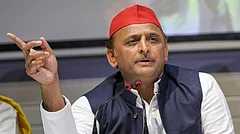
Rahul Gandhi has held a series of meetings with such regional party leaders as part of what reports describe as a push to expand Congress's organisational footprint across Uttar Pradesh ahead of the polls.
Why Is Akhilesh Keeping His Distance?
Akhilesh has publicly said seat-sharing even within the core SP-Congress alliance will be decided by "winnability" rather than a fixed quota, and has gone further by asking Congress itself to field only candidates capable of actually winning their seats.
That logic appears to extend to smaller potential allies too: having already seen alliance partners complicate his coalition math in recent cycles, the Rashtriya Lok Dal's earlier exit from the INDIA bloc, Apna Dal (Kamerawadi)'s own break from the SP ahead of the 2024 Lok Sabha polls, and Swami Prasad Maurya's departure from the SP that same year, Akhilesh is reported to be wary of carrying smaller outfits with limited standalone vote share into a tightly contested 2027 battle.

Which Leaders Are Involved, And What Do They Want?
Swami Prasad Maurya, a veteran OBC leader who has moved through the BSP, BJP and SP over his career, quit the SP in 2024 after remarks he made on the Ramcharitmanas drew controversy and strained his standing with Akhilesh; he has since floated his own outfit and is now reportedly seeking around a dozen seats from Congress, with a preference for his candidates contesting on his own party's symbol.
Sanjay Chauhan brings organisational reach among the OBC Chauhan community through his Janwadi Party (Socialist). Pankaj Niranjan represents a faction of Apna Dal (Kamerawadi), the Pallavi Patel-led party that broke from the SP's alliance before the 2024 Lok Sabha election and briefly aligned instead with Asaduddin Owaisi's AIMIM. All three have turned to Congress rather than the SP to secure a place on the ballot in 2027.
How Is Congress Responding?
UP Congress in-charge Rajendra Pal Gautam raised the party's own seat demand from the SP to around 200 of Uttar Pradesh's 403 Assembly seats as of October 4, 2026 — up from the roughly 150 seats Congress had earlier indicated it wanted.
Congress's broader approach has drawn comparisons to the BJP's own pre-2017 UP playbook: building alliances with smaller, locally influential caste-based outfits and absorbing credible leaders into its own fold, rather than relying solely on its tie-up with a single larger party. Reports suggest Congress is open to fielding leaders like Maurya on its own symbol, which would mean such seats come out of Congress's share of the alliance rather than a separate allocation from the SP.
What Does This Reveal About Congress's Broader UP Strategy?
The courtship of smaller parties sits alongside Congress's recent organisational reshuffle in Uttar Pradesh — naming Aradhana Mishra as state president and Imran Masood as working president — as part of a wider effort to rebuild an independent caste coalition of its own: Brahmin, Muslim and Dalit leadership at the top, and now a cluster of OBC sub-group leaders being drawn in from outside.
The aim is to position Congress as a credible organisational hub in its own right rather than simply the SP's junior partner in the alliance.

Where Do SP-Congress Talks Stand, And What's At Stake?
The negotiation has grown increasingly public and sharp-edged: Congress pressing for roughly 200 seats, while SP MP Shiv Pal Singh Patel has dismissively suggested Congress "should be happy" with around 50, pointing to the SP's considerably stronger showing in the 2024 Lok Sabha election.
Akhilesh himself has downplayed talk of a rift, insisting that alliance victory matters more than the exact seat count, even as he holds to winnability as his stated bottom line. The smaller parties' pivot toward Congress adds a further wrinkle: if Congress tries to carve out seats for Maurya, Chauhan and Niranjan from within its own share, that could shape how large a seat demand it ultimately presses with the SP.
For Akhilesh, the bet is that a leaner, more disciplined alliance outperforms a broader but harder-to-manage one; for Congress, absorbing these leaders could meaningfully widen its footprint beyond its traditional base — but only if they can deliver votes beyond their own relatively narrow followings, a question that remains untested ahead of 2027.