



Legendary Bengali star Uttam Kumar’s centenary is being celebrated this year.
Sayandeb Chowdhury’s Uttam Kumar: A Life in Cinema is significant as the first substantial book-length study of the actor bring this popular cultural icon—within an otherwise culture-obsessed Bengali community—into the realm of serious critical discussion.
It puts the last decade of his career—coincidentally, also the last decade of his life—under scrutiny.
This year, as Uttam Kumar’s centenary is being celebrated, I heard film theorist and academician Moinak Biswas reminiscing about his younger days of discovering cinema. He said, and I paraphrase: we knew Uttam was worth discussing, but coming from the cine-society milieu, we couldn’t quite come to terms with the significance of his mainstream films. Biswas’ statement is borne out by the relative scarcity of serious critical writing on Kumar. Apart from a handful of significant essays such as Sharmishtha Gooptu’s Bengali Cinema: An Other Nation, Maitreyee Chowdhury’s Uttam Kumar-Suchitra Sen: Bengali Cinema’s First Couple and The Couple and their Spaces: Harano Sur as Melodrama Now by Biswas himself—there has been surprisingly little sustained critical engagement with Kumar’s body of work. Instead, innumerable pieces of gossip and memorabilia have often confined an actor of his stature to page-three and popular celebrity culture.
Sayandeb Chowdhury’s Uttam Kumar: A Life in Cinema (Bloomsbury) is significant as the first substantial book-length study of the actor to have the courage to bring this popular cultural icon—within an otherwise culture-obsessed Bengali community—into the realm of serious critical discussion. First published in 2021, the book was republished this year to commemorate the centenary of its subject, with several new chapters and a refreshing foreword by filmmaker Sudhir Mishra.
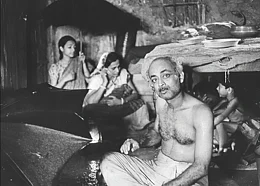
The first chapter opens with a phone conversation between Satyajit Ray and Kumar, in which Ray invites the actor to attend the premiere of Nayak (The Hero). The conversation immediately evokes an image from the same film: a close shot of Kumar holding the telephone receiver. From this seemingly incidental recollection, the author begins to establish the extraordinary aura surrounding Kumar.



Chowdhury approaches Kumar through the language of hyperbole, placing his appeal alongside some of the most recognisable male stars of Hollywood and European cinema. His romantic charm is likened to Cary Grant, his intelligence to Humphrey Bogart, and his vulnerability to Marcello Mastroianni, while Gregory Peck and Gary Cooper also enter this constellation of comparisons. Chowdhury acknowledges that such comparisons may appear outlandish, but suggests that hyperbole is perhaps the only adequate language with which to approach a hero of Kumar’s stature. Rather than attempting to domesticate Kumar within a conventional account of Bengali stardom, the author first establishes the sheer magnitude of the phenomenon.
The section “Cinema Verite” shifts the discussion from the mythology of the star to his larger significance within popular cinema. Chowdhury argues that Kumar did not merely inhabit the conventions of popular Bengali cinema; he helped reshape them. More significantly, his stardom introduced into popular cinema a climate of critical engagement, intellectual ambition and an acute awareness of 20th-century modernity. The chapter begins to position him not simply as a hugely popular romantic hero, but as a figure through whom the possibilities and contradictions of popular cinema itself can be reconsidered.
In “A Historical Conditionality”, the author examines how charged historical moments played out during the high noon of Bengali popular cinema, arguing that Kumar’s enormous presence helped shape that trajectory. The discussion then turns to the 1950s, when both Ray and Kumar emerged as defining figures. They could be understood as establishing two distinct “schools” of cinema or two different celluloid ecosystems around themselves—though, paradoxically, these ecosystems converged in the figure of Kumar himself, most memorably in his collaborations with Ray.

In “A Dulcet Naturalism”, Chowdhury emphasises the actor’s unnervingly effortless mode of performance, which departed from the dominant theatrical style associated with some of his influential predecessors. What looks like simplicity, the author suggests, was in fact a significant intervention in the grammar of popular performance.
“A Bhadralok Desirability” takes a look at the kinds of characters Kumar repeatedly played: doctor, scientist, engineer, architect, lawyer, radio singer, industrialist, among others. These professions were deeply embedded in the aspirations of a confident, urban Bengali middle class. Kumar’s characters therefore did more than provide romantic fantasy; they embodied a particular imagination of urbanity, respectability and social mobility.
This is where the book's argument about Kumar becomes particularly compelling. No single figure in the history of Bengali popular culture, the author suggests, so neatly embodied the imagination, anxieties and desires of the middle class. One dimension of Kumar’s Hollywood-like stardom can be understood through the imported conventions of melodrama; another becomes visible only when we recognise how those transnational forms were reworked through specifically Bengali cultural codes. Kumar cannot be understood simply as either a star or a quintessential bhadralok. He was both and, crucially, each identity helped constitute the other.
The chapter titled “Hard Times in a Soft City” is set in the capital city of newly independent and partitioned Bengal. Through a complex and ambivalent understanding of modernity—and, more specifically, of the postcolonial city-society—this chapter explores how the characters played by Kumar came to epitomise the city itself. Reading it, I could transport myself through time: arriving at the 19th-century Calcutta of Saheb Bibi aur Gulam, and then bidding goodbye to the enigma of Calcutta in the late-1960s Chowrongee. Chowdhury calls Chowrongee a moment of reckoning both for Bengali cinema and for Kumar’s oeuvre. There is a Calcutta after Chowrongee, but it is a different Calcutta; and there is stardom after Chowrongee in Kumar’s career, but that is a different kind of stardom. The dark Calcutta of the 1970s was to re-emerge in the art cinema of the decade, while the figure of the zealous protagonist who had mirrored the city through romance, humour, pathos and heroic discernment gradually began to fade.
The book is not a uni-dimensional appreciation of Kumar. Instead, it puts the last decade of his career—coincidentally, also the last decade of his life—under scrutiny. By then, the Bengali film industry had become so heavily dependent on him that he had to appear in a string of below-par, at times downright horrendous, films simply to keep the industry going. As the author suggests, having become the industry itself, Kumar also came to bear the cross of his fame too heavily, making his decline almost inevitable in a time of irrevocable change. He did not have the luxury of fading away gradually. His was a stardom that had to exhaust itself while still at work.
Several other chapters analyse this phenomenon from different angles. The epilogue brings together Ray on Kumar and Kumar on Ray, alongside Sharmila Tagore’s warm account of her experience of working with Kumar. Ultimately, this book is an attempt to understand a particular moment in the cultural history of Bengal through the life, body and afterlife of its most enduring star. For anyone interested in Bengali cinema, Bengali society and the cultural imagination of Bengal, this is a book worth reading.
(Debarati Gupta is a filmmaker, writer and guest lecturer at the University of Calcutta)








