



CM Vijay wants a permanent freeze on the Lok Sabha's 543 seats and today's state-wise seat shares, and has asked TN's MPs to oppose the Centre's Delimitation Bill, 2026.
The bill proposes basing delimitation on fresh census data and expanding the Lok Sabha to 850 seats, reviving fears that fast-growing northern states will gain influence at the South's expense.
The exercise is also the trigger for the 33% women's reservation law passed in 2023, adding urgency to an already fraught federal dispute.
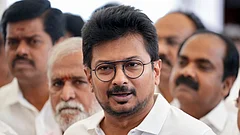
On August 8, 2026, Vijay convened a consultative meeting of Tamil Nadu's MPs in Chennai on the Centre's proposed delimitation exercise, urging them to unite against a redrawing of Lok Sabha seats that he says could cost the state its political voice.
The meeting was boycotted by the DMK and AIADMK, who called it a stunt, but it has still succeeded in putting Vijay, and not his predecessor M.K. Stalin, at the Centre of Tamil Nadu's oldest political argument: the fight to protect the state's weight within a Parliament increasingly shaped by the more populous north.

What exactly is Vijay demanding?
Vijay wants the Lok Sabha's current strength of 543 seats, and the existing distribution of seats among states, permanently frozen, and has asked all political parties to unite against the Centre's proposed constitutional amendment and Delimitation Bill. At his August 8 meeting, 19 MPs from the TVK alliance — including the Congress, the VCK, the MDMK, the IUML, and the Left parties — passed a resolution calling delimitation "unnecessary" and "an injustice" to Tamil Nadu.


The group also asked to retain the existing 2.2:1 ratio between the Lok Sabha and Rajya Sabha, and said Parliament, not the Delimitation Commission alone, should have the final say. Tamil Nadu's government has said it will move a special Assembly resolution opposing the exercise.
Why is Tamil Nadu worried about delimitation?
The Union government introduced three linked bills on April 16, 2026 — the Constitution (131st Amendment) Bill, the Delimitation Bill, and the Union Territories Laws (Amendment) Bill — to enable delimitation using fresh census data, expand the Lok Sabha's maximum strength from 550 to 850 seats, and unlock the women's reservation law.
The number and distribution of Lok Sabha seats among states has been frozen since the 1970s specifically to avoid punishing states that controlled population growth, a freeze extended by the 84th Amendment in 2001 until the first census after 2026. The DMK's Kanimozhi Karunanidhi has said any changes must not cut Tamil Nadu's existing 7.18 per cent share of seats, a red line Vijay's resolution echoes.
Why does population become politically important?
Article 81(2)(a) of the Constitution requires Lok Sabha seats to be allocated among states roughly in proportion to population, which is precisely what worries southern leaders. States such as Uttar Pradesh and Bihar have grown faster since the 1971 Census, the last one used to apportion seats, while Tamil Nadu, Kerala, Karnataka, Andhra Pradesh and Telangana brought down fertility rates well ahead of national targets.
A purely population-based formula would reward the states that grew fastest and, in the South's telling, penalise the ones that met the family-planning goals the Centre itself once promoted.
How could seat redistribution affect the South?
The five southern states currently hold about 129-130 of the Lok Sabha's 543 seats. Government-aligned estimates suggest that under the proposed 850-seat expansion, the South's tally could rise to roughly 195 seats, keeping its overall share close to today's level — an assurance Union home minister Amit Shah has repeated on the campaign trail in Tamil Nadu.
Southern leaders remain unconvinced, partly because a bigger House also raises the ceiling on the Council of Ministers under Article 75, which analysts estimate could grow from 81 to about 122 members — a change that would let larger, faster-growing states command more ministerial berths even if the South's proportional seat share is technically preserved.

Where does women's reservation fit in?
The 2023 law reserving a third of Lok Sabha and Assembly seats for women tied its own start date to the first delimitation carried out after 2026, meaning the quota could not take effect until that redrawing was complete. Facing delays in the ongoing census, the Union Cabinet approved a workaround in April 2026 to instead use 2011 Census figures for this round of delimitation, with the 131st Amendment Bill formally removing the requirement to wait for newer data.
That decoupling is what let the government target 2029 for rolling out the women's quota, but it is also what convinced southern states that a politically sensitive redrawing of constituencies is being rushed ahead of the settled facts on population.
Is Vijay reviving Tamil Nadu's federalist politics?
Tamil Nadu's insistence on protecting state power against the Centre has deep Dravidian roots, and until this year it was Stalin who carried that banner nationally, convening a Joint Action Committee of southern and eastern states in Chennai in March 2025. Vijay's August 8 meeting, coming just 80 days into his term as chief minister, was widely read as an attempt to take that federalist mantle for himself and for TVK.
The Week described it as a bid to "seize the leadership of the federalist narrative" from the DMK, a reading reinforced by the DMK and AIADMK's decision to boycott the meeting and dismiss it as political theatre over a bill that hadn't yet been formally taken up. Tamil Nadu minister C.T.R. Nirmal Kumar countered that the Centre was trying to push the exercise "through the back door."
What does this mean for Vijay's national positioning?
The timing matters. Vijay took office after a hard-fought, first-ever election win in May 2026, having earlier been mocked as a distant, "work-from-home" politician following the Karur stampede that killed 41 people during his campaign. Leading the charge on delimitation lets him step onto the same stage Stalin once occupied, defender of Tamil Nadu's interests against New Delhi. It also sits comfortably with the position Vijay staked out from the start: an explicit refusal to ally with the BJP, which he has called an "ideological enemy," making opposition to a Centre-driven delimitation exercise a natural extension of his founding pitch.
Can Tamil Nadu build a broader Southern front?
The template exists. Stalin's March 2025 Joint Action Committee in Chennai drew Kerala's Pinarayi Vijayan, Telangana's Revanth Reddy, Punjab's Bhagwant Mann and Karnataka's D.K. Shivakumar, and produced a joint demand to extend the seat freeze by 25 years; Reddy has separately floated a hybrid formula weighting both population and GDP to soften the impact on the South. But Vijay's own August 8 meeting was confined to Tamil Nadu's MPs, and even there, the state's two largest parties stayed away — a reminder that before TVK can lead a multi-state Southern front, it will first have to win over a Tamil Nadu political class that isn't yet convinced Vijay, rather than Stalin, should be the one leading the fight.















