DMK says it continues to oppose the Centre’s proposed delimitation exercise.
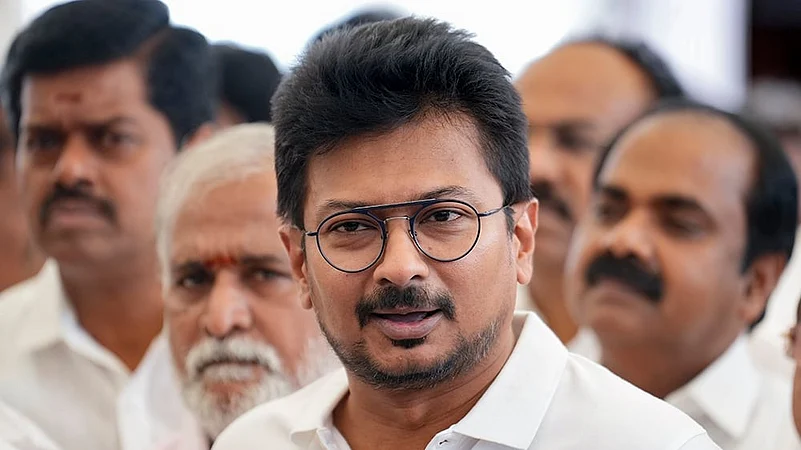
Udhayanidhi Stalin rejected speculation that the party had softened its stand.
Southern states fear population-based delimitation could reduce their relative political weight.
The DMK on Thursday sought to dispel speculation that it had softened its position on the proposed delimitation exercise, with Tamil Nadu Assembly Leader of Opposition Udhayanidhi Stalin asserting that the party had opposed the move from the beginning and would continue to do so.
His clarification came as delimitation once again emerged as a political flashpoint in Tamil Nadu following indications that the Centre intends to revive the legislation, which has been linked to the implementation of women’s reservation.
“The DMK has always opposed delimitation. We will continue to oppose it in the future,” Udhayanidhi told India Today.
“This is not a new issue. The Centre is presenting it as if it has surfaced for the first time,” the Leader of the Opposition in the Tamil Nadu Assembly said.
The statement followed reports suggesting that the DMK could consider supporting the proposed legislation if certain safeguards sought by the party were included.
Tamil Nadu Chief Minister Vijay, meanwhile, has called a meeting of MPs from the state to discuss the proposed delimitation exercise as political differences over the issue widen.




The DMK’s position has also come under scrutiny from the Congress. Rahul Gandhi recently took a veiled swipe at those backing the proposal, describing them as “21st-century Ettappans”, invoking a term commonly used in Tamil Nadu to refer to a traitor.
Report Claims DMK Could Back Bill With Conditions
The renewed debate comes months after a united Opposition defeated the Constitution (131st Amendment) Bill in April. The legislation proposed removing the freeze on expanding the strength of the Lok Sabha.
At the time, DMK chief MK Stalin had strongly opposed the measure and symbolically burnt a copy of the bill.
Political equations have changed since then. The DMK subsequently left the INDIA bloc at the national level after the Congress decided to support Vijay’s TVK in Tamil Nadu.
Questions over the DMK’s current position intensified after The Hindu reported that the party had indicated it could consider supporting the delimitation legislation if three changes were made. Udhayanidhi’s remarks came hours after the report.
The proposed exercise seeks to redraw parliamentary constituencies on the basis of the 2011 Census and could increase the strength of the Lok Sabha from the current 543 seats to around 850.
According to the report, the DMK wants the 1971 Census, rather than the 2011 Census, to remain the basis for determining the distribution of Lok Sabha seats for another 25 years.
The party has also sought an across-the-board 50 per cent increase in Lok Sabha seats for all states. The demand follows what the DMK says was a verbal assurance given by Union Home Minister Amit Shah when the bill was brought before Parliament in April.
The third demand is for the legislation to spell out the number of seats that each state would receive after delimitation.
With 22 MPs in the Lok Sabha and eight in the Rajya Sabha, the DMK remains a significant parliamentary force.

Southern States Fear Loss Of Relative Representation
Opposition to population-based delimitation in Tamil Nadu is closely tied to concerns that southern states could see their relative representation in Parliament decline.
Political parties in the South have argued that states which successfully controlled population growth should not be disadvantaged when parliamentary seats are redistributed.
Tamil Nadu, Kerala, Andhra Pradesh, Karnataka and Telangana together account for around 24 per cent of India’s population.
Since population growth has been higher in several northern states, southern parties fear that using a more recent Census for delimitation could result in the North receiving a substantially larger share of additional Lok Sabha seats.
Even if Tamil Nadu and other southern states gain seats in absolute terms, their proportional influence in Parliament could decline if the increase in northern states is significantly larger.
The issue has also become linked to concerns over tax devolution, with southern states apprehensive that a shift in the demographic and political balance could have wider consequences for their influence over the allocation of central resources.