Sonam Wangchuk shifted focus from Union Education Minister Dharmendra Pradhan’s resignation to securing legal protection for protesting students.
Wangchuk secured a written assurance from the central government late on July 23 confirming that peaceful student protesters would not face FIRs or harassment.
The change in negotiation strategy followed meetings at the hospital on July 21 with Union ministers JP Nadda and Jitendra Singh.
Activist Sonam Wangchuk claimed to have softened his demand for Union education minister Dharmendra Pradhan’s resignation during talks with the government and made protection from legal harassment for protesting students his “non-negotiable” condition for ending his hunger strike. Speaking on the PGX podcast, Wangchuk said that by July 22 he no longer saw Pradhan’s resignation as his top priority and was increasingly worried that violence could spread to other cities.
Wangchuk said that by then the cost of keeping the resignation demand at the centre of the protest had also become clearer. “By 22 I didn't see resignation as the first priority,” Sonam Wangchuk said, adding that he believed the resignation could come later and that others were also pressing for it. “So I started thinking that this resignation will probably happen because they should have done much earlier,” Wangchuk said. “Maybe they didn't have resignation in mind. If it doesn't happen, it will happen in two-four days, and there are others also demanding it.”
Legal Protection Demand
Wangchuk said his focus in the talks shifted to ensuring that students who took part in the protest would not face criminal cases or other legal harassment. “But my main point was that there should be no legal harassment,” he said. “So I softened the resignation demand a little and said — you can consider accountability through resignation, but the non-negotiable is that you will not do legal harassment.”


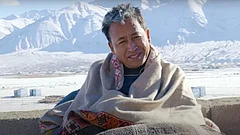

He said the demand took on more weight because of his experience after the September 2025 violence in Ladakh. More than 80 cases were still pending a year later, he said, and people who had tried to prevent violence had themselves been jailed. That made him fear a similar pattern could emerge around the Delhi protest.
Government interlocutors first told Wangchuk that they could give only a verbal assurance that protesters would not face legal harassment. He rejected that. “I said, ‘If it happens, it will be written. Later, there is no honour in anything,’” Wangchuk recalled. “I want a written signature that no FIR, no legal harassment will be on any students who are exercising their fundamental right.” He said he was eventually informed around 11.30pm on July 23 that the government was willing to give the assurance in writing.
July 21 Meetings
The negotiations followed meetings with Union ministers JP Nadda and Jitendra Singh. Wangchuk said they first met him at the hospital on the night of July 21 and asked him to end his hunger strike. At that stage, he said, his demands included accountability through resignation, compensation and a parliamentary discussion aimed at finding long-term solutions.
He later added the demand that peaceful protesters should not face FIRs or harassment. The shift did not remove the resignation issue, but it did push legal protection to the centre of the talks.
Fear Of Escalation
Wangchuk said his decision to prioritise legal protection was also driven by fear that the agitation could spiral out of control. He recalled seeing reports of a “violent buildup” in Connaught Place on the night of July 23, including preparations around metro stations and the deployment of police and paramilitary forces.
“If two-three lakh people in Ladakh had so many people killed, what could happen in Delhi?” Wangchuk said. He added that if the unrest spread to Mumbai, Lucknow and other cities, it could become a “civil war situation”. He said he therefore wanted the hunger strike and the confrontation to end once adequate assurances were secured.
CJP Keeps Pressure
Wangchuk’s decision to soften the resignation demand did not end the issue for the Cockroach Janta Party (CJP). After Wangchuk’s hunger strike was broken, CJP leaders decided to continue the protest and demand Pradhan’s resignation.
Wangchuk said he supported that decision. He argued that resignation represented accountability for what had happened during the protest, even if a change of minister would not necessarily lead to major improvements in education.
“An accountability and some responsiveness” had been achieved, he said, but he did not see a major transformation in the education system following Pradhan’s departure.