Bankipur’s history as a bellwether constituency makes Kishor’s victory symbolically significant for Bihar’s evolving political order.
Kishor represents a new source of political capital built on governance, organisational expertise, grassroots mobilisation and aspirational politics rather than inheritance or caste identity.
As Bihar enters a potential transition beyond Nitish Kumar, Kishor’s rise could position him as a contender for the state’s next politics of sushasan, jobs and opportunity.
Elections in a democracy are intriguingly shape-shifters. Most merely reaffirm the status quo, either returning incumbents to power or rewarding a credible challenger. A few, however, transcend the arithmetic of victory and defeat. They announce the arrival of a new political era, a new Zeitgeist that reorders old hierarchies, and redefines the conventional grammar of politics. Prashant Kishore’s stunning victory in the Bankipur Assembly by-election is one such moment. It is at once the personal triumph of India’s celebrity political strategist, widely credited with pioneering high-impact campaign innovations such as PM Narendra Modi’s iconic Chai Pe Charcha outreach in 2014 and this historic electoral validation of his political experiment, Jan Suraaj, after its much -anticipated debut in the 2025 Bihar Assembly election proved more promising than consequential.
Paradoxically, the verdict is about far more than the BJP's loss of one of its safest urban constituencies. It heralds the rise of an iconoclastic new political generation, animated by the anger, anxieties and aspirations of India's youth, especially Gen Z. The verdict carries an even deeper symbolism. If Champaran became the defining moment of Gandhi's politics and Patna the epicentre of Jayaprakash Narayan's anti-Emergency movement, Bankipur may eventually be remembered not merely for electing Prashant Kishor, but for marking the moment when Bihar's politics began to move decisively into the post-Nitish Kumar era. And this is not without historical precedent.




Before the 2008 delimitation, Bankipur was known as Patna West, the constituency from which maverick Congress leader Mahamaya Prasad Sinha defeated the incumbent Chief Minister Krishna Ballabh Sahay in the watershed 1967 assembly election, paving the way for him to become Bihar’s first non-Congress Chief Minister. The verdict effectively led to the beginning of the decline of Congress’s political dominance in Bihar and ushered in the state’s first experiment with coalition politics, bringing together parties as ideologically diverse as the Jana Kranti Dal, the Samyukta Socialist Party, the Bharatiya Jana Sangh and the Communist Party of India. Patna West also elected Thakur Prasad, one of the founding leaders of the Bharatiya Jana Sangh and a prominent RSS figure in the 1977 assembly elections, underscoring the constituency’s enduring role in the evolution of the BJP’s politics in the state. It is perhaps no coincidence then that the constituency remained a BJP bastion for three decades. From 1995 until this by-election, the seat was held continuously by the father-son duo of Nabin Kishore Prasad Sinha and Nitin Nabin, a rare feat of political continuity in Bihar’s otherwise volatile electoral landscape. In retrospect, Bankipur, formerly Patna West, is one of the most decisive electoral arenas where Bihar’s changing political order reveals itself.
There is a striking irony in the Bankipur verdict. The by-election itself was necessitated by the resignation of Nitin Nabin, the BJP's youngest national president, after his elevation to the Rajya Sabha. The seat has now been won by a charismatic political disruptor who seeks to embody the aspirations of Bihar's Governance generation. In that sense, Bankipur is not merely witnessing a change of representative; it has signalled the arrival of Bihar’s next political generation. Among this emerging generation, Prashant Kishor occupies perhaps the most unconventional position. A public health professional turned election strategist, born into a middle-class family in Buxar to a physician father and a schoolteacher mother, he entered politics without the inherited advantages that have shaped the careers of most of

Bihar's contemporary leaders. Like Tejashwi Yadav, he carries neither the advantage of a political dynasty nor the burden of the legacy of so-called jungle raj. Unlike the popular Chirag Paswan, he inherited neither an established social constituency nor a ready-made party organisation. Nor, unlike Mukesh Sahani, does he derive political legitimacy from a compelling subaltern narrative or an outsider's story of upward social mobility. His journey has unfolded largely outside the familiar pathways of Indian politics. Rather than emerging through student politics or family networks, Kishor built his public identity through an unusually successful career in political consulting, organisational innovation, grassroots mobilisation and his extensive padyatras before launching the Jan Suraaj party.
In short, his victory in Bankipur therefore represents something relatively novel in Indian politics. The country has long witnessed film stars, sporting icons and political heirs convert fame into electoral success. Kishor's rise points to a different source of political capital, one rooted in entrepreneurial ambition, organisational competence and a governance-centric vision rather than inherited identity or personal mythology. Like Tamil Nadu CM Vijay's transition from cinema to politics, Kishor's journey reflects how political legitimacy in the twenty-first century can emerge outside conventional party structures in democracies.
The larger significance of Bankipur, however, extends well beyond Prashant Kishor's personal journey. At its core, it is about Bihar after Nitish Kumar. For nearly two decades, Nitish Kumar has been the defining force in the state's politics. His tenure fundamentally reshaped the state's governance discourse through improvements in law and order, roads, women's empowerment, welfare delivery and social peace. Whether admired or criticised, he has been the most consequential political leader Bihar has produced in the twenty-first century. With that shadow now beginning to recede, the contest is no longer simply about who governs Bihar, but about who inherits the state's political imagination.
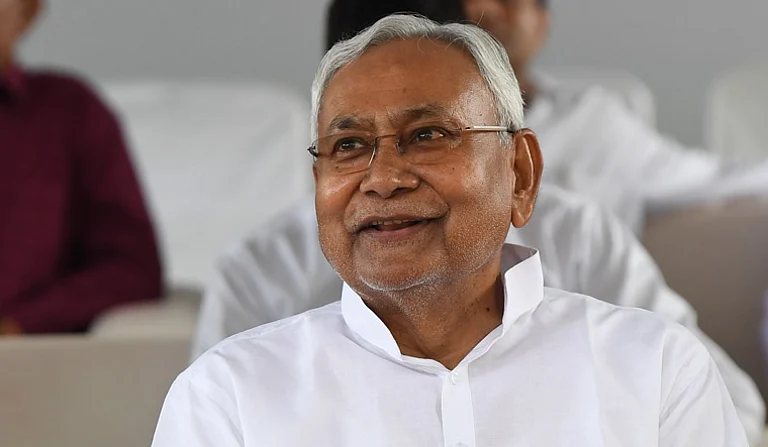
In many ways, Prashant Kishor was once seen as the answer. When Nitish Kumar appointed him National Vice-President of the JD(U), it was an extraordinary elevation for someone who had never contested an election. The move fuelled widespread speculation that the Chief Minister was preparing Kishor for a larger leadership role, perhaps even as his political heir. That relationship eventually unravelled. Kishor left the JD(U), and what had once appeared to be a succession plan quietly receded from public view. Bankipur has now unexpectedly reopened that question. Within the JD(U), Nitish Kumar's son, Nishant Kumar, has emerged as the natural dynastic successor. But beyond the party, Prashant Kishor is increasingly being viewed as a potential heir to the politics of governance that Nitish Kumar came to embody. If Bankipur marks the beginning of Bihar's post-Nitish political transition, Kishor's victory may come to be seen not merely as an electoral upset, but as the first credible claim to the political inheritance of an era and perhaps the first step in his own journey towards becoming Bihar's next Sushasan Babu.
With nearly half its population below the age of 30, Bihar is undergoing a demographic and democratic transformation that is beginning to redefine its politics. The Mandal moment is gradually giving way to an era of aspirational politics, in which the language of social justice increasingly coexists with demands for jobs, education, entrepreneurship, migration and effective governance. At the same time, Hindutva politics in Bihar has increasingly adapted itself to the state's enduring socialist–Dalit-Bahujan traditions rather than displacing them while seeking political dominance. Against this evolving political landscape, Prashant Kishor's rise is as much an expression of this generational churn as it is of his own political
experiment in forging a new-age rainbow coalition of diverse social constituencies and aspirations.
It is precisely here that the Bankipur verdict has the potential to unsettle both the ruling alliance and the opposition. If this emerging political grammar takes root, neither traditional caste arithmetic nor established party structures may be sufficient to contain it. Whether Prashant Kishor's Bankipur victory marks the beginning of a larger political realignment or remains an exceptional electoral moment, only time will tell. What already seems clear, however, is that Bihar stands at a critical inflexion point, grappling with large-scale migration, limited employment opportunities and the rising aspirations of one of India's youngest electorates. The political fortunes of both the ruling alliance and the opposition will increasingly depend on how convincingly they respond to these aspirations and shape the state's future trajectory. Perhaps no image captures Bihar's enduring dilemma more poignantly than Piyush Mishra's haunting lyric from Gangs of Wasseypur: "Ek bagal mein chaand hoga, ek bagal mein rotiyan"("On one side, the moon; on the other, a loaf of bread.") The verdict in Bankipur suggests that a new generation of Biharis no longer wishes to choose between aspiration and survival. It seeks a politics capable of delivering both the moon and the bread, both opportunity and dignity, without compelling its young to leave home in search of either.
Ashwani Kumar is a poet, political scientist, and author of Community Warriors: State, Peasants, and Caste Armies in Bihar. Presently, he is a Senior Visiting Fellow, Centre for Policy Research (New Delhi).
Views expressed are personal.