



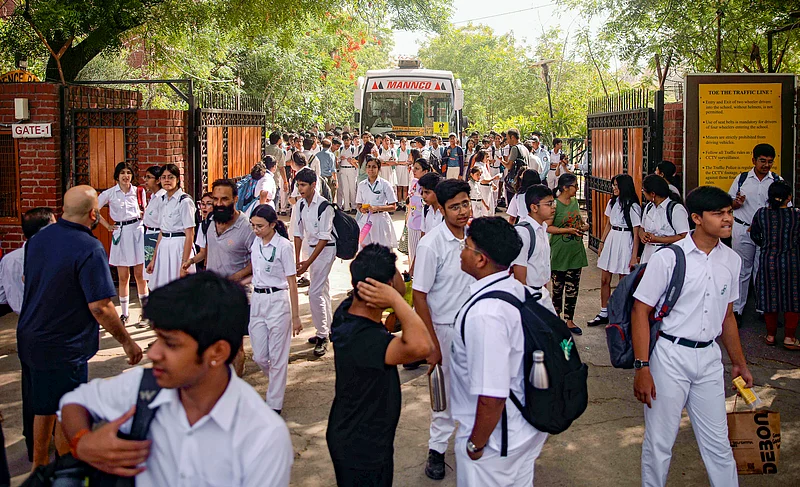
The Associated Management of Primary and Secondary Schools in Karnataka withdrew support for the August 13 bandh, keeping Bengaluru schools open.
School management and teachers wore black ribbons as a symbolic protest against the Cauvery water release directive to Tamil Nadu.
The association cited academic disruptions and acute teacher shortages due to the Special Intensive Revision exercise for remaining operational.
The 12-hour Karnataka bandh on August 13, 2026, saw a mixed and muted impact across the state. Several major pro-Kannada groups withdrew their support for the shutdown. The groups cited improved rainfall and reservoir inflow.
Public transport operated normally under police security. Schools, banks, hospitals, and pharmacies remained open.
Businesses, shops, and restaurants stayed operational. Trade bodies such as the Bangalore Hotels Association offered only moral support instead of shutting down, as per news reports.
Schools Maintain Operations
The Associated Management of Primary and Secondary Schools in Karnataka withdrew support for the bandh. The organisation stated that schools would remain open on August 13.
Academic activities faced disruption because teachers were deputed for the Special Intensive Revision (SIR) exercise, the association stated. Government-aided schools also grapple with an acute teacher shortage.
Closure would severely hit these institutions. School management, teachers, and non-teaching staff wore black ribbons or black strips as a symbolic gesture of moral support. "Schools can use this as a chance to educate the students about the Cauvery dispute. Students from classes five to 12 can be imparted facts about the dispute either during the morning assembly or in the classroom," the association said.




Escalating Cauvery Dispute
The bandh was originally called after the Cauvery Water Management Authority (CWMA) upheld a July 28, 2026 directive from the Cauvery Water Regulation Committee (CWRC). The directive ordered Karnataka to release 3,500 cusecs of water daily to Tamil Nadu for 15 days.
The dispute escalated on August 11, 2026. The CWRC ordered a higher release of 12,000 cusecs—approximately 1 tmcft—daily for 15 days. The CWMA subsequently endorsed this directive.
Pro-Kannada activist Vatal Nagaraj and his faction proceeded with the protest call. They opposed the water-sharing mandates despite the split among organising groups.















