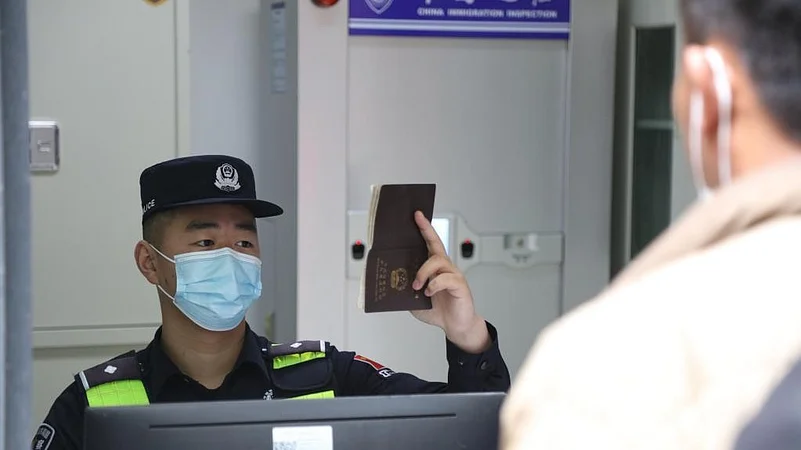
China's new exit-and-entry rules came into force on September 15, expanding controls linked to national security and technology security.
Chinese citizens deemed a potential threat to national technology security can be prevented from leaving the country, while some national-security-related exit bans can last six months to three years.
The rules come amid years of tighter scrutiny of overseas travel and wider concerns over China's use of exit bans against both Chinese and foreign nationals.
China has tightened controls on citizens travelling abroad, giving authorities broader powers to prevent people from leaving the country in cases involving national security, technology and industrial interests. The new regulations, which came into effect on September 15, formalise and expand the existing system of exit restrictions amid growing competition with the US over sensitive technology.
The rules allow Chinese authorities to impose exit bans on individuals deemed a national security risk or those possessing sensitive technological or industrial knowledge, including employees in sectors such as semiconductors and advanced manufacturing. The move comes as Beijing seeks to prevent the outflow of expertise and intellectual property amid an intensifying tech rivalry with Washington, which has also imposed export controls and visa restrictions targeting Chinese nationals in strategic industries.

What Do China's New Travel Rules Say?
The regulation aims to standardise exit and entry administration, protect the lawful rights and interests of exit and entry personnel, and safeguard national sovereignty, security and development interests, according to Xinhua.




China expects that this regulation will improve the exit security risk prevention system, stipulating that the foreign affairs, culture and tourism, and other competent departments under the State Council shall promptly and publicly issue overseas safety alerts and safety risk warnings for tourist destinations.
When processing and approving applications for exit and entry documents, as well as conducting exit border inspections, the immigration authorities shall remind Chinese citizens to exercise caution when traveling to high-risk countries or regions, according to the regulation.
The regulation also details application requirements for exit and entry, refines restrictive measures, and regulates intermediary services related to exit and entry.
Why Is China Tightening Controls Now?
This follow measures that have increasingly affected people working in government and state-linked organisations. In 2023, Reuters reported that Chinese civil servants and employees of state-affiliated enterprises were subject to stricter restrictions on private trips overseas, along with greater scrutiny of their links to foreigners, as Beijing intensified its efforts to counter perceived foreign influence.
There have also been instances in which foreign governments said Chinese authorities prevented individuals from leaving the country, particularly when they were involved in investigations related to national security.
The United States has separately warned travellers about China's use of exit bans, saying they can be imposed without a fair and transparent process under Chinese law.

The development therefore reflects a wider shift in how China treats international movement: travel is increasingly being viewed not only as an individual activity but also through the lens of national security, technology and state interests.
A recent case involved Min Zin, a Myanmar expert and US citizen designated by Washington. He was arrested by Chinese authorities in June on allegations of endangering national security and was detained last month. The United States has described his detention as wrongful, according to Reuters.
The latest regulations have also drawn concern from Taiwan. Taipei has advised its citizens to exercise greater caution when travelling to China. Beijing claims Taiwan as part of its territory and considers Taiwanese people to be Chinese citizens.
Shen Yu-chung, deputy head of Taiwan's Mainland Affairs Council, said the new regulations effectively provide a legal basis for border-control practices that had previously lacked one. He also argued that the rules give enforcement agencies greater discretion in deciding who can be prevented from leaving the country.
The US identified people that may be taregeted by the Chinese: U.S. citizens of Chinese heritage or origin; anyone involved in business disputes or who has ties to US corporate entities involved in business disputes in China; anyone with a current or prior affiliation with US law enforcement, US military, or US intelligence agencies; anyone traveling on US government-funded programs; individuals with current or former connections to the US government.
The Library of Congress noted that the new framework could increase uncertainty over whether individuals will be permitted to leave China, particularly because national-security and development interests are broadly defined. It said the regulations incorporate population mobility more explicitly into China's national-security legal framework.