



Tarique Rahman’s proposed India visit could reset ties between New Delhi and Dhaka
Sheikh Hasina’s extradition remains a major political hurdle in bilateral relations
Energy cooperation and the expiring Ganga Water Treaty add urgency to the engagement
India has invited Bangladesh Prime Minister Tarique Rahman to visit twice, once for a bilateral engagement and again for the BRICS outreach session. Yet New Delhi still had no date to announce at the end of last week, even as Dhaka said the two sides had been in touch for several weeks over the proposed visit.
That uncertainty matters because Rahman’s first visit to India as prime minister would come at a sensitive moment in bilateral ties. Bangladesh has a new elected government, but the relationship with New Delhi remains shaped by the fallout from Sheikh Hasina’s ouster, while both sides still have substantial economic, energy, security and water interests to manage.
The question, therefore, is not whether India wants to engage Rahman. New Delhi has already made that clear. It is what the two governments need to resolve before that engagement can move from an invitation to a confirmed visit.
Why The Visit Matters
Rahman’s emergence as Bangladesh’s prime minister represents a reset in Dhaka’s political leadership after the upheaval that ended Hasina’s rule.
India signalled its willingness to work with the new government soon after Rahman’s election. Prime Minister Narendra Modi congratulated him in February and reaffirmed India’s commitment to the peace, progress and prosperity of the two countries, describing India and Bangladesh as close neighbours with deep historical and cultural ties.
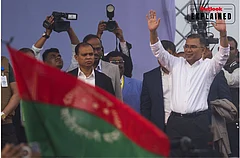


India followed that up with a formal invitation. During Rahman’s swearing-in ceremony in Dhaka in February, Lok Sabha Speaker Om Birla handed him a personal letter from Modi inviting him to visit India at his earliest convenience. The message also reiterated New Delhi’s interest in deepening the partnership between the neighbours.
The proposed visit would therefore carry significance beyond protocol. It would give New Delhi and Dhaka an opportunity to establish the political tone of their relationship under Rahman and address a backlog of issues that have accumulated since the change of government.

Why No Dates Yet?
The two governments are still talking.
Bangladesh Foreign Ministry spokesperson SM Mahbub Alam said on Sunday that Dhaka and New Delhi had been in touch for several weeks regarding the proposed visit, suggesting that discussions are continuing rather than stalled.
India's position at the end of last week was similarly open-ended. At the MEA briefing, spokesperson Randhir Jaiswal confirmed that Rahman had received two invitations: one for a bilateral visit and another for the BRICS outreach session. But he said there was no update on the proposed engagements and that India would provide further information if there was progress.
Reports have suggested a possible August 20-25 window for the bilateral visit, but neither government has publicly confirmed those dates.
The distinction is important. A formal invitation does not mean the political conditions, schedules and agenda for a visit have been settled.
For India, the invitations signal a willingness to engage the new government. For Bangladesh, the continuing discussions indicate that Dhaka also sees value in getting the relationship back onto a more functional footing.
What remains unclear is whether the outstanding political disputes are merely complicating the timetable or are becoming conditions for the visit itself.
The Hasina Factor
The most politically sensitive issue is Sheikh Hasina.
The former prime minister has remained in India since leaving Bangladesh in 2024, and Dhaka has repeatedly sought her extradition.
Last week, Rahman raised the issue with Indian High Commissioner Dinesh Trivedi in Dhaka, pressing for the extradition process to be expedited. Trivedi, meanwhile, conveyed Modi’s greetings and reiterated New Delhi’s desire for a "positive, constructive and forward-looking" relationship with the Rahman government.
India has maintained that its position on Hasina's extradition has not changed. MEA spokesperson Randhir Jaiswal has described extradition as a legal matter to be dealt with accordingly.
The dispute has also extended beyond extradition. Last week, Bangladesh objected to a media interaction by Hasina from India. New Delhi said the Indian government had no role in organising the event.
That distinction matters because it reflects the broader disagreement between the two sides. Dhaka increasingly views Hasina's presence and activities in India through the lens of its domestic political transition, while New Delhi has sought to separate those issues from its government-to-government engagement with Rahman.

Is Hasina A Condition?
The question became particularly pointed at last week’s MEA briefing.
A journalist directly asked whether Bangladesh had communicated that Rahman could not visit India unless Hasina was extradited.
Jaiswal did not confirm such a condition. Instead, he reiterated that India had extended both the bilateral and BRICS invitations to Rahman and said he would share updates if there was progress.
There is therefore an important difference between a formal diplomatic condition and an issue that is affecting the political atmosphere around the visit.
The available official record does not show India accepting any linkage between the visit and Hasina’s extradition. Nor has New Delhi indicated that its invitations have been withdrawn.
But the fact that the question has become part of the diplomatic conversation shows how difficult it will be to separate the new bilateral engagement from the legacy of the previous government.
The Energy Connection
The relationship also has an immediate economic dimension.
Bangladesh is heavily dependent on imported energy and has faced fuel and power pressures, particularly amid disruptions in global energy markets. It has sought additional diesel supplies from India while also looking to diversify sources.
India already has an established diesel supply arrangement with Bangladesh through the India-Bangladesh Friendship Pipeline. At last week’s MEA briefing, Jaiswal said the existing diesel arrangement was continuing. He added that any request for additional supplies would have to be assessed against India's own requirements, refining capacity and domestic availability.
That gives the bilateral relationship a practical dimension beyond political symbolism.
Dhaka needs reliable access to fuel and other essential imports at a time when global energy disruptions have exposed the vulnerability of economies heavily dependent on external supplies. Bangladesh imports the overwhelming majority of its energy requirements, making stable access to petroleum products strategically important.
For India, energy cooperation is also a form of leverage and interdependence. New Delhi can provide an important supply line, but its own domestic requirements limit how far it can expand that assistance.
The issue therefore illustrates the broader nature of the relationship: political disagreements coexist with economic necessities that neither side can easily ignore.

Water Adds Another Deadline
Another issue is approaching a natural deadline: the Ganga Water Treaty.
Signed in 1996, the 30-year agreement governing the sharing of Ganga waters at Farakka is due to expire in December this year. The treaty is one of the central institutional arrangements between India and Bangladesh, and its renewal will require the two sides to reconcile competing demands over dry-season river flows.
For Bangladesh, water security is a strategic issue that extends beyond the Ganga to its wider network of transboundary rivers. For India, the treaty also involves domestic interests, particularly in West Bengal, where water availability and the Farakka Barrage have major economic and ecological implications.
The timing is significant. The Rahman government is entering negotiations over a treaty that has been a longstanding part of India-Bangladesh diplomacy at the same moment that broader political relations are being recalibrated.
Any progress on the Ganga framework could therefore become an important confidence-building measure. Conversely, a prolonged dispute could add another source of friction just as the two governments try to establish a new relationship.
What Does India Want?
New Delhi's approach so far suggests that it wants engagement without allowing any single dispute to dominate the relationship.
The two invitations to Rahman — one bilateral and one linked to BRICS — indicate that India wants multiple channels of engagement with the new government. Modi's initial outreach also emphasised the broader bilateral relationship rather than individual disputes.
India also has concrete strategic interests in a stable relationship with Bangladesh.
Bangladesh shares a 4,096-km border with India and is important to the security and connectivity of the Northeast. Trade routes through Bangladeshi territory can provide valuable access to India's northeastern states, while cooperation on border management, connectivity and energy has become an important part of the bilateral relationship.
At the same time, New Delhi has maintained its position on Hasina's extradition rather than making that issue part of its stated engagement policy.

What Does Bangladesh Want?
Rahman's government also has several reasons to engage India.
Bangladesh needs a stable relationship with its largest neighbouring power for trade, energy, connectivity and regional economic interests. At the same time, the new government has domestic political reasons to maintain pressure over Hasina's return.
That creates a complicated diplomatic equation.
Dhaka wants cooperation with India without appearing to compromise on an issue that remains politically important at home. New Delhi wants engagement with the new government without allowing the Hasina dispute to determine the entire bilateral relationship.
The proposed visit sits precisely at that intersection.
What Happens Next?
For now, Dhaka and New Delhi remain in contact over Rahman's proposed India visit, while the dates remain unconfirmed.
India's invitations are still in place, and the MEA has said it will share any progress.
The eventual visit will therefore be an early test of more than personal diplomacy between Modi and Rahman. It will show whether the two sides can compartmentalise their disagreements while rebuilding cooperation on issues where their interests remain closely connected.
Hasina's extradition will remain difficult. Energy needs are immediate. And the Ganga Water Treaty deadline means water diplomacy cannot be indefinitely postponed.
For Rahman, the challenge is to reset ties with India without appearing to soften Dhaka's position on Hasina. For New Delhi, it is to establish a productive relationship with Bangladesh's new government while protecting its own legal, strategic and economic interests.
That is why the question of when Rahman visits India matters less than what the two sides are able to agree before he does.















