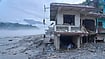
A GLOF occurs when water stored in a glacial lake is suddenly released downstream
Retreating glaciers and expanding glacial lakes are increasing potential flood risks across the Himalayas
The Rasuwa flooding has not been confirmed as a GLOF, but it highlights the region’s broader vulnerability
Flooding in Nepal's Rasuwa district has renewed attention on glacial lake outburst floods (GLOFs), one of the major hazards facing communities downstream of the Hindu Kush Himalayas. The cause of the latest Rasuwa flooding has not been confirmed as a GLOF.
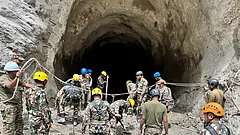
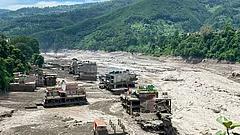
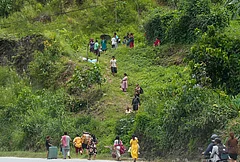
The disaster came after a sudden surge through the Bhote Koshi River, which swept through parts of Rasuwa and neighbouring areas, destroying homes, roads and bridges and leaving people dead and missing. The flooding also prompted India to monitor water levels downstream in Bihar and Uttar Pradesh.
What Is A Glacial Lake Outburst Flood (GLOF)?
A GLOF occurs when water stored in a glacial lake is suddenly released, usually after the failure or overtopping of a natural barrier such as a moraine, ice or rock.
Glacial lakes can expand as glaciers retreat and meltwater accumulates. Landslides, rockfalls, glacier collapse, displacement waves or seepage can then trigger a breach, sending water, sediment and debris rapidly downstream.

Why Are GLOFs A Growing Threat In The Himalayas?
Warming temperatures and glacier retreat are contributing to the formation and expansion of glacial lakes across the Hindu Kush Himalayas. ICIMOD says the region has more than 25,000 glacial lakes, increasing the potential for dangerous outburst floods.

Nepal has experienced more than 90 GLOFs since the early 1920s, while the Everest region has recorded five significant events in less than 50 years, according to ICIMOD.
The Thame Example
The August 2024 Thame flood showed how quickly a GLOF can escalate. ICIMOD found that a rock avalanche struck a glacial lake at about 4,900 metres, creating a displacement wave that breached the lake. The released water then caused a second lake's moraine dam to fail.
An estimated 459,000 cubic metres of water was released, carrying debris about 80 km downstream.

Can GLOFs Be Predicted?
GLOFs are difficult to predict because different triggers can combine to cause a sudden lake breach. Risk reduction therefore depends on monitoring glacial lakes, identifying those at high risk and maintaining early-warning systems.
Nepal's hydrological authorities have procedures for monitoring and warning communities in vulnerable areas, while ICIMOD has stressed the importance of real-time monitoring and early-warning systems as cryosphere-related hazards increase.
The Rasuwa disaster has therefore highlighted a broader Himalayan risk, even as authorities determine whether the latest flooding was caused by a GLOF or another form of extreme flooding.