Turkey has widened its LGBTQ+ crackdown, with raids, detentions, investigations and restrictions affecting organisations, activists and digital platforms across several cities.
Authorities cite public order, morality, criminal allegations and family protection, while LGBTQ+ and rights groups say legitimate rights and HIV-related support work is being criminalised.
The crackdown fits into a broader “family values” agenda, which activists and international rights groups say has increasingly restricted LGBTQ+ expression, assembly and civil society.
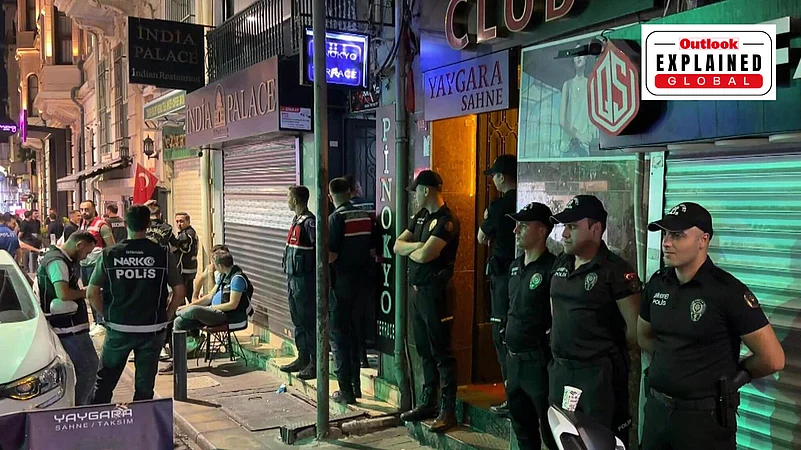
Turkish authorities have launched one of their broadest crackdowns yet on LGBTQ+ organisations, activists and HIV support groups, detaining dozens of people, raiding association offices and blocking websites and social-media accounts. The operation, spread across several cities, is officially being framed as an effort to protect children, families and public order. But rights groups say the action is part of a wider campaign to suppress LGBTQ+ visibility and independent civil society in the name of “family values,” according to AP.
The latest raids have put 162 people, nine associations and 13 businesses under investigation, according to Turkey’s Justice Minister Akin Gurlek. Authorities have cited allegations including prostitution, obscenity, drugs and other criminal activity, while also pointing to alleged international funding received by some organisations. LGBTQ+ groups, however, say the operation criminalises legitimate rights advocacy and public-health work, Reuters reported.
What Happened In Turkey’s Latest LGBTQ+ Crackdown?
Police carried out coordinated raids in cities including Istanbul, Ankara, Izmir, Aydin and Mersin, targeting association offices, venues and private residences. Reuters reported that at least 26 people were detained in the initial Istanbul operation, while further arrests in Ankara and Izmir pushed the number higher. Kaos GL, one of Turkey’s most prominent LGBTQ+ organisations, said at least 50 activists had been detained, including people taken from their homes.

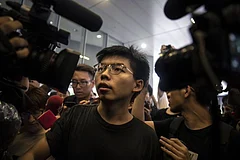


The operation has also extended into the digital sphere. Authorities have blocked access to websites and social-media accounts linked to organisations including Kaos GL, 17 May Association, ÜniKuir, Pembe Hayat, SPoD, Genç LGBTI+ Association, Lambdaistanbul and Muamma LGBTİ+ Association. Activists and journalists have also been affected.
Importantly, the organisations are not all accused of the same conduct. Authorities have cited allegations of prostitution, obscenity and criminal activity, but rights groups have questioned the evidence and the use of such allegations against organisations whose work includes LGBTQ+ rights, HIV awareness and community support.

Why Is Turkey Targeting LGBTQ+ And HIV Support Groups?
The government says the crackdown is about protecting children, the family and public order. Justice Minister Akin Gurlek has linked the investigation to President Recep Tayyip Erdogan's broader policy agenda concerning families and children, including the government's “Decade of Family and Population” initiative, according to Reuters.
That makes the political context important. Turkey's government has increasingly presented LGBTQ+ rights as incompatible with its vision of the traditional family, particularly as it addresses concerns over declining birth rates and demographic change.

The latest operation follows years of restrictions. Istanbul Pride has been banned since 2015, with attempted gatherings frequently dispersed by police. In 2026, more than 120 LGBTQ+ and feminist social-media accounts were also suspended amid Pride-related restrictions, according to the International Planned Parenthood Federation and Turkish civil-society groups.
The pressure has also extended beyond Pride events. Human Rights Watch said Turkey's 2025 “Year of the Family” was used to justify measures affecting LGBTQ+ people, including official instructions discouraging the use of terms such as “gender”, “sexual orientation” and “gender identity”. A leaked 2025 draft law also proposed criminalising certain conduct deemed contrary to biological sex, although it had not become law.
This is why the targeting of HIV support organisations matters. These groups often provide health information, testing referrals, prevention support and community services. Their inclusion in a crackdown framed around morality and family protection raises concerns that public-health and rights work is being treated as part of the same political threat.

How Have Activists And International Rights Groups Responded?
Turkish activists and human-rights organisations have strongly rejected the government's justification. The Human Rights Association described the operation as a political campaign aimed at imposing a single model of family and weakening LGBTQ+ and independent civil society. It also criticised the inclusion of allegations such as drugs, prostitution and obscenity, arguing that they were being used to stigmatise the wider community.
International organisations have also raised concerns. Amnesty International condemned the arrests, while European Parliament rapporteur Nacho Sánchez Amor described the developments as an alarming escalation. The European Pride Organisers Association said the measures represented an unprecedented wave of pressure on LGBTQ+ civil society, human-rights defenders and associated venues.
The broader picture is therefore more significant than the latest arrests alone. Homosexuality itself is not illegal in Turkey, but LGBTQ+ people face increasing restrictions on assembly, expression and advocacy. Pride bans, online censorship, restrictions on organisations and criminal investigations have progressively narrowed the space in which LGBTQ+ groups can operate.
The government's stated justification is the protection of children, families and public order. Critics argue that the pattern shows something broader: an attempt to reshape Turkish public life around conservative “family values” while portraying LGBTQ+ organisations and activists as a threat to that model.
Clémence Guetté Deputy of the French National Assembly, opposed the crackdown, saying, "Our rights are never guaranteed. The far right is a threat. I offer my support to the imprisoned activists and to all the victims of their government's authoritarianism and homophobia."