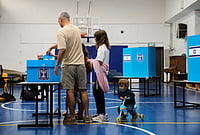
Residents of Majd al-Krum protested against a settler outpost established on land within the town’s jurisdiction; the encampment was later removed.
Residents fear that the far right’s plans to expand Jewish communities in the Galilee and Negev could put further pressure on Palestinian communities and land rights.
Palestinian citizens’ votes could influence the election outcome, but some remain sceptical that a change of government would address discrimination and other concerns.
Palestinian citizens of Israel fear that a victory for far-right parties in the country’s parliamentary election could intensify pressure on their communities, land rights and political freedoms. In Majd al-Krum, a Palestinian-majority village in the Galilee, residents recently organised week-long protests against an attempted settler outpost on village land, forcing the removal of tents by September 16. The protests have heightened concerns that the expansion of settlements into Palestinian communities in Israel could become more common if far-right leaders retain power.
Settler Outpost Sparks Fears Over Land Rights
The dispute began in late August, when settlers from the occupied West Bank began establishing an outpost on al-Rus hilltop near Majd al-Krum. The settlers said they had permission to graze livestock on the land, but residents questioned the purpose of the encampment. Within weeks, the site had reportedly expanded to include tents, a kitchen, a toilet, water and electricity. Local residents and activists responded with daily demonstrations, drawing participants from neighbouring Arab communities and some Jewish residents. The Jewish National Fund subsequently ordered the tents removed, although it later said the grazing initiative would move to another plot nearby.



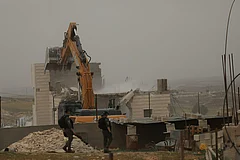

Residents have linked their concerns to the political agenda of Finance Minister Bezalel Smotrich, a far-right member of Prime Minister Benjamin Netanyahu’s government. Smotrich has campaigned on a promise to “Judaise” the Galilee and proposed plans to increase the Jewish population in the region and the Negev, known in Arabic as the Naqab. Villagers fear that the outpost could be a test of how far such initiatives can extend into Palestinian communities. The Israeli police, finance ministry and Jewish National Fund were approached for comment by Al Jazeera, but the outlet said it had not received responses from the police or ministry at the time of publication.

Election Puts Palestinian Citizens’ Political Influence In Focus
Palestinian citizens make up around 20–21% of Israel’s population and hold Israeli citizenship, including the right to vote. Their participation could influence the outcome of the election, with pre-election projections suggesting that neither the main Jewish-led political blocs would secure the 61 seats needed for a majority in the 120-member Knesset without additional support. Arab-led parties are therefore seeking higher turnout, although disagreements over whether mainstream opposition parties would cooperate with them could limit their influence in government formation.
The election has also brought renewed attention to concerns over discrimination, rising violent crime and restrictions on political expression in Arab communities. While some residents see voting as a way to challenge the far right, others remain sceptical that a change of government would address their concerns. The protests in Majd al-Krum have demonstrated the strength of local mobilisation, but residents fear that further attempts to establish outposts could threaten their land and deepen tensions beyond the village.