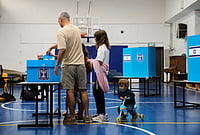
Israel recorded 16.7% voter turnout by 10am, with approximately 1.2 million ballots cast.
Early turnout exceeded the 15.9% recorded at the same time during the 2022 election.
The contest between Netanyahu’s coalition and the opposition could leave smaller parties pivotal in forming the next government.
Israel recorded a voter turnout of 16.7% by 10 am on Tuesday, October 27, with around 1.2 million people casting their ballots in the country’s parliamentary election. The figure was higher than the 15.9% recorded at the same time during the 2022 election and marked the strongest early turnout since at least 1996, according to reports citing the Central Elections Committee. The election is being closely watched as Prime Minister Benjamin Netanyahu faces a challenge from opposition forces led by former general Gadi Eisenkot.
Turnout Rises Amid Closely Contested Election
The early turnout figures indicate strong participation during the opening hours of voting, although they do not establish how high the final turnout will be. In the 2022 election, 15.9% of eligible voters had cast their ballots by 10 am, while the final turnout reached approximately 70.6%. Israel’s Central Elections Committee publishes cumulative turnout figures throughout election day, allowing participation levels to be compared with previous parliamentary polls.
The election comes amid deep political divisions over Netanyahu’s leadership, national security and the government’s response to the October 7, 2023, Hamas attack and the subsequent war in Gaza. Netanyahu’s coalition faces opposition from a bloc led by Eisenkot, a former Israel Defense Forces chief of staff. Pre-election projections suggested that neither camp was certain to secure a parliamentary majority, potentially making smaller parties and coalition negotiations decisive in determining the next government.


Early Figures Do Not Determine Final Outcome
The high morning turnout provides an early indication of voter participation but does not, by itself, reveal which parties are benefiting. The political impact will depend on how turnout develops across different communities and constituencies, as well as on the final distribution of seats in the Knesset, Israel’s 120-member parliament. Parties must secure sufficient representation to enter parliament, while the formation of a governing coalition requires support from a majority of lawmakers.
Voting is scheduled to continue until 10 pm local time at most polling stations. Further turnout updates and exit polls are expected later in the day, followed by the counting of ballots. While the early figures suggest a strong start to polling, the final turnout and seat tally will determine whether the election produces a clear governing majority or leads to prolonged coalition negotiations.