Prime Minister Andy Burnham has said Britain could “go all the way” and consider rejoining the European Union, while stressing that ministers will assess the options and what is feasible
The position marks a change from Labour’s 2024 election platform, which ruled out returning to the EU Single Market, Customs Union and freedom of movement while advocating a closer relationship with Brussels
Burnham has not announced a bid to rejoin the EU, but says he will set out possible models around the UK-EU summit expected in November, ranging from the existing relationship to deeper integration and full membership
UK Prime Minister Andy Burnham has said Britain should consider a range of options for its long-term relationship with the European Union, including the possibility of going “all the way” and rejoining the bloc.
The comments, made in interviews after his Labour Party conference speech, go further than the position Burnham took in May, when he said he was not proposing that Britain consider EU membership and did not want to reopen the Brexit debate.
Burnham’s conference speech itself did not explicitly call for Britain to rejoin. He said Brexit had done “more harm than good” and that the UK could not determine its long-term future without deciding what relationship it wanted with its European partners. He said he would set out different options around an EU-UK summit later this year.
The subsequent clarification matters because the options he described include remaining as Britain is, moving towards a customs union or single market arrangement, or ultimately returning to full EU membership.
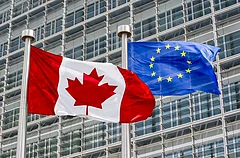


What Did Burnham Actually Say?
In his conference speech on Tuesday, Burnham said the UK had lost some control over its economy and immigration policy after Brexit and argued that closer cooperation with Europe was necessary to improve growth and prosperity.
He said an EU-UK summit later this year would provide an opportunity to set out what he considers the different options for Britain's long-term relationship with the bloc. The Labour Party's own summary of the speech said the immediate ambition was to secure deals that could boost the economy, reduce red tape for businesses and create opportunities for young people, while describing those measures as the “floor” rather than the limit of future ambitions.
Asked subsequently whether that could include full EU membership, Burnham said the UK could examine several possibilities. He referred to remaining under the current arrangements, considering a customs union, considering single market membership and, ultimately, going “all the way” to rejoining the EU.
That makes his position broader than the immediate policy proposals set out in his conference speech. The speech opened a review of the UK's long-term relationship with Europe; his subsequent interviews made clear that full EU membership is among the possibilities being considered.

Why Is The Shift Significant?
The significance lies in the change from what Burnham said earlier this year.
In May, while still serving as Greater Manchester mayor and before becoming prime minister, Burnham said he was not proposing that Britain consider rejoining the EU. He said he respected the referendum result and argued that reopening the issue would keep Britain trapped in the political divisions created by Brexit.
That position itself followed an earlier evolution. Reuters reported in June that Burnham had previously said he wanted Britain to rejoin the EU in his lifetime, but had subsequently said EU membership was not a priority and that he was not proposing it.
His September position is therefore different from the one he stated in May. He is no longer excluding EU membership from the options under consideration.
That does not mean Britain is seeking membership. Burnham has so far said he will examine the different possibilities and assess what is feasible, rather than announcing an application to rejoin.
What Was Labour’s Brexit Position?
Labour's 2024 general election manifesto provides the clearest baseline for measuring that change.
The manifesto said Britain would remain outside the EU and explicitly ruled out a return to the Single Market, Customs Union or freedom of movement. Instead, Labour promised to reset relations with the EU, reduce trade barriers and negotiate closer cooperation in areas including veterinary arrangements, professional qualifications and security.
The distinction was central to Labour's Brexit position: the party wanted a closer relationship with Europe while accepting Britain's departure from the EU's institutional structures.
Burnham's latest comments move beyond that formulation. His proposed range of options now includes arrangements that the 2024 manifesto explicitly ruled out, as well as full EU membership.
At the same time, his comments do not amount to a new manifesto or a settled government policy of rejoining. He has said the options will be examined and presented around the forthcoming UK-EU summit.

Where Does The UK Stand Now?
Britain currently sits outside the EU, its Single Market and its Customs Union. The Trade and Cooperation Agreement, reached after Brexit, provides the principal framework for trade and cooperation between the UK and EU, replacing the system based on EU membership and EU law.
That means there is already a substantial relationship between Britain and the bloc without membership.
The distinction matters because “closer ties” can describe very different arrangements. Cooperation on a particular programme or sector does not put Britain back inside the EU's institutional framework.
The present relationship also includes agreements covering areas such as trade, security and participation in selected European programmes. The government has been pursuing a broader reset with the EU since Labour came to power, including work on growth, security, migration and research.
What Options Are There Short Of Membership?
There is a spectrum between Britain's present position and full EU membership.
At the narrowest end is the existing relationship under the Trade and Cooperation Agreement. Beyond that are arrangements covering individual sectors or closer cooperation in areas such as trade, security, research and movement.
A customs union would represent a deeper economic relationship by establishing common arrangements for external goods trade. Single Market participation would go further, bringing Britain into a wider framework governing the movement of goods, services, capital and people.
Full EU membership is different again because it involves participation in the Union's political and legal institutions, rather than simply access to particular areas of the European market.
Burnham's own description places these possibilities on the same spectrum: Britain could remain where it is, examine a customs union, consider the single market, or ultimately pursue full membership.
The practical consequences would vary substantially between these options, particularly on regulation, trade, movement of people and the role of EU institutions.

How Is Britain Already Moving Closer?
Burnham's comments come against the backdrop of an existing effort to deepen UK-EU relations.
In July, Burnham told European Council President António Costa that Britain wanted a stronger Europe through a closer UK-EU relationship, with cooperation on defence, security and economic growth. The two sides agreed to work towards a summit later in the year.
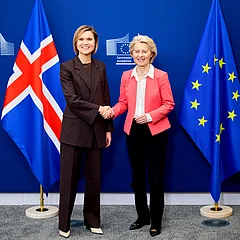
In September, Burnham met European Commission President Ursula von der Leyen at the UN General Assembly. According to the UK government, they discussed the next EU-UK summit and cooperation on security, illegal migration, global markets and other shared challenges.
The government's economic agenda has also included closer European cooperation. In her Mansion House speech, Chancellor Rachel Reeves said Britain had already made progress through participation in Horizon Europe, plans to rejoin the Erasmus programme and an agreement concerning UK participation in an EU loan for Ukraine. She called for a deeper economic and security partnership with Europe.
These measures are significant because they show that greater cooperation with the EU is already being pursued without Britain having to reopen the question of membership. Burnham's latest intervention takes the debate a step further by putting membership itself among the options.
What Would Rejoining Actually Require?
Rejoining the EU would not be the same as negotiating another bilateral agreement with Brussels.
Under Article 49 of the Treaty on European Union, a European state may apply for EU membership. The application is addressed to the Council, which acts unanimously after consulting the European Commission and obtaining the consent of the European Parliament. The conditions of accession and the required treaty changes then have to be agreed between the applicant and the member states and ratified according to their constitutional requirements.
The European Union's own explanation of the accession process describes membership as a lengthy process in which an applicant has to meet the political and economic conditions for membership before negotiations can proceed.
For Britain, this would therefore not amount to simply reversing the legislation and agreements adopted at the time of Brexit. It would require a future UK government to make a formal application and negotiate the terms of accession with the EU.
Burnham's comments do not begin that process. They open a political discussion about whether such an option should be considered.

Why Does The 2016 Vote Still Matter?
Any discussion of reversing Brexit remains tied to the referendum that produced Britain's departure from the EU.
The June 2016 referendum resulted in 51.9% of votes being cast for Leave and 48.1% for Remain, with turnout of 72.2%, according to the Electoral Commission.
Burnham has previously said he respects that result. His May position was that reopening the question risked prolonging the division created by the referendum.
His latest position does not erase the referendum or establish that another vote will take place. It changes the political question from whether EU membership should simply be treated as off the table to whether it should be examined alongside other possible forms of a closer relationship.
What Has Changed And What Happens Next?
Burnham's position has moved from explicitly saying that he was not proposing EU membership to saying that full membership should be considered as one of several possible long-term arrangements.
That is the immediate significance of his intervention. It does not mean Britain is preparing to rejoin the EU, nor has the government announced a formal application.
The next substantive stage is the UK-EU summit expected later this year, around which Burnham has said he intends to set out the different options for Britain's future relationship with Europe. The immediate debate is therefore about the range of relationships Britain should examine, from the existing arrangements through deeper economic integration to eventual EU membership.
The change is consequently political rather than legal at this stage: an option that Burnham explicitly rejected as a proposal in May is now part of the range of possibilities he says Britain should examine.