



Sergey Lavrov backed India's candidature for a permanent seat on the UN Security Council, alongside Brazil, during his UNGA address.
Russia called for greater representation of Asia, Africa and Latin America, while opposing additional permanent seats for Western countries, particularly Germany and Japan.
Lavrov said UNSC reform should not dilute the powers of the existing permanent members, while broader reform of the Council remains subject to agreement among UN member states.
Russian Foreign Minister Sergey Lavrov on Saturday backed India's candidature for a permanent seat on the United Nations Security Council, saying Russia supports expanding representation from Asia, Africa and Latin America.
Addressing the 81st United Nations General Assembly in New York, Lavrov said Moscow supported the candidatures of both India and Brazil as part of its position on reforming the Security Council.
What Did Lavrov Say About India’s UNSC Bid?
Lavrov said Russia was in favour of broadening the representation of Asia, Africa and Latin America on the Security Council.
“We support Brazil's and India's candidatures for a permanent seat,” he said.
The statement reiterates Russia's longstanding support for India's bid for permanent membership of the UNSC. India has sought reform of the Council to make its composition more representative of the current global order, with New Delhi arguing for a greater role for developing countries.



Why Did Russia Oppose More Western Seats?
While backing India and Brazil, Lavrov rejected the idea of allocating additional permanent seats to Western countries.
“UN Security Council reform cannot involve any additional seats being allocated to Western countries, especially to Germany and Japan,” he said, adding that Russia favoured broader representation for Asia, Africa and Latin America.
Lavrov also argued that reform should not dilute the existing powers of the five permanent members of the Security Council.
The UNSC currently has 15 members, including five permanent members — China, France, Russia, the UK and the US — which hold veto powers. The remaining 10 members are elected for two-year terms.
Russia's backing adds to international support for India's permanent-membership bid, although support from individual countries does not itself change the composition of the Council. Any amendment to the UN Charter requires approval by two-thirds of the General Assembly and ratification by two-thirds of UN member states, including all five permanent members.
Mauritius also reiterated its support for India's candidature during the General Debate. Micronesia Vice President Aren Palik also vcalled for UNSC reforms during his UNSC speech, which included India along with Brazil, Germany, Japan, Africa, SIDS states.
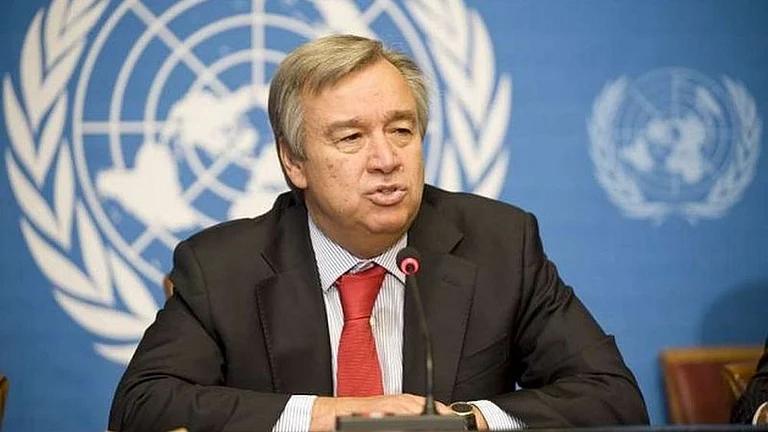
Earlier on September 26, Spokesperson for the United Nations Secretary-General, António Guterres, Stéphane Dujarric, while speaking to ANI on UNSC reforms, said, “There has been a push to adapt the Security Council to the realities of today, as opposed to those of 1945… Secretary-General António Guterres has been very clear about the need to reform the Security Council because it is at the heart of the UN's peace and security mechanism, and people need to believe in it. They need to find it credible and legitimate… And we are not there yet.”

The question of Security Council reform remains unresolved, with countries differing over the number of new permanent members, regional representation and whether new permanent members should receive veto powers.















