Tigmanshu Dhulia criticised storytelling in mainstream Hindi cinema.
Dhulia stated that commercial blockbusters like Dhurandhar, Pushpa, and KGF increasingly resemble formulaic fictional biopics.
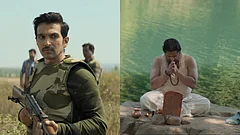
The filmmaker praised Dhurandhar's presentation, music, and engagement but argued its plot lacks meaningful depth beyond a bare premise.
Ranveer Singh's Dhurandhar received polarised reviews. Filmmaker Tigmanshu Dhulia pointed to Ranveer Singh-starrer to highlight this narrative erosion during a recent panel discussion. While he appreciated the Aditya Dhar's film for its engaging packaging and entertainment factor, Dhulia argued that commercial productions now lack meaningful plots.

Tigmanshu Dhulia's comment on how corporate culture has shaped films
Dhulia spoke about how the mainstream movies are now built. He linked that shift to corporate influence, repeated formulas and a wider loss of individuality beyond cinema.
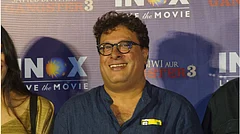
Dhulia made the remarks at an event organised by The Wire on The State of Media and Film Industry. There, he spoke about how corporate culture has shaped the films being made now.
He named Pushpa, KGF and Dhurandhar as examples of successful commercial cinema that, in his view, follow a common mould. He described many of these films as "fictional biopics".
“Because it is a corporate culture, the same kind of films are being made. Every film is a biopic, a fictional biopic. Every film, you can watch Pushpa, you can watch KGF, Dhurandhar. I am talking about commercial mainstream cinema,” he said.


Dhulia says Dhurandhar has no story
“If I ask you to tell me the story of Dhurandhar, I liked that film by the way, the first part. Very well presented, very engaging, good use of music.”
“But if you ask someone to tell you its story, you won’t be able to tell the story of Dhurandhar. There is a man, he is a cover spy, he goes to Pakistan and wreaks havoc there. Is that a story? Stories have disappeared from films,” he added.
For Dhulia, the issue runs deeper than one title. “For one, the people who tell stories have disappeared, and those who want to tell them are not allowed to make them. They are not allowed to tell those stories because they think, ‘This story won’t work.’ There is only one template.”

He blamed what he called extreme capitalism for making films, people and places look increasingly alike.
“This is what extreme capitalism does; people also start looking the same. Go anywhere, everybody looks the same. Every city has started looking the same. The character of every city has disappeared,” he said.