



President returns West Bengal’s Anti-Goonda Bill for reconsideration after Centre flags overlap with Central drug laws.
Centre says provisions covering NDPS offences could create a parallel preventive-detention framework and raise Article 254 concerns.
The Bill’s future follows a Calcutta High Court hearing that found challenges premature without Presidential assent.
The President of India Droupadi Murmu has returned the West Bengal Public Safety and Control of Anti-Social Activities Bill, 2026 for reconsideration after the Centre raised an objection over its possible overlap with Central legislation.
According to The Indian Express, the Centre’s concern relates to a provision that includes certain offences under the Narcotic Drugs and Psychotropic Substances (NDPS) Act, 1985, within the Bill’s definition of a “goonda”.
In its note, the Centre said Section 2(d)(iii)(B) could overlap with the preventive-detention framework under the Prevention of Illicit Traffic in Narcotic Drugs and Psychotropic Substances Act, 1988, or PITNDPS Act.
The Centre said this could create an overlapping or parallel preventive-detention mechanism for drug-related activities and raise an issue of repugnancy under Article 254 of the Constitution.
It recommended deleting the reference to offences under the NDPS Act from the provision to avoid duplication and overlap with the existing Central framework.

What Does The Bill Propose?
The Bill was introduced by the West Bengal government in June 2026 to deal with anti-social activities. It defines what constitutes an anti-social activity and who can be treated as a “goonda”.



The proposed law gives certain authorities the power to bar a person from entering a specified area, district or districts for up to one year.
A district magistrate, Commissioner of Police, or a police officer not below the rank of DIG authorised by the state government can issue such an order if they are apprehensive that a “goonda” is engaging in or will engage in anti-social activities.
The order can require the person to leave the specified area, prohibit them from returning for up to one year and require them to report their movements or themselves to a specified authority.
The Bill also provides for preventive detention as part of its framework.

What Is The Political Controversy?
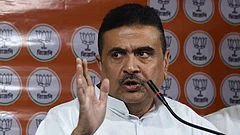
The legislation has faced criticism from the Opposition, while Chief Minister Suvendu Adhikari has defended it and said it would not be misused for political purposes.
Adhikari had said that those concerned about the preventive-arrest provisions had no reason to fear and that the administration would act according to the law.
The Bill also became part of a dispute over whether it had already become law.
Adhikari had publicly claimed that the ‘Goonda Daman Bill’ had received the Governor’s assent and had been invoked against those accused of violence during a July 24 protest march at Esplanade.
However, the state later told the Calcutta High Court that the Bill was still awaiting Presidential assent.
What Did The Calcutta High Court Say?
On August 6, a division bench of the Calcutta High Court comprising Justice Tapabrata Chakraborty and Justice Partha Sarathi Chatterjee dismissed three PILs challenging the Bill as premature.
The court recorded that the Bill had not received Presidential assent. It observed that since the Act was yet to receive such assent, the petitions were premature. The bench also said petitioners would be free to approach the court after the Bill received the required assent.
The latest development means the Bill will now have to be reconsidered in light of the Centre’s objection.
A senior state official told The Indian Express that the Bill could be brought back before the Assembly after changes were made to provisions that conflict or overlap with Central law. It could then be sent again for Presidential assent.















