



The Manipur High Court ordered Census 2027 in the state to remain in abeyance till April 30, 2027
Chief Justice M Sundar and Justice A Guneshwar Sharma asked the Registrar General and Census Commissioner of India to examine seven representations
The petitioners raised concerns over counting displaced residents and internally displaced persons after ethnic violence in Manipur
The Manipur High Court has directed that Census 2027 in the state remain on hold until April 30, 2027, over concerns about carrying out the exercise while many people remain displaced after ethnic violence, Bar and Bench reported. The court asked the Centre to examine the objections before the process can move ahead.
In its November 4 judgment, a division bench of Chief Justice M Sundar and Justice A Guneshwar Sharma directed the Registrar General and Census Commissioner of India to examine seven representations and issue a reasoned order by April 30, 2027. According to the report, the bench also kept in place the existing notifications that had already put the census exercise in abeyance.
The order matters because it links any restart of the census in Manipur to a formal review of concerns around displaced residents, population records and the counting of internally displaced persons. The ruling also sets a clear deadline for the authorities and creates time for a legal challenge after that decision.


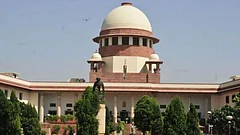

Court's November Ruling
The bench was explicit in its ruling.
"To put it differently, the census exercise for the State of Manipur will continue to be put on hold/kept in abeyance till 30.04.2027," the bench said in its November 4 judgment.
The judges also directed that the present notifications keeping the census process in abeyance would continue without any change until that date. That means the earlier suspension orders stay in force while the Registrar General and Census Commissioner consider the representations.
The court added another safeguard. It directed that the census remain suspended for four weeks after the authorities take a decision on the representations. The bench said this would give aggrieved parties time to move the High Court and challenge that decision.
Petitions And Concerns
The case came through a public interest litigation filed by the Kangleipak Students' Association (KSA) and International Peace and Social Advancement (IPSA). A connected petition was also filed by Shanta Singh Nahakpam.
Their objection was specific. The petitioners questioned whether the census could be carried out properly when residents had been displaced by ethnic violence in Manipur. They argued that any such exercise had to account for people who were no longer living in their usual homes.
They also raised concerns about the accuracy of population records and the identification and enumeration of internally displaced persons. The petitions questioned the implications of pressing ahead with the exercise before those issues were addressed.

Earlier Developments And Steps
The proceedings also referred to two resolutions adopted unanimously by the Manipur Legislative Assembly on August 5, 2022, and March 1, 2024, seeking the introduction and implementation of the National Register of Citizens (NRC). During earlier hearings, the petitioners had asked for the census to be postponed until their concerns were resolved.
On August 31, the centre informed the High Court that it had decided to defer the house-listing operations for Census 2027 in Manipur. The state government also gave an undertaking that it would not begin the exercise scheduled for September 1, 2026.
That was followed by formal steps. The Registrar General and Census Commissioner issued notifications dated September 5 and October 30 on the postponement. Taking note of those developments, the bench observed that the parties were in agreement that the representations should be considered before the census resumed, keeping larger public interest in mind.
The court then opened the door for more inputs. It allowed the petitioners and other individuals and organisations to submit additional representations by November 25, 2026. The authorities may hold public consultations while examining those submissions. If they decide not to do so, they must record reasons.
The bench also set out how the final decision must be handled. It said the order must be communicated to the petitioners' lawyers within five working days and uploaded to the official websites of the Manipur government and the Census Commissioner. The judges also appreciated the counsel for adopting a fair and balanced approach, noting the larger public and national interest involved. The petitions were accordingly disposed of.















