India's family-based care system is under pressure as families shrink, migration increases and life expectancy rises.
Nearly 94% of care for older people is still provided by family members at home.
Fewer caregivers are available to meet the growing and increasingly complex care needs of an ageing population.
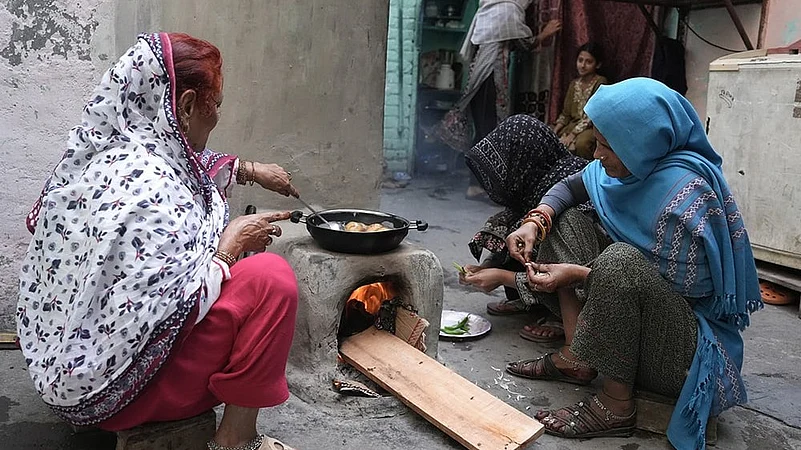
In a village in eastern India, a woman in her seventies sits alone through the hottest hours of the afternoon, her sons long gone to work in cities hundreds of miles away. She is not an exception. Across rural India, a generation that once cared for ageing parents within large joint households is now doing so with a fraction of the hands it once had, even as more people live longer and more of them live with chronic illness rather than dying young. It is a shift playing out quietly in millions of homes, largely unseen by policy built for a younger, sicker India.
The pattern is now backed by data. A new white paper by the non-profit Transform Rural India (TRI) found that India is ageing faster than any large nation in history and doing so while still a middle-income country, decades before it can draw on the wealth that ageing societies elsewhere in the world had already built up.
The paper, titled "Demographic Transition, Evolving Families and the Future of the Care Ecosystem in Rural India," argued that the country's rapid ageing is unfolding at a fraction of the income levels enjoyed by Western nations when they went through the same shift a century ago.



Ageing Without The Wealth
By 2050, roughly one in five Indians, around 347 million people, will be aged 60 or above and seven in ten of them will live in rural areas, the report noted. Additionally, the median age, which hovered near 20 for most of the 20th century, is projected to reach 31 by the end of this decade and nearly 40 by mid-century.
Notably, Western Europe took more than a hundred years to make a comparable demographic shift, and did so after becoming rich. India is compressing the same transition into a few decades while still a middle-income economy, with limited pension coverage and almost no formal long-term care system in place, the paper noted.
The pace of change is also deeply uneven. Kerala's ageing index, the number of older adults per 100 children, is heading towards 97, comparable to a developed nation, while Uttar Pradesh sits at 34. Yet the largest absolute increase in older people over the coming decades will occur in precisely the states with the weakest health systems: Uttar Pradesh, Bihar, Madhya Pradesh, Rajasthan and Jharkhand.
“India has made remarkable progress in helping people survive. The next challenge is ensuring they can live well for longer. Our demographic transition requires us to redesign care delivery itself- beyond facility-based care, it will require to facilitate as shared community functions and improving sustainable living conditions,” said Shyamal Santra, Practice Director, Transform Rural India.
Santra added that the institutions needed to make this possible already exist across rural India. “By connecting them through a common care mandate, an ecosystem to be built that supports families and caregivers, strengthens local governance and prepares villages for the decades ahead.”
Notably, India remains one of the world's most unequal countries, with the richest 10% accounting for 58% of the nation's total income while the bottom 50% earn just 15%, according to the World Inequality Lab's 2026 report. Wealth is even more concentrated, with the top 10% owning about 65% of total wealth and the richest one per cent alone controlling nearly 40 per cent.
The disparity persists despite India being the world's fastest-growing major economy. Strong gross domestic product (GDP) growth, driven by industrialisation and digital transformation, has not translated into comparable gains in individual incomes. With a population of more than 1.4 billion, the per capita net national income stood at about Rs 2.08 lakh ($2,813) in 2025–26, showing the gap between rapid economic expansion and living standards.
“India’s 94% family-care dependence is an outcome of cultural preferences and continued traditional practices. This is not new. What’s new is that India is going through a demographic and social transition. Life expectancy is up but unfortunately so is the disease burden, nuclear families, a very small proportion of India has any formal retirement coverage. Our policy frameworks, care models and capacity creation of care givers need reimagination and a serious rethink,” said Rajit Mehta, MD and CEO, Antara Senior Care.
A Shrinking Safety Net
The TRI report linked this demographic shift to a rapid narrowing of family support. The number of working-age adults for every person aged 60 or above has fallen from 8.4 in 2001 to a projected 5.2 this year. Over the same period, the number of people aged 80 and above for every hundred in their 50s, those most likely to be providing care, is set to nearly triple, from 5 to 14.
Average household size has fallen from 5.3 people in 2001 to 4.9, driven mainly by declining fertility rather than families choosing to live apart, the report found, citing census data. Even so, it stated that close to 94% of care for older Indians is still delivered inside the home, meaning the same obligation is now shared among far fewer people.
The paper also highlighted a shift like illness itself. The share of India's disease burden made up of years lived with disability, rather than years of life lost to early death, rose from 17.5% in 1990 to 32.8% in 2016, showing a broader move from infectious disease towards chronic, long-term conditions such as diabetes and hypertension.
According to industry data, India trains only a fraction of the geriatric caregivers it needs as the 60+ population moves from roughly 173 million now to 347 million by 2050. There are less than 400 formally trained geriatricians and only a handful of postgraduate seats in geriatric medicine; some estimates put this number at 80.
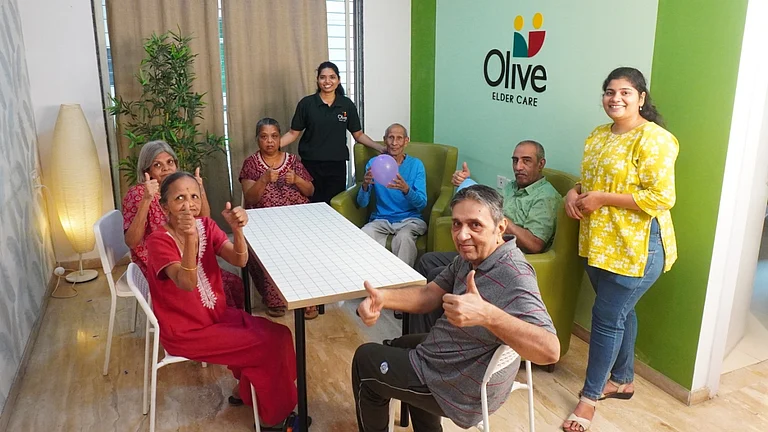
“Care today is fragmented with hospitals, home care and assisted living operating in silos. This leaves a missing middle of step-down or transition care between independent living and hospitalisation, precisely where many seniors need support after an acute episode. Building this continuum should be a clear policy priority,” Mehta told Outlook.
However, CareEdge Ratings in a report in April 2026 stated that India’s fast-ageing population is set to create a $35 billion annual opportunity in specialised senior care by 2036, even as gaps in healthcare financing, infrastructure and workforce threaten to strain the system.
“India’s demographic transition is not just a social shift but a structural economic change,” said Krunal Modi, Director at CareEdge Ratings, noting that evolving family structures and limited pension coverage will accelerate demand for organised eldercare services.
CareEdge report highlighted that nearly 70% of elderly Indians rely on family for daily maintenance, while 78% lack pension coverage. At the same time, healthcare costs remain a major burden, with average inpatient out-of-pocket expenses estimated at Rs 8,000 in public hospitals and Rs 31,933 in private facilities.

Care Falls On Women
According to the TRI whitepaper, the burden of this shift is falling disproportionately on women. Citing the government's Time Use Survey, it stated that women in India spend around 305 minutes a day on unpaid domestic and care work, compared with 56 minutes for men, a gap that has widened, not narrowed, over the past five years.
Climate change is adding further strain, with a single heat wave day estimated to add around 90 minutes of extra unpaid work, and flooding adding 10 to 18 hours in a week.
The report described the typical future care recipient as a widow in her late seventies with limited literacy, no land or pension, and children who have migrated to cities for work.
A study by the State Bank of India estimated that women's unpaid work at home contributes the equivalent of 7.5% of the country's GDP, showing the economic value of domestic and caregiving labour that remains largely invisible in official statistics.
The International Monetary Fund estimates that domestic GDP could be nearly 27% higher by 2050 if women participated in the workforce at the same rate as men. However, much of that potential will remain unrealised unless unpaid care work is recognised as an economic contributor.
Notably, a key barrier to women's workforce participation is the persistence of patriarchal norms that place the burden of caregiving on women. Household surveys show that more than half of Indian men believe childcare is primarily a woman's responsibility.
Many Indian women leave the workforce after marriage or childbirth as caregiving responsibilities increase, and a large number never return. Those who remain employed are often pushed into low-paid, informal or insecure jobs, limiting their earnings and economic mobility.
Economists describe this as the "care penalty", the systematic loss of income and opportunities caused by unpaid care work. Beyond its impact on women, the phenomenon also weakens rural economies by reducing labour force participation, productivity and growth.

Building Neighbourhoods, Not Hospitals
Rather than calling for new hospitals or clinics, the TRI paper argued that rural India already possesses the institutions needed to respond: panchayats, women's self-help groups, Anganwadi centres, frontline health workers and primary-care platforms, but that these currently operate under separate mandates with no single body responsible for long-term care.
It proposed a model it called the "Neighbourhood of Care," in which these existing local institutions are linked under a shared mandate centred on the household, rather than the creation of new infrastructure. "The twenty-first century will judge (India) not by how many lives it saved, but by how well those longer lives were lived," the report added.
Additionally, a NITI Aayog report also stated that India needs to move towards a more organised, professional and coordinated caregiving system as its population ages, family structures change and long-term care needs rise. It noted that a stronger care ecosystem could improve the quality of life of older people and persons with disabilities while creating skilled jobs, increasing women's workforce participation and strengthening health and social care systems.
The report from the think tank added that existing initiatives by the Centre and states need greater coordination, standardisation and workforce recognition. It recommended establishing a National Caregiving Council (NCC) to provide institutional leadership, alongside a National Caregiving Qualification Framework to standardise education, training, accreditation and certification of caregivers.
“We welcome NITI Aayog’s new working paper, which rightly calls for significant policy reforms to fill gaps in the current caregiving ecosystem. The single biggest gap is the absence of one nodal authority for senior care. Today, health, social justice, skilling and housing all touch elder care but no single body owns it,” added Mehta.
To strengthen workforce planning and service delivery, Niti Aayog proposed creating a National Caregiver Registry supported by a digital platform. It further recommended expanding social security and welfare measures for caregivers while increasing support for family and community-based caregiving.
The report also called for greater use of technology-enabled caregiving services, innovation and cross-learning among states, and stronger international partnerships to build a globally competitive caregiving workforce. Together, it said, these measures would help India meet rising domestic care needs while positioning it as a global provider of skilled caregiving professionals under the vision of Viksit Bharat.
Mehta added that the government should also use the existing Community Health Centre network as rural geriatric hubs, building on NHM’s preventive care, chronic disease management and teleconsultation capabilities.
“Public-private partnerships should specifically target rural expansion of home healthcare and rehabilitation services, since no single stakeholder, government, industry or civil society, can close this gap alone,” he added.
Meanwhile, as India grows older before it grows rich, the challenge is shifting from creating jobs to building systems that can support millions of older people and those who care for them. Without stronger investment in community care, social protection and support for unpaid caregivers, particularly women, the demographic transition that shows longer lives could also deepen inequality and place growing pressure on rural households.