



Bharat is not merely a modern nation-state; it is a living civilisation shaped by a deep commitment to collective well-being. For thousands of years, successive generations have inherited and carried forward a vision centred on the pursuit of lasting material, moral and spiritual fulfilment for all. This civilisational continuity, sustained despite numerous challenges and disruptions, is not simply a source of historical pride. Rather, it remains essential for understanding contemporary Bharat—its aspirations and challenges. Just as present day challenges cannot be understood in isolation from the past, the foundations of a stronger future cannot be built without engaging seriously with our shared civilisational journey. Bharat’s civilisational journey cannot be divided into a series of disconnected periods; it is a continuous process linking the past, present and the future.
Rich Civilisational History
Since time immemorial, our sages have recognised the importance of the spirit of rashtra. They understood that enduring happiness could be achieved only through unity, peaceful coexistence and mutual harmony. Certain symbols and ideals have remained constants throughout Bharat’s civilisational journey, embodying our inner sense of oneness, cultural continuity and core moral values. Foremost among these is the idea of matrubhoomi or the motherland. This sacred land is Bharat Mata, and we regard ourselves as her sons and daughters. Our relationship with the motherland and her people is founded on ahetuk prem or selfless and unconditional love. This leads us to consider fellow citizens not as strangers or competitors, but as members of a large extended family. This civilisational ethic is reflected in the modern constitutional idea of ‘We, the People’, which unites citizens across diverse groups as inheritors of a rich civilisational history.

All citizens should take pride in our rich civilisational legacy and serve Bharat Mata, in whatever capacity they can. Building a stronger present and a better future for Bharat is a collective responsibility that should be embraced by society as a whole. However, fulfilling this responsibility requires sound character, self-discipline and a strong moral compass. Only those who can look beyond narrow self-interest can place collective well-being at the centre of their actions.
Without discipline and moral restraint, individuals can become captive to limitless desires and immediate personal gain. This may lead them to place personal interests above the welfare of their fellow citizens and, at times, even above national interests. Thus, national unity and integrity depend on a society whose members uphold high ethical standards, sincerely care for each other and remain committed to the larger common good. Bharat needs citizens who are willing to devote their time, abilities and resources to national service—and, when the circumstances demand, even willing to make the supreme sacrifice for the country. This is why political struggle and economic growth, though essential, are not sufficient by themselves for national progress. They must be accompanied by sustained efforts for cultural awakening and character building. Together, these provide the moral foundations necessary for the long-term process of nation-building.
Identity politics poses a serious threat to national unity and progress because it converts natural social differences into competing social divisions. In a diverse society, identities should be harmonised within a broader sense of national belonging instead of being mobilised against each other.
Bharat’s multiple languages should be considered as sister languages that collectively represent our shared cultural heritage. They collectively enrich the nation and should not be turned into competing forces that create divisions. Similarly, Bharat’s states are administrative units; they should not become the basis for competing regional identities that weaken national cohesion.
Historically, caste has produced deep divisions within the Bharatiya society. Caste-based discrimination and social fragmentation can be overcome by strengthening and unifying under a broader Hindu identity. Similarly, categories such as ‘reserved’ and ‘general’ may remain applicable for welfare provisioning and social justice measures, but they should not become instruments for politicisation and creating resentment in society.

Realisation of Eternal Truth
Citizens may differ based on their ideology, religion, gender, political affiliation or economic circumstances. Such differences are natural in a diverse society. However, manufacturing and deepening social divisions based on these weaken social cohesion.
Buddhist, Jain or Sikh traditions, associated with different gurus and sages, should not be viewed as contradictory or mutually exclusive. Rather, these have emerged through a long civilisational process, representing different stages of spiritual inquiry for the realisation of the eternal truth.
Bharat is itself a living civilisation that has constantly evolved through a culture of dialogue and deliberation. Our multidimensional understanding of life has found expression in numerous philosophies and practices. Despite their differences, all of them have emphasised and strengthened Hindutva—the eternal civilisational value at the core of our existence through the ages. This philosophy of respect, harmony and cohesion has formed the basis of our national unity and living civilisation.
While remaining connected with the wider world, Bharat must always engage with it based on its own civilisational perspective and priorities.
It is an unfortunate reality that politics and social discourse are increasingly operating through binaries that divide society into competing groups. Now, new fault lines are being drawn between generations as well. But no generation exists in isolation. People of every age remain connected with each other through the family, community and the wider society. The interests of one generation cannot be separated entirely from those of another. Policymakers cannot consider every social category as a separate group requiring isolated solutions. They should recognise distinct needs while integrating them within a vision of collective well-being. Effective solutions are those that bring society together rather than fragmenting it. Instead of constantly searching for differences that separate us, we should cultivate a spirit of cooperation and mutual respect.
Every individual should take pride in their respective lineage and cultural heritage. At the same time, we must learn to rise above our narrower affiliations and embrace our larger collective identity as members of one Rashtra. When people recognise the deep civilisational bond that connects them, their conception of “our own” naturally expands. Gradually, affinity for the larger national family replaces excessive concern for individual or sectional interests. This transformation changes both our thought and conduct. It inspires us to follow Bharat-centric ideas and priorities.
While remaining connected with the wider world, Bharat must always engage with it based on its own civilisational perspective and priorities. Central to this approach is Swa—our own civilisational selfhood. The Rashtriya Swayamsevak Sangh (RSS) has consistently viewed every citizen as Bharat Mata’s child. The success of any national mission cannot be measured merely by a change in political leadership or replacing one government with another. Its true measure lies in whether it produces transformative impact on the fortunes of the nation itself.
In its centenary year, the RSS is once again undertaking this process of national awakening in society by emphasising the panch pran: samajik samrasta (social harmony); environment-friendly lifestyle; kutumb prabodhan (family enlightenment); swavalamban and swadeshi (realisation of selfhood and imbibing the swadeshi spirit); and fulfilling fundamental duties as citizens of Bharat. Together, these five commitments seek to promote a culture of knowledge, thoughtful introspection and constructive dialogue. Such a culture is necessary to address contemporary challenges and prepare the nation for future opportunities.
By overcoming both external influences and internal challenges, the RSS seeks to empower society and the nation to secure their rightful place in the future and ensure the well-being of the coming generations. Such aspirations can be realised only through the wisdom, involvement and participation of ordinary citizens. The shakha provides an important space in which people come together to deliberate, develop their capacity and dedicate their efforts to this larger national purpose.
The youthful energy of Bharat has continuously kept the nation moving on a timeless path of civilisational evolution. Widespread adoption of these ideals of national unity, service and self-discipline remains necessary for sustaining Bharat as a living civilisation.
(Views expressed are personal)
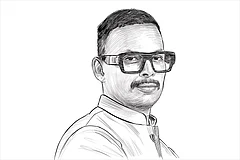
Sunil Ambekar Akhil Bharatiya Prachar Pramukh, RSS

MORE FROM THIS ISSUE


(This story appeared in Outlook magazine’s August 31 issue, 'Whose Idea of India?', in which India’s noted public intellectuals, policymakers, cultural practitioners, political leaders, scholars and economists write in detail about the idea of India they believe can best secure the nation’s future as we celebrate 80 years of independence.)















