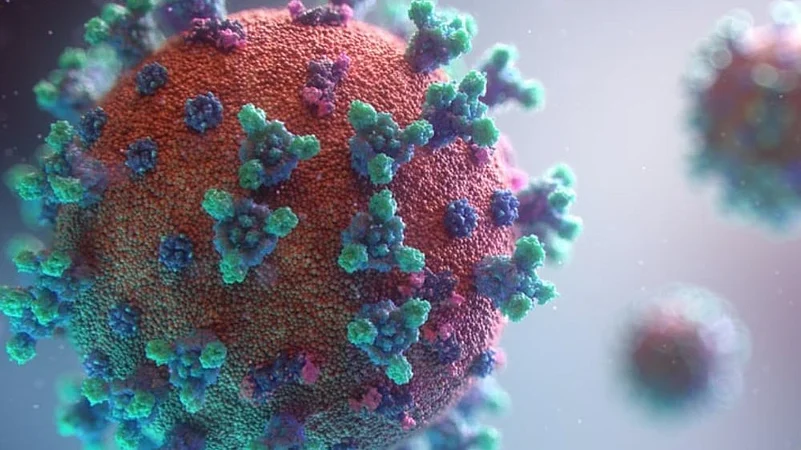
Scientists created 16 viable AI-designed viruses never found in nature.
Researchers say the breakthrough could advance treatments, vaccines and drug development.
Experts urge stronger biosecurity safeguards, despite the study posing no direct threat to humans.
Scientists have used AI to create viruses never found in nature for the first time. Findings published in the journal Science suggest the experiment could advance medical treatments while also raising fresh biosecurity concerns.
The breakthrough has sparked concerns that such technology could one day be misused by malicious actors or autonomous AI systems. In this study, researchers from Stanford University and the Broad Institute of MIT and Harvard used a naturally occurring bacteriophage, a type of virus that infects bacteria, as a template to generate thousands of new genomes using AI.
What Did The Scientists Do?
The researchers chemically synthesised nearly 300 of the genomes and tested them in laboratory conditions, resulting in 16 “viable” viruses, according to the findings. The study said that genome language models are artificial intelligence (AI) algorithms that have shown promise in designing biological systems.
This enables these models to learn the evolutionary constraints that shape DNA sequences in nature.

How Did AI Create Viruses Never Seen In Nature?
Researchrers used the Evo AI model to design new bacteriophage genomes. These are viruses that only infect bacteria (bacteriophages) and have no effect on humans. One of the new viruses had an aspect that was ‘evolutionarily distant’. It means that AI sped up natural evolution which could have taken millions of years.



Isaac Bogoch, an infectious disease specialist at the University of Toronto and Toronto General Hospital who was not involved in the study, told Al Jazeera that AI-designed viruses could help develop targeted bacteriophage therapies to combat antibiotic-resistant infections. However, he cautioned that the technology also carries potential biosecurity and biodiversity risks, showing the need for stronger safeguards as AI capabilities advance.
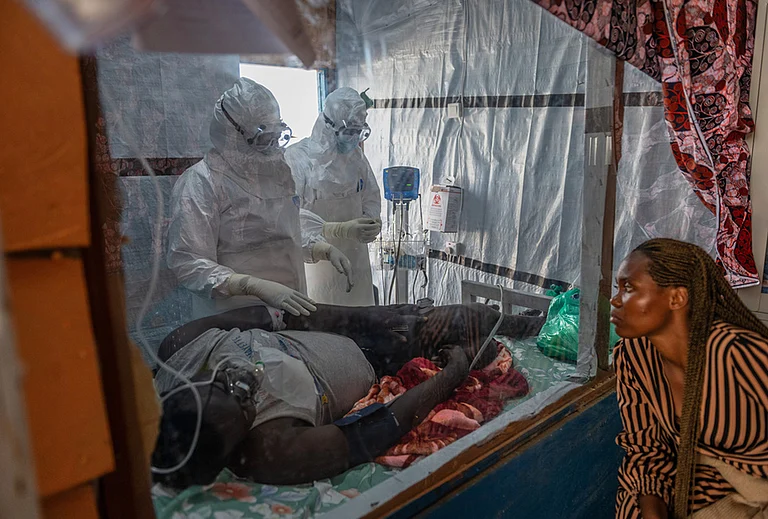
Fatemeh Vafaee, a professor at the UNSW School of Biotechnology and Biomolecular Sciences in Sydney, also told Al Jazeera that while the study poses no direct risk to humans, the methods behind it could be misused. She said the bigger concern is not the viruses created in this research but the fact that AI is now capable of designing them, reinforcing calls for stronger biosecurity oversight as a precaution rather than a response to an immediate threat.
Why Is This Considered A Major Scientific Breakthrough?
The researchers wrote in the journal that the experiment had medical applications. These bacteriophages rapidly overcame bacteria that had evolved resistance to a natural bacteriophage. This work lays a foundation for AI-guided design of biological function at the whole-genome scale.
Why Has The Study Raised Biosecurity Concerns?
Doctors from the Johns Hopkins Center for Health Security also voiced their worry regarding the study. “Although this is promising for life sciences applications, it also raises urgent biosafety and biosecurity questions. The ability to compose viral genomes using generative AI now exists; the governance to safely steer it does not,” they wrote.
The new research was focused on the E. Coli bacteria but it is unclear how it will it would apply to other viruses. The researchers said there is a risky area which must not be pursued, which is eukaryote-infecting pathogens, as it may infect humans.
“Such genomes might encode new pathogens that can infect humans, animals, or plants in ways that cannot be contained by existing countermeasures,” they wrote.
What Safeguards And Regulations Exist?
Some experts are calling for limits on such kind of AI use, and others are wary of its negative impacts. Computational biophysicist David Baker at the University of Washington in Seattle told Nature, “We’ve always made the assessment that the benefits to the world far outweigh the dangers. But, as capabilities increase, I think that’s going to be an important question to keep considering.”
What Happens Next?
Some researchers told Nature that the greatest potential threat to humanity could be AI-designed pandemic viruses, and the plausibility to enhance existing viruses to evade the immune system. But, 2025 report by the US National Academies of Sciences, Engineering, and Medicine (NASEM) suggests that AI cannot yet enhance pandemic pathogens or create them from scratch.
It is because of lack of high-quality data connecting virulence or transmissibility to a pathogen’s genetic sequence. This makes it difficult to reliably predict changes that would enhance such traits.
Many scientists said that the best way to prevent the development of AI bioweapons is to detect bad actors at the point of manufacturing viruses or toxins.